The 2024 Indian monsoon was much better when it came to overall precipitation with 108% rainfall of the Long Period Average (LPA) recorded. With heavier rain, extreme and very heavy rainfall events, which caused landslides and flooding, were also much higher, constant with the rising trend of such climate change-induced events.
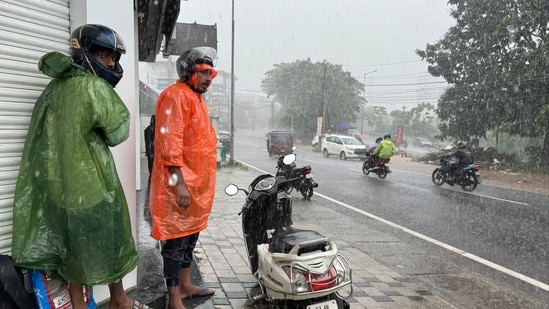
According to the India Meteorological Department (IMD), between June 1 to September 30, India recorded 934.8 mm of rain, surpassing the seasonal norm of 868.6 mm. The data showed
The 2024 Indian monsoon was much better when it came to overall precipitation with 108% rainfall of the Long Period Average (LPA) recorded. With heavier rain, extreme and very heavy rainfall events, which caused landslides and flooding, were also much higher, constant with the rising trend of such climate change-induced events.
According to the India Meteorological Department (IMD), between June 1 to September 30, India recorded 934.8 mm of rain, surpassing the seasonal norm of 868.6 mm. The data showed that the maximum contribution came in the form of very heavy to extremely heavy rainfall.
This year’s monsoon was longer like the ones in the past five years but it failed to cool down nights unlike it used to do previously. With ground surface temperature rising due to climate change, deforestation and higher use of vehicles, air-conditioners and industrial units, these alterations in the Indian monsoon system are here to stay.
A leading climate expert said the changes have become increasingly evident with each passing monsoon season in the last decade. “During the last five-six years, weather systems have been travelling through Central India, which used to follow the northward trend. Changes in rainfall patterns are driven by global warming and at the same time driven by El Nino, IOD (Indian Ocean Dipole) and MJO (Madden Julian Oscillation). High-intensity and short-duration precipitation is driven by climate change. The longevity of monsoon systems has increased because of back-to-back systems. These systems led to the saturation of soil moisture. When systems move over such areas, soil provides the same momentum as it is over the ocean. It may not be of the same magnitude but it does increase the shelf life of the weather system,” said IMD’s former director general, K J Ramesh,
When asked whether the monsoon would return to former normal patterns, Ramesh said it was highly unlikely. “Man-made conditions on the ground are not going to change much and climate change is already there. In such a scenario, the monsoon predictability would become difficult in coming years as IMD cannot factor in all causes that may be impacting monsoon,” he said.
The monsoon data for the last three decades has already established the link between monsoon rain variations and climate change. Drier periods during the monsoon are getting longer and the probability of intense rainfall has increased. A study by IIT-Gandhinagar showed that the intensity of extreme rainfall has increased by 30% in the Himalayan, western and Kerala-Karnataka coastal regions in the past 30 years.
The IMD data showed that very heavy rainfall events have increased from 1912 in 2020 to 2632 in 2024. Similarly, extreme rainfall events have increased from 341 to 473 in this period. Rainfall is classified as very heavy when a station records between 115.6 mm and 204.5 mm of rainfall within 24 hours. If more than 204.5 mm of rain falls in that period, it is classified as extremely heavy rainfall.
Data with IMD showed the 2024 monsoon recorded the highest number of heavy rainfall events in the last five years; June recorded the second-highest very heavy rainfall events in the last five years while July reported the second-highest number of extremely heavy rainfall events. In August, 753 stations recorded very heavy rainfall, the highest since 2020 while September marked a new record, with 525 stations recording very heavy rainfall.
This monsoon, out of 729 districts, 340 districts recorded normal rainfall, 158 districts experienced excess rainfall, 48 districts saw large excess rainfall, 167 districts faced a rainfall deficit and 11 districts saw large deficit rainfall. So, the data clearly shows huge variations in rainfall patterns across districts, which can have implications for agriculture.
A recent study showed that India now experiences extended summer-like conditions between June and September, which are the monsoon months. These shifting patterns are creating a new norm of aggravated, erratic, and incessant monsoons, making dry years drier and wet years wetter. Around 70% districts now experience persistent and erratic rainfall more frequently.
Districts with higher heat wave occurrences from June to September also tend to see more frequent extreme rainfall events, studies have shown. The data also showed that despite excess monsoon rains, there has been a constant rise in minimum temperatures during the monsoon months, which experts say, has a bearing on agriculture production. Central India recorded higher night temperatures during the months of monsoon; India has recorded the highest night temperature, with an anomaly of 0.61 degree Celsius.
With the Intergovernmental Panel on Climate Change (IPCC) predicting global temperature to rise up to 3 degree Celsius to pre-industrial level by the turn of the century, northeastern and Central India are bracing for hotter summers and highly unpredictable monsoons. The IPCC has warned of the intensification of rainfall by more than 20% and an exponential surge in heat waves and cyclone events in the Indian subcontinent.
Chetan Chauhan, national affairs editor, analyses the most important environment and political story in the country this week
One Subscription.
Get 360° coverage—from daily headlines
to 100 year archives.
Archives
HT App & Website