The narrow bylanes of the Haridwar rural assembly segment, from where chief minister Harish Rawat is contesting, reflect the contest between the Congress and the BJP in the state where the difference between the winning and the losing party has historically been slender.
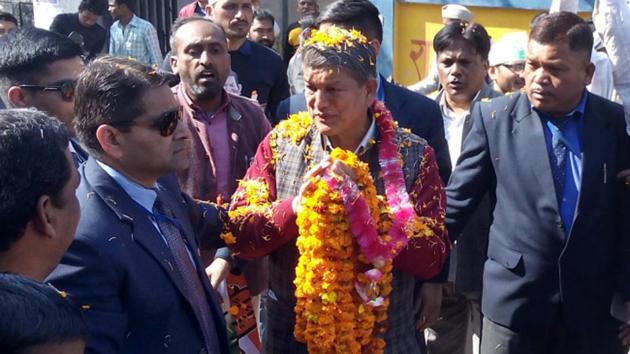
Rawat is banking on 30% Muslim voters and 15% Dalits in the constituency to defeat sitting Bharatiya Janata Party legislator Swami Yatishwaranand and swing the state in favour of Congress. The Haridwar Lok Sabha seat has 14 assembly segments, of which Congress won only three in the 2012 polls.
The importance of Haridwar, bordering Uttar Pradesh, can be gauged from the fact that both Prime Minister Narendra Modi and Congress vice-president Rahul Gandhi visited the religious city to galvanise voters.
Haridwar has traditionally been a BJP bastion as the Congress was considered a party of the hills. To change that, Rawat decided to contest from Haridwar rural, where a high Muslim-Dalit vote appears to favour Congress and was nurtured by his daughter Anupama Rawat for the past few years. However, one thing is clear — there is no wave in Rawat’s favour that could have a cascading effect in other seats.
In fact, there are two factors that are likely to upset his applecart — BSP’s Mukarram Ansari, who appears to be eating into the Congress’ Muslim and Dalit votes, and uncertainty over which seat Rawat will retain if he wins. The chief minister is also contesting from Kicha, an assembly segment in his native Kumaon. “He (Rawat) will opt for Kicha and not us,” said Yasat Ali, with many around him in Dhanpura village agreeing. “A hill leader is against plains. Otherwise, Rawat would have carried out development work here also like he did in Kumaon,” he said.
{{/usCountry}}In fact, there are two factors that are likely to upset his applecart — BSP’s Mukarram Ansari, who appears to be eating into the Congress’ Muslim and Dalit votes, and uncertainty over which seat Rawat will retain if he wins. The chief minister is also contesting from Kicha, an assembly segment in his native Kumaon. “He (Rawat) will opt for Kicha and not us,” said Yasat Ali, with many around him in Dhanpura village agreeing. “A hill leader is against plains. Otherwise, Rawat would have carried out development work here also like he did in Kumaon,” he said.
{{/usCountry}}Rawat vs Modi
Like in most parts of the state, the BJP here has pitted Modi against Rawat and pushed its local candidate to the sidelines.
“We will vote for Modi and his work,” said Mange Ram of Bhogpur village, accusing Rawat of ignoring the plains even though he represented the region in the Lok Sabha in 2009. When told that Modi could not be the chief minister, Ramkant, another villager, argued that he would give the state a “good administrator” who will not be “corrupt like Rawat”.
However, there were others who feel Modi’s charisma has waned since 2014 and the BJP committed a mistake by contesting the polls in his name.
Numbers game
Since the first election in 2002, the contest between the Congress and the BJP has been close. The difference between them has never been of more than two percentage points, even though their vote share has risen because of the decline of the Uttarakhand Kranti Dal and the BSP.
In 2002, the first poll two years after the state was carved out of UP, the Congress won 36 seats with almost 27% vote share and the BJP got just 19 with 26% votes. Five years later, the BJP’s vote share increased by six percentage points, with the party bagging 34 seats. Congress vote share also increased to 30% but it got only 21 seats. In the last elections, the difference of vote share of the two parties was just 0.7 percentage points with the Congress getting 32 and the BJP 31. Of the total 70 seats, the winning margin in 19 seats was less than 2,000 votes or less than 5% of the votes polled.
Mirroring the state
The constituency reflects Uttarakhand as it has a sizeable population of people from the hills — Kumaon and Garhwal — that account for around 40 seats. While people from Garhwal are rooting for BJP, Kumaon is backing ‘son of the soil’ Rawat.
Breaking the BJP hold in Haridwar will be crucial for Rawat to win the polls. Or else, history — no party returning to power — will repeat itself.