More than two decades after the original negatives of Satyajit Ray’s acclaimed Apu Trilogy were damaged in a fire in a film lab in London, technicians and experts on three continents have put in thousands of hours to produce new high-definition versions of the films. New prints of Pather Panchali, Aparajito and Apur Sansar – derived from 4K restorations using the damaged original negatives and film prints from the US Academy of Motion Picture Arts and Sciences, Harvard Film Archive, and British Film Institute – will be screened across America from May and released on Blu-ray. Behind the restorations is a tale of technicians in the US and Italy repairing the burnt prints by hand, scanning them frame by frame and then using computer tools to remove scratches and other blemishes. Watch: Restoring Satyajit Ray's classics
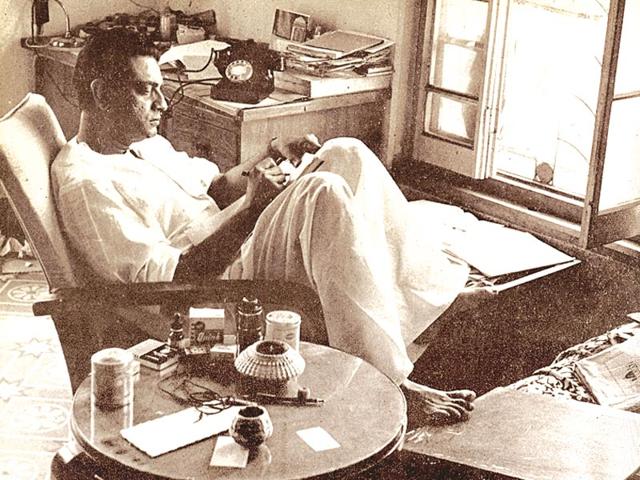
The first attempt at restoring Ray’s classics was made in 1993, shortly after his death. When the Academy of Motion Picture Arts and Sciences presented an honorary lifetime achievement Oscar to Ray in 1992, producers sourcing material from the director’s films for the Oscars ceremony were dismayed by the poor condition of existing prints.
Several of the filmmaker’s original negatives were shipped to Henderson’s Film Laboratories in London in 1993. On July 20 that year, a massive fire at the lab destroyed original negatives of several British classics and severely damaged several of Ray’s films, including the original negatives of the Apu Trilogy.
{{/usCountry}}Several of the filmmaker’s original negatives were shipped to Henderson’s Film Laboratories in London in 1993. On July 20 that year, a massive fire at the lab destroyed original negatives of several British classics and severely damaged several of Ray’s films, including the original negatives of the Apu Trilogy.
{{/usCountry}}The burnt negatives were deemed unusable but the Academy of Motion Picture Arts and Sciences gathered all fragments and film cans and stored them at its archive in the US. It was believed at the time that there were no technologies available to fully restore the badly damaged film elements.
Fast forward to 2013, and the Criterion Collection – a New York-based company that specialises in releasing classic films from around the world – began working on restoring the Apu Trilogy. As part of its efforts, Criterion located the negatives stored in the Academy Film Archive that had not been seen in 20 years.
Watch: New trailer for Apu Trilogy
Many portions were burnt to ash and others were very fragile because of deterioration, the heat they were exposed to and contaminants. The negatives were shipped to L’Immagine Ritrovata, one of the world’s premier film restoration facilities at Bologna in Italy.
The Italian technicians rehydrated the brittle film using a special solution consisting of glycerol, acetone and water and physically repaired the negatives over 1,000 hours. The negatives were then scanned to make digital copies.
Section of the three films that were destroyed by the fire in 1993 were replaced with sections from prints and duplicate negatives provided by the Academy of Motion Picture Arts and Sciences, Harvard Film Archive and British Film Institute.
In the end, 40% of Pather Panchali and more than 60% of Aparajito were restored from the original negatives. The two surviving reels of Apur Sansar were too damaged to be used and the whole of that film was restored from other prints.
The scanned copies were then sent to the Criterion Collection’s restoration lab in New York, where technicians used computer tools to digitally remove dirt, debris, warps and cracks. The technicians ensured that the original look of the films was retained.
Peter Becker, president of the Criterion Collection, said: “This monumental restoration and re-release is the culmination of seven years of work by dozens of people on three continents…There's a lot of discussion about how much irreplaceable film history we have lost from around the world, but this is one of the rare cases where the dedicated work of archivists have saved three masterpieces, allowing a whole new generation of filmgoers to see them as their filmmaker intended."
There are, however, no plans as of now for screening the new versions of these classics in India.
Read: Did Steven Speilberg steal Satyajit Ray's story for ET?
Get more updates from Bollywood, Taylor Swift, Hollywood, Music and Web Series along with Latest Entertainment News at Hindustan Times.
Get more updates from Bollywood, Taylor Swift, Hollywood, Music and Web Series along with Latest Entertainment News at Hindustan Times.