For a lover of short stories, especially of the traditional variety that harks back to RK Narayan’s Malgudi tales and the ethos of mid-twentieth-century India, to Satyajit Ray’s characters in Indigo and Stranger stories, or to the subtle twists in the narratives of Saki and O Henry, Savithri’s Special Room and Other Stories is a literary bonanza. This collection, that inspires nostalgia for a long-gone era, attempts to resuscitate a genre drowning in the flood of recent fiction set in the contemporary world. Unsurprisingly, it has landed on the ‘Tata Literature Live! First Book Award’ longlist – an honour it deserves.
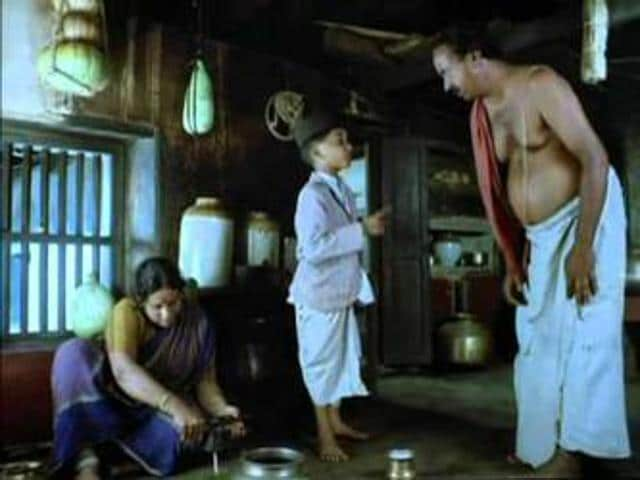
In this debut collection, Manu Bhattathiri has created a delicious dish using tried and tested ingredients in fresh recipes. So Karuthupuzha is a fictitious ‘sleepy little town in the interiors of south India’ much like Malgudi, and its entertaining and sometimes idiosyncratic characters are caught in extraordinary situations in their ordinary lives.
Usually, it is quite easy to pick favourites from such a collection but the task is almost impossible in this one. Each of the nine interconnected tales is a gem with a simple plot that begins in the most innocuous manner. The appeal lies in the way the narrator builds up the narrative and introduces the subtle turn of events. The reader is transported into a simple world as it existed before machines took over completely, before humans became semi-automatons themselves in a bid to outdo each other, and the pace of life changed.
{{/usCountry}}Usually, it is quite easy to pick favourites from such a collection but the task is almost impossible in this one. Each of the nine interconnected tales is a gem with a simple plot that begins in the most innocuous manner. The appeal lies in the way the narrator builds up the narrative and introduces the subtle turn of events. The reader is transported into a simple world as it existed before machines took over completely, before humans became semi-automatons themselves in a bid to outdo each other, and the pace of life changed.
{{/usCountry}}The first story, ‘The Cold’, introduces Kunjumon -- an employee of Eeppachan Mothalali, the owner of a rice mill -- who, on a sudden whim one day, decides to show some charity towards the residents of Chamel’s Old Age Home. But though his intentions remain noble, procrastination plays the villain.
‘The Man Who Knew God’ is another entertainer with the storyteller Murali as the protagonist. ‘Apart from arriving at exotic points of view, no one knew what Murali really did,’ says the narrator. He goes from being a storyteller at the toddy shop to being perceived as a scholar and a champion of the underdogs in town (including that of Joby, the slipper thief), to being a teacher to the town’s children, to being a universal counselor-cum-psychiatrist… until Destiny intervenes.
‘Savithri’s Special Room’, the story that gives the collection its title, is about an old couple, Vasu Appooppan and his wife Savirthri Ammoomma, who live in a dilapidated house, waiting for the annual visit of their son, daughter-in-law and grandson, Kuttan. The story begins with a vivid description of their home: ‘Nature, from all sides, was trying to get in. Moss was slowly, secretively climbing up most of its walls. Weeds grew straight up and stood on their toes to peek in through its windows, as if checking out their future home.’ The relevance of the imagery strikes home later in the story.
Some of the best stories are perhaps ‘Paachu and the Arrogant Tuft’, ‘The Wife’s Leg’ and ‘The Scandal’. In the first, Inspector Paachu, soon to retire, decides to pump fear into the hearts of the townsmen so that his image is maintained even after he quits the police force, but is beaten by a stubborn tuft of hair on his head that refuses to settle down. In the second story, a very jealous Eeppachan Mothalali takes his young wife, Amminikutty, to task – but she has her revenge. In the last, Shanta, Savithri Ammoomma’s maid, falls victim to a spiteful scandal created by the ‘most evil man’ Maniyan, a labourer in Mothalali’s rice mill, but ends up as the winner.
A return to the pre-mechanical age in terms of setting, characters and stories is also visible in Ali Akabar Natiq’s recent collection, What Will You Give for This Beauty and in Arunava Sinha’s The Greatest Bengali Stories Ever Told. However, Bhattathiri’s stories stand apart because of his sense of humour that’s so subtly woven into his narrative. In some ways, he shares this with Kanishk Tharoor. But while Tharoor is still somewhat distant and incisive in style, Bhattathiri is quite indulgent towards his characters. Once can imagine his narrator as a denizen of Karuthupuzha himself.
Perhaps the only criticism one can offer is that the women sometimes come across as lesser than men. But that fact can be blamed upon the times the stories are set in and which they realistically reflect. Bhattathiri’s themes steer clear of politics. Instead, they focus on the portrayal of the society: human nature, follies or foibles and relationships in a certain cultural context. His characters are amazingly unforgettable – Mothalali, Chamel (owner of the Old Age Home and seller of porn magazines), the cuckold Kunjumon, Murali, Paachu Yemaan, the singer Acchu and her lover George Kutty, and several others who will probably be remembered as well as – if not better than – RK Narayan’s. This book is a classic.
Divya Dubey is the publisher of Earthen Lamp Journal, the Editor/Instructor at Authorz Coracle, and the author of Turtle Dove: A Collection of Bizarre Tales