I guess most people who wear perfume rarely think about the labour-intensive process that goes into making it. To what extent has this book changed the way you approach perfume?
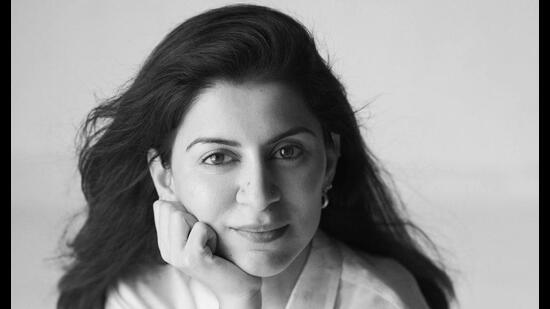
Yes, I suppose that is true of any handmade product that we use often. I got to see up close the work and hours that go into making a perfume – both, the cultivation side as well as the time and thought it takes to successfully compose one later in the lab. Personally, I would say that it has made me less likely to straight up dismiss a perfume even if it isn’t one that I would buy or wear.
Who were you writing for when you started out? Did your target audience change as you plunged deeper into your research?
I cannot say that I had an audience in mind. I was quite unsure throughout. I did recognise though that I was definitely not writing for those who already worked in perfumery; I knew it would seem all very basic to them! Apart from that, I wrote for anyone who’d be interested in learning a little more about fragrances that we are all familiar with.
A lot of Indians who go to the US miss the smells of home, and you have documented your own experience in New York City. Tell us more about Manhattan’s “pervasive non-smell of dazzling modernity”. How did that compare with other boroughs in the same city like Queens, Brooklyn, the Bronx and Staten Island?
{{/usCountry}}A lot of Indians who go to the US miss the smells of home, and you have documented your own experience in New York City. Tell us more about Manhattan’s “pervasive non-smell of dazzling modernity”. How did that compare with other boroughs in the same city like Queens, Brooklyn, the Bronx and Staten Island?
{{/usCountry}}Eventually, I think that non-smell was a mixture of the absence of odours I took for granted both within, and without the home, and of certain detergents and surface cleaners that I associate with the US (that’s odour associative learning for you!) My visits to the Bronx and Staten Island were too brief and busy for me to have paid enough attention to scents because I was likely on some deadline. But certain parts of Queens became familiar to me over the course of a long story that I was reporting from there; part of which took me to a temple that had a canteen, which sold masala dosa and vadas. I used to linger there. Brooklyn was where I first encountered a matcha latte and I remember that clearly – both the smell and the taste.
What were some of the uniquely Indian smells that you took for granted before you left home? What emotions do you associate with them?
Everyone has scents that they associate with home. They are almost always mundane, and taken for granted until they are not there and then they take on the weight of emotion. For me there were the home smells of course – dusty books, fresh roti, mom’s perfume on her saris and so on – but I took for granted the idea that every place you could go to in the city would be crowded with smells of all kinds, and that you would recognise most of them. It was lonely without them for a while.
Of all the places in India that you visited in connection with The Perfume Project, which ones were most exciting and most disappointing for you to explore?
Absolutely nothing was disappointing because all of it was new to me. When I began work on this book, I knew very little. And I asked some very basic questions of the people I met. Every field, distillery and lab fascinated me, and they still do.
How did the structure and narrative style of this book fall into place?
With some amount of wrangling and a lot of help from my editor, Ajitha GS at Westland! She was very patient in explaining to me what did and did not work in my previous drafts. There were bits of writing that I felt strongly about but had to let go of, and others that I was very uncertain of but was able to develop with her help. Her edits also included questions; and in the answering of those often, structure came into clearer view.
What were your three big takeaways about the state of the perfume industry in India today?
That it’s quite alive, still very traditional, and has a marketing problem.
What were some of the unexpected chemistry lessons that you learnt while working on this book?
Dry distillation was a new one for me. It’s also called destructive distillation and is a chemical process in which a material is heated (in this case it was sea shells), the fumes condense in the neck of the retort and are collected in another vessel placed underneath. I hadn’t seen or studied this until then.
Which perfumes would you recommend using to get rid of writer’s block?
I wish I could tell you it was a simple matter of a fragrance switch to get rid of it! But to drive away the despair, I sometimes use a diffuser with peppermint oil, so try that perhaps?
Chintan Girish Modi is a freelance writer, journalist and book reviewer.