A story of the Andamans
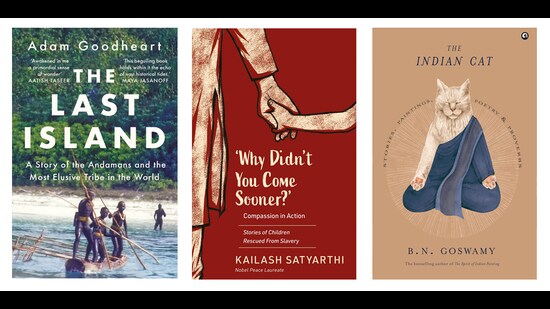
A journey to the coast of North Sentinel Island, home to a tribe believed to be the most isolated human community on earth. The Sentinelese people want to be left alone and will shoot deadly arrows at anyone who tries to come ashore. As the web of modernity draws ever closer, the island represents the last chapter in the Age of Discovery — the final holdout in a completely connected world.
In November 2018, a zealous American missionary was killed while attempting to visit an island he called “Satan’s last stronghold,” a small patch of land known as North Sentinel in the Andaman Islands, a remote archipelago in the Indian Ocean. News of the tragedy fascinated people around the world. Most were unaware such a place still existed in our time: an island unmolested by the advances of modern technology.
20 years before the American missionary’s ill-fated visit, a young American historian and journalist named Adam Goodheart also travelled to the waters off North Sentinel. During his time in the Andaman Islands he witnessed another isolated tribe emerge into modernity for the first time.
Now, Goodheart — a best selling historian — has returned to the Andamans. The Last Island is a work of history as well as travel, a journey in time as well as place. It tells the stories of others drawn to North Sentinel’s mystery through the centuries, from imperial adventurers to an eccentric Victorian photographer to modern-day anthropologists. It narrates the tragic stories of other Andaman tribes’ encounters with the outside world. And it shows how the web of modernity is drawing ever closer to the island’s shores.
The Last Island is a beautifully written meditation on the end of the Age of Discovery at the start of a new millennium. It is a book that will fascinate any reader interested in the limits — and dangers — of our modern, global society and its emphasis on ceaseless, unbroken connection.*
{{/usCountry}}The Last Island is a beautifully written meditation on the end of the Age of Discovery at the start of a new millennium. It is a book that will fascinate any reader interested in the limits — and dangers — of our modern, global society and its emphasis on ceaseless, unbroken connection.*
{{/usCountry}}Stories of children rescued from slavery
The work of rescuing children from slavery is not for the faint of heart, as the 12 gut-wrenching accounts in this book will show. Harder still is to give them their life back, after they’ve been kidnapped, trafficked, sold, abused and made to work in horrific conditions, often for as long as they can remember.
Pradeep was offered up for human sacrifice by his family, thought to be a bad omen; Devli was a third-generation slave in a stone quarry in Haryana, who had never seen a banana before her rescue; Ashraf, a domestic child labourer at a senior civil servant’s house, was starved and scalded as punishment; Sahiba was trafficked from Assam to be someone’s wife against her will; Kalu was abducted and made to weave carpets all day long, his injuries cauterized with phosphorus scraped off matchsticks; Bhavna was trapped in a circus, sexually abused for years by her owners; Rakesh was worked in the fields all year round like cattle, and spent the nights locked up with them in the stable; Sabo was born to labourers at a brick kiln, and never knew life outside it; and Manan lived his childhood mining mica in the forests of Jharkhand, barely given time to even mourn his friend who got buried when the mine caved in.
Kailash Satyarthi’s own life and mission were entwined with the journeys of these children. Having lived through unspeakable trauma, they had lost faith in humanity. But behind their reticence, behind their scraggy limbs and calloused hands and feet, hope still endured. This book tells the story of their shared struggle for justice and dignity — from the raid and rescue operations of Satyarthi’s Bachpan Bachao Andolan, to international campaigns for child rights. It is a testament both to the courage of the human spirit and to the power of compassion.*
The meow meow uprising
The Indian Cat: Stories, Paintings, Poetry, and Proverbs is a most unusual book. In it, renowned art historian BN Goswamy illustrates all the varied ways in which cats have made themselves a home in our art, literature, and speech, as well as in our hearts. In the Jataka Tales, cats turn up as characters whose clever tricks or pretensions are generally foiled by the Bodhisattva. In Vaishnava bhakti, when a devotee approaches God in utter surrender they follow marjara-nyaya — the act of a kitten who passively submits to its mother as it is picked up by the scruff of its neck. The Hadith speaks of the Prophet who once chose to cut off the sleeve of his robe when he had to stand up and go pray rather than disturb his pet cat, Muezza, who was sleeping on it. In the Mahabharata, Duryodhana repeatedly charges the noble Yudhishthira with observing the marjara-vrata, “cat-like observance”, denoting hypocrisy. Great poets like Mir and Ghalib are known to have loved their cats to distraction, the poet Jibanananda Das saw himself in a cat that went here and there, always following the sun, and Vikram Seth saw the cat as being full of mischief and cleverness but no evil. All in all, on a daily basis, as everyone knows, the feline in India is often addressed with affection.
The Indian Cat first presents a delightful picture of the cat in our written and oral literatures. This is followed by a catalogue of paintings, each showcasing a different aspect of the place accorded to cats in our society. Then there is a selection of poetry about the cat, much of which is translated from a wide swathe of languages including Urdu, Hindi, Persian, and Bengali. The final section presents proverbs, sayings, and idioms on the animal. An enchanting and gorgeously designed book, The Indian Cat will appeal to a wide array of readers.*
*All copy from book flap.