State of anger
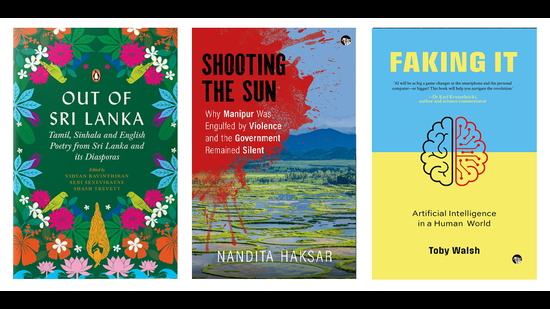
The ethnic clashes that broke out in Manipur in May 2023 were ostensibly due to Kuki opposition to the demand by the dominant Meiteis for Scheduled Tribe status. Kukis, and other tribal groups, claim that this would eat into their meagre entitlements. In turn, the Kukis as a group have been branded “illegal immigrants”, blamed for the proliferation of poppy cultivation, and accused of “narcoterrorism”.
Conflicts between ethnic groups are not new in Manipur. But the violence in 2023, which killed hundreds and displaced tens of thousands, was shocking for the sheer viciousness on display. Any effort to find explanations to this conflict only throws up more questions. Why is there such anger in the people of the state? Is this a religious or an ethnic conflict? Why were the police and paramilitary forces — of which huge numbers are deployed in Manipur— unable to stop the violence? What role did chauvinist Meitei organizations like Arambai Tenggol play in the violence? Why did it take several months for India’s national leadership to break their silence on the issue? Is there really a problem of illegal immigration into Manipur from Myanmar? Who are the KukiZo people? Are they to blame for the drug menace in the state, as claimed by the Meiteis? What have the state and central governments done to prevent drug trafficking in the region? Does anyone benefit from what is happening?
In this urgent book, Nandita Haksar explores with clarity and insight, and also courage, a complex geopolitical problem, exposing the hypocrisy of identity politics in Manipur, never losing sight of those that have suffered — and continue to suffer — the most in this conflict.*
{{/usCountry}}In this urgent book, Nandita Haksar explores with clarity and insight, and also courage, a complex geopolitical problem, exposing the hypocrisy of identity politics in Manipur, never losing sight of those that have suffered — and continue to suffer — the most in this conflict.*
{{/usCountry}}Facts about AI
Artificial intelligence is, as the name suggests, artificial and fundamentally different to human intelligence. Yet often the goal of AI is to fake human intelligence. This deceit has been there from the very beginning. We’ve been trying to fake it since Alan Turing answered the question “Can machines think?” by proposing that machines pretend to be humans.
Now we are starting to build AI that truly deceives us. Powerful AIs such as ChatGPT can convince us they are intelligent and blur the distinction between what is real and what is simulated. In reality, they lack true understanding, sentience and common sense. But this doesn’t mean they can’t change the world.
Can AI systems ever be creative? Can they be moral? What can we do to ensure they are not harmful? In this fun and fascinating book, Professor Toby Walsh explores all the ways AI fakes it, and what this means for humanity – now and in the future.*
Affirming the imperative to remember
Sri Lanka has thrilled the foreign imagination as a land of infinite possibility. Portuguese, Dutch and British colonisers envisioned an island of gems and pearls, a stopping point on the Silk Road; tourists today are sold a vision of golden beaches and swaying palm trees, delicious food and smiling locals. This favours the south of the island over the north rebuilt piecemeal after the end of the civil war in 2009, and erases a history of war crimes, illicit assassination of activists and journalists, subjugation of minorities, and a legacy of governmental corruption that has now led the country into economic and social crisis. This first ever anthology of Sri Lankan and diasporic poetry – many exiles refuse to identify as “Sri Lankan” – features over a hundred poets writing in English, or translated from Tamil and Sinhala. It brings to light a long-neglected national literature, and reshapes our understanding of migrational poetics and the poetics of atrocity. Poets long out of print appear beside exciting new talents; works written in the country converse with poetry from the UK, the US, Canada and Australia. Poems in traditional and in open forms, concrete poems, spoken word poems, and experimental post-lyric hybrids of poetry and prose, appear with an introduction explaining Sri Lanka’s history. There are poems here about love, art, nature – and others exploring critical events: the Marxist JVP insurrections of the 1970s and 80s, the 2004 tsunami and its aftermath, recent bombings linked with the demonisation of Muslim communities. The civil war between the government and the separatist Tamil Tigers is a haunting and continual presence. A poetry of witness challenges those who would erase, rather than enquire into, the country’s troubled past. This anthology affirms the imperative to remember, whether this relates to folk practices suppressed by colonisers, or more recent events erased from the record by Sinhalese nationalists.*
*All copy from book flap