I began this year with two books dealing with a common theme. How Fascism Works: The Politics of Us and Them (2018) by Jason Stanley and How Democracies Die: What History Reveals About Our Future (2018) by Steven Levitsky and Daniel Ziblatt are strongly-argued books about the dreaded past as well as our precarious present. One cannot help but feel a sense of foreboding and déjà vu reading through them.
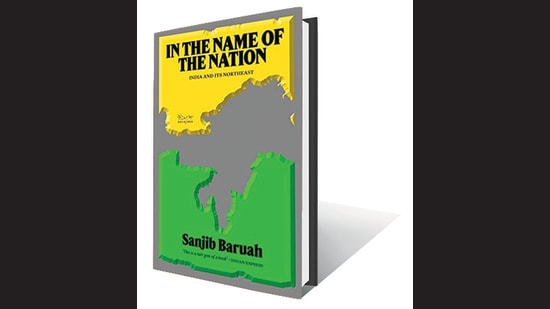
Next is Sanjib Baruah’s new book, In the Name of the Nation: India and its Northeast. Baruah has long been critical of India’s handling of the problems in the Northeast, right from the very idea of the country having a “policy” on the region. “To be made an object of policy implies the peoples of the region are not in a relationship of ‘human concerns such as love, friendship, understanding of the other’ but in a relationship of manager and managed,” he has argued.
As to the future, Baruah, who’s now 70, still finds little to be optimistic about. “Northeast India urgently needs a politics of citizenship based not on memories of a real or imagined past but on a vision of a common future for the people who live in the region today,” he intones. But this is unlikely to happen soon, at least not until India attains more confidence in its dealings with the region, he concludes.
Looking to lighten my mood, I turn to local memoirs. My uncle LT Ngaihte’s The Village Boy (2021) is a retelling of experiences and anecdotes while posted at various capitals around the world as an Indian Foreign Service officer. While in Milan, he was referred to as “that Chinese guy” by Italian visitors. Then, on his way back to India with his family, the Indian policeman on duty at the Emigration line in Delhi repeatedly asked them to change their queue from the one designated for Indians to the one for foreigners. So sure of their un-Indianness, the policeman even shifted their luggage twice. Only when he barked at him in Hindi did the guard disappeared from the scene, he recalled. A somewhat similar story was contained in Rev Ginnei Thang Ngaihte’s autobiography called My Hand in His: Journeying into cross-cultural missions. Ngaihte is a globe-trotting missionary. He recalled being asked, while in Bangkok, if he’s a Thai. When he answered he’s Indian, they asked if his wife is a Thai. When told she’s also Indian, they persisted, “are your two children Thai?!!”
{{/usCountry}}Looking to lighten my mood, I turn to local memoirs. My uncle LT Ngaihte’s The Village Boy (2021) is a retelling of experiences and anecdotes while posted at various capitals around the world as an Indian Foreign Service officer. While in Milan, he was referred to as “that Chinese guy” by Italian visitors. Then, on his way back to India with his family, the Indian policeman on duty at the Emigration line in Delhi repeatedly asked them to change their queue from the one designated for Indians to the one for foreigners. So sure of their un-Indianness, the policeman even shifted their luggage twice. Only when he barked at him in Hindi did the guard disappeared from the scene, he recalled. A somewhat similar story was contained in Rev Ginnei Thang Ngaihte’s autobiography called My Hand in His: Journeying into cross-cultural missions. Ngaihte is a globe-trotting missionary. He recalled being asked, while in Bangkok, if he’s a Thai. When he answered he’s Indian, they asked if his wife is a Thai. When told she’s also Indian, they persisted, “are your two children Thai?!!”
{{/usCountry}}Thangkhanlal Ngaihte teaches political science at Churachandpur College, Lamka, Manipur.