
 E-Paper



Interview: George Saunders - more vaudevillian than scholar
In his new book, the Booker Prize winning author of Lincoln in the Bardo offers lessons in getting better at reading and writing, interpreting and analyzing, based on his decades of teaching the Russian masters

 Prefer HTon Google


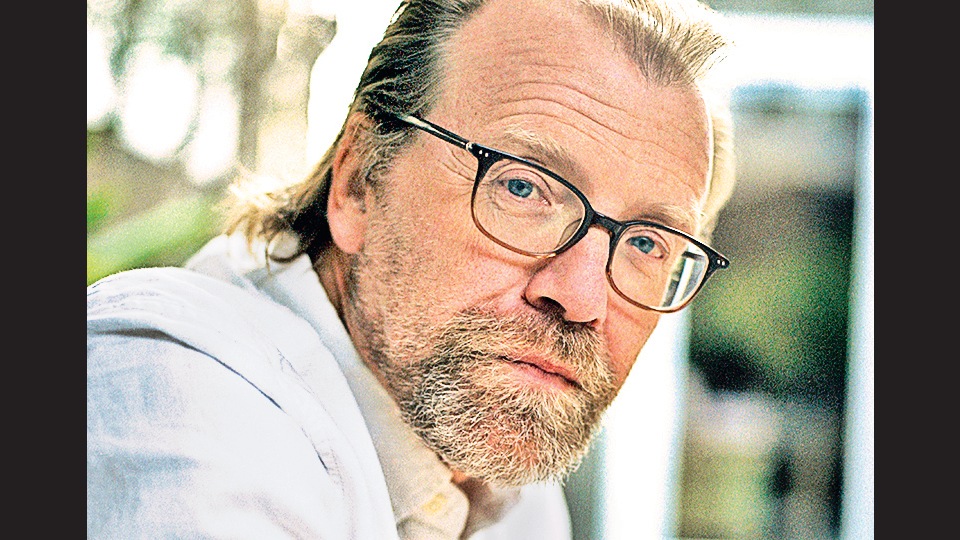
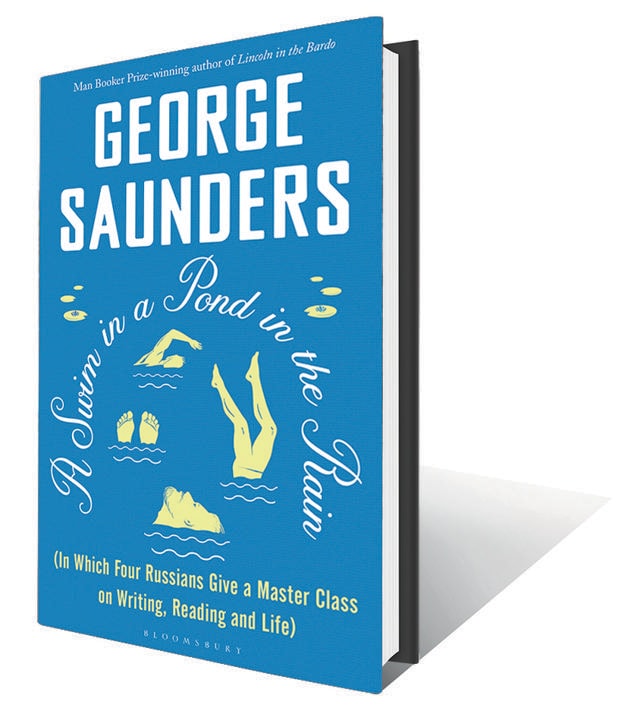
George Saunders, the Booker Prize-winning author of Lincoln in the Bardo, has been variously described as the “best short story writer in English” and “one-man defibrillator” of the form. As a writer who chronicles “the lost, the unlucky, and the disenfranchised,” he seems to be greatly invested in the goodness of the humankind. His brilliantly-voiced stories often make the reader want to be a better person, newly awakened to the world. In their horror and hilarity, subversion and satirical energy, absurdity and ingenuity, there exists a great deal of warmth and humanity. Saunders, 62, whose latest, A Swim in a Pond in the Rain: In Which Four Russians Give a Master Class on Writing, Reading, and Life (Bloomsbury) was released on January 12, says that it is precisely these aspects — the sense of increased alertness, of seeing the world anew — that really makes a story a “moral-ethical document”. While he doesn’t consciously work on this, because to do so would make for stories that are too neat and reductive, that is always his intention. He believes this alertness can happen even in the face of a very dark work, if that work is a “highly organized system.” “It may be that that is what we respond to — that sense that a work of art has been refined into uniqueness,” he writes in an email interaction.
A Swim in a Pond in the Rain brings together lessons in getting better at reading and writing, interpreting and analyzing, based on Saunders’ two decades of teaching the Russian masters at Syracuse University’s graduate MFA creative writing program. Saunders, who is a little suspicious of any “general” approach to writing fiction, says he hopes the book is more than just a writer’s manual — one that is as valuable to the writer as it is to the reader, one that also deliberates on what art/fiction should do. “My teaching has made me feel that, the more particular (geared to that particular student, at that particular place in her trajectory), the better. So, in this book, the idea is that the reader and I will huddle over these classic stories and see what we can tease out about the short story form itself — and then, that that knowledge will ‘land’ differently on each of us and, I hope, help each of us in our individual artistic struggle.”
In his artistic quest, Saunders has come to the works of Anton Chekhov, Ivan Turgenev, Leo Tolstoy and Nikolai Gogol, again and again in different mindsets over the years because their stories seem to speak to the reader “differently at different times” in his life. He finds them very wise in that way. They’re never wrong, he says, but they are right differently, over the years. For Saunders, the most cheering part of reading the Russians is “the realization that minds can connect, across time and space — they really can”. He says: “The work of reading a story is really about the act of connection — understanding the great power of connection, and also of working on that connection on a sort of micro basis; asking, as we read, ‘Am I in or out? If I am in — why am I in? If out, what threw me out?’ This is all a way of learning about how the mind works; how it judges, how it processes language.” Saunders loves it when he is reading along and realizes that the author (a long-dead Russian, in this case) was, apparently, worried about the same things that he is. “The same things kept him up at night. How should we live? What is the cost of ego, of inattentiveness? How should power be used, and what is the cost, when it is used badly? You often hear it said that fiction makes us feel less alone, and I think this is true. Whatever we are going through, someone else has gone through it too and, in a good story, we find a high-level scale model of that conundrum, laid out in a simple way, to help us along,” he says.
The book, a modest version of his MFA class, features three stories by Chekhov (In the Cart, The Darling and Gooseberries), two by Tolstoy (Master and Man and Alyosha the Pot) and one each by Turgenev (The Singers) and Gogol (The Nose). Each of these stories is followed by Saunders’ commentary and his reading of these stories. While Saunders loves Chekhov, he has also found, over the years, that his stories teach really well. “They are very classic in their shape and in the way they proceed,” says the author whose anthologies of short stories include CivilWarLand in Bad Decline (1996), Pastoralia (2000), In Persuasion Nation (2006) and Tenth of December: Stories (2013), a finalist for the National Book Award. Saunders explains the craft to the reader through apt metaphors and hands-on analogies, which he has arrived at during teaching and giving talks about writing all these years. Writing, he says, might be a bit like quantum physics — the truth of it is best got at by way of poetry and allusion, rather than direct, reductive statement. He says: “There is no one truth and so we need to approach giving ‘advice’ with a lot of humility — basically always saying, not, ‘Here is how to do it,’ but, rather ‘Might this help?’”
Saunders, along with other American writers like Jonathan Franzen and David Foster Wallace, has set the new terms for contemporary American fiction. Joshua Ferris, whose works Saunders loves, once wrote that there was a shared acknowledgement among writers that Saunders was “a little more than just a writer”. That he writes like “something of a saint” and seemed to be “in touch with some better being”. Saunders says: “I wish that was true but — and I say this from the very authoritative/unfortunate position of being located inside my own head: no trace of saintliness in there, or in my day-to-day life. Neuroses, good intentions, hard work, yes, but saintliness, no.” What Saunders does believe, however, is that each of us can, through the artistic process, work toward (or at least glimpse) “a better version of ourselves”. He says: “Nothing mystical about it — we revise our work, making it smarter and more truthful and more communicative with each pass and, in that process, we can start to hear what that better version of ourselves might sound like — how that person thinks and reasons and so on.” We go around in the world, says Saunders, with what we might call “first-draft” mind — time is going too fast and we are making ill-informed snap judgments out of habit. “Writing, we get to slow down time, essentially; reexamining moments and motivations and even internal monologues, to make them more interesting (ie more in tune with reality). And, in the result, we see a different way for the mind to work, that cuts more to the essence of things. But that state, in my experience, doesn’t feel particularly elevated — it is a feeling of the monkey-mind going slightly more quiet as I concentrate on the story,” he says.
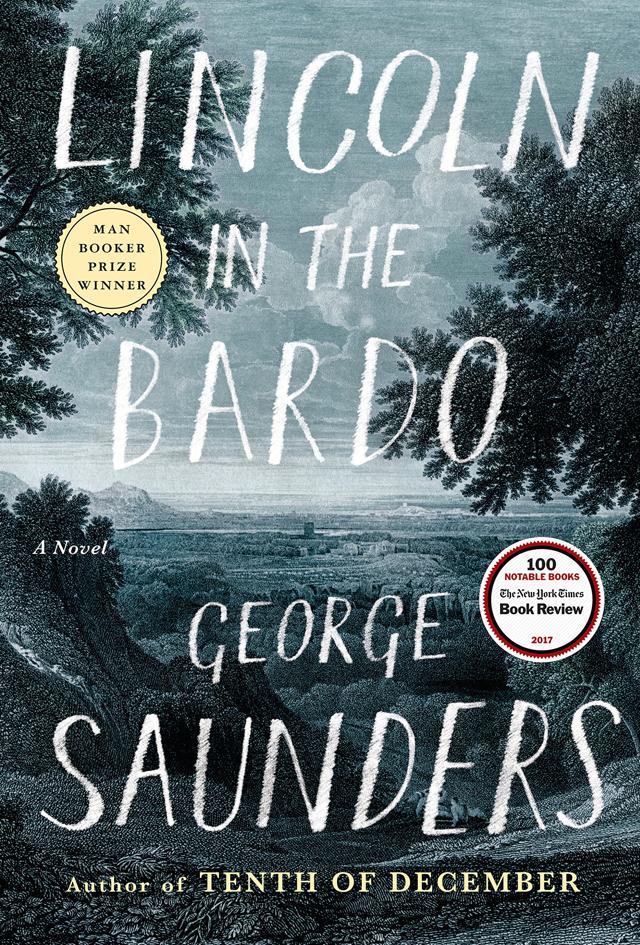
Joel Lovell, an editor at The New York Times, once wrote that we could call the desire to be as open as possible, all the time, to beauty and cruelty and stupid human fallibility and unexpected grace as the George Saunders Experiment. Saunders says he owes this desire to Buddhism — that feeling that comes from meditation that the mind operative in us at this moment is limited and mutable; it’s not the only mind we can experience and, however it is at this moment, it won’t be around in that state for very long. For example, Saunders says, he was born with a “slightly jokey, cynical way of approaching things” (a strand evident in his work). “But that’s my mind. It’s not the world. And, therefore, the possibility exists that, through working with my mind, I could learn to be more positive — that is, to not just simply default to that more negative mind. It’s a perception issue — by not honoring (only) our present mind, but recognising it as a temporary construction, well… I think we might say that more data gets in; we are that much closer to truth,” he says. Being truthful and open is a nice idea and one Saunders has been talking about for a long time. But, at 62, Saunders says he is finding out that talking about it and doing it are two very different things. “I’m like a dance critic who can wax rhapsodic about a certain style of dance that I can in no way actually do myself. There might be some aspirational value in that, but it is not doing the thing itself,” he says.
In his students’ work, Saunders sees a new urgency; he says that they seem to accept the notion that fiction should take on the big issues and should acknowledge the current and catastrophic state of affairs in the US. “They also understand that, to do this doesn’t necessarily mean writing directly ‘about’ politics, but maybe recognizing that ‘a political story’ is really just ‘a good story, with people in it.’ That is, a story that is about human aspiration and limitation and sorrow,” he says. One of his students, Nana Kwame Adjei-Brenyah, published a beautiful and urgent book of dystopian stories, Friday Black, in 2018 that many young writers in the US look to as a model. “It’s ‘political,’ yes, but by the means described above, he makes us care about individual people,” says Saunders.
The biggest advice Saunders has offered to his students is: “Learn to revise, in your own flavor.” All of a writer’s particular obstructions, and the ways he/she will overcome those, he says, are only going to be discovered by the hard work of revising. The other piece of advice he gives his students is to not underestimate the power of living boldly. “We can transform our artistic self by refining our actual self. So, I encourage them to nurture in themselves a genuine curiosity about the world. I remember hearing that the poet Gary Snyder once said, ‘Travel makes you big,’ and that is true about all kinds of travel, even the kind where you try to talk to your perceived enemy with an open heart. We really don’t know what is going on down here on Earth — why there is so much cruelty and so much joy and all of that. We really don’t. So that’s exciting. And a big person will, given the same level of craft, make a more interesting book than a small (incurious) person,” he says.
The focus of Saunders’ artistic life, he writes in the book, has been trying to learn to write emotionally-moving stories that a reader feels compelled to finish. “I consider myself more vaudevillian than scholar,” he writes. What does it take to create compelling stories, to take what’s unknowable and make it a little more knowable? Often, he admits, it is by revising. He imagines that there’s a sort of meter in his head that is measuring his engagement as a reader. “When that meter is saying, ‘High Engagement! Loving it!’ — I don’t change anything. When, on the other hand, it starts saying, ‘Ugh, boring! Condescending! Go watch a movie at once!’ — well, then I know that editing is needed. And the whole trick is learning to be in touch with what that meter is saying — to learn to trust our own taste and judgment and then have confidence that we can act on same,” he says. The key is also to respect the reader. While writing, he tries hard to take his reader into account, and to imagine her, as he refines every phrase, to be a very engaged, soulful, smart and experienced. He sees himself as trying to compel her to keep reading. “And that battle can only take place a line at a time. To me, this is the great power of fiction: that mutual assumption of intelligence that says, essentially, that anything I find in my mind and experience will find a corollary in yours, if I imagine you respectfully enough as I write,” he says.
It is also by revising that Saunders works on refining his stories into uniqueness and lets them speak to our time as freshly, effectively and ingeniously as the Russian stories spoke to theirs. “If we are revising with energy, everything we are will get into our stories — our beliefs, fears, hopes, etc — and they will get in there more subtly, and in ways that surprise us, ways that our merely conceptual mind couldn’t have come up with. Revising, for me, means somehow opening up the channel between our (very wise) subconscious mind and the page; sidestepping our normal, reductive way of thinking, by making a series of micro-decisions, over and over,” he says.
Nawaid Anjum is an independent journalist, translator and poet. He lives in New Delhi.


