
 E-Paper



Interview: Reem Bassiouney, author, Al Halwani; The Fatimid Trilogy
On historical fiction, being a scholar of sociolinguistics, writing in Arabic and English, and winning the Sheikh Zayed Book Award for Literature

 Prefer HTon Google


Egyptian author and sociolinguist Reem Bassiouney recently won the Sheikh Zayed Book Award for Literature for her book Al Halwani: The Fatimid Trilogy. Bassiouney teaches sociolinguistics at the American University in Cairo and her notable works include The Pistachio Seller, The Ibn Tulun Trilogy and The Mumluk Trilogy for which she won the prestigious Naguib Mahfouz Award. Bassiouney, who is bilingual, writes her academic books in English and her fiction in Arabic. Some of her major historical fictional works have been translated from Arabic into English by Roger Allen.
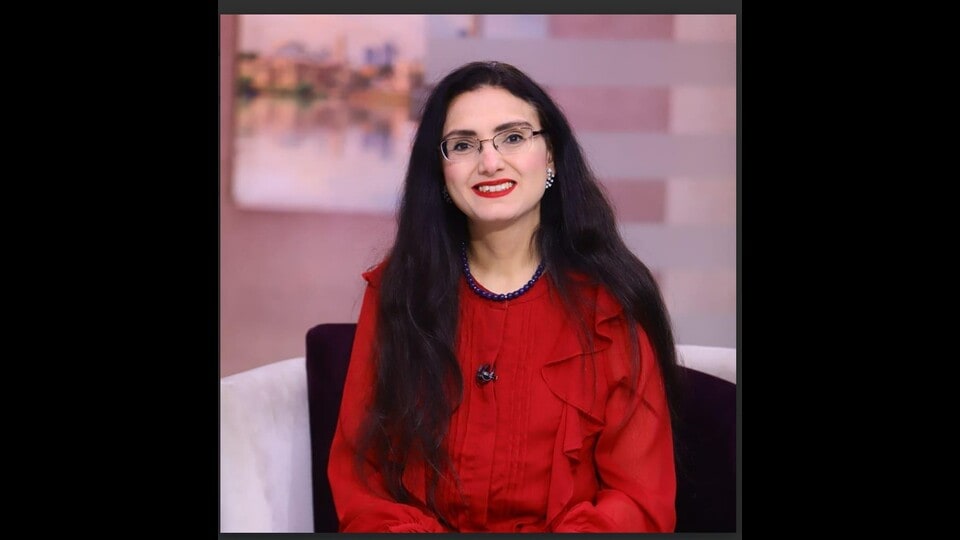
You skillfully explore Egyptian identity and the country’s historical and cultural ties with its neighbours in Al-Qata’i: Ibn Tulun’s City Without Walls, a multi-generational epic tale of power, love, and revenge set in early medieval Egypt. What are the common themes that run through your historical fiction? Do you find the relationship between history, fact and fiction complicated?
I write about human struggles. In the historical context what interests me is that there are a lot of challenges -- wars, famines, pandemics, cities are built and then destroyed. I am interested first and foremost in the human experience. This experience surpasses history and place. But history provides a rich framework for me to build my storylines. Histories are full of love, hate, jealousy, heroes and villains. There is a lot to pick and choose from and then rebuild your own narrative.
Hilary Mantel once said, “We carry the genes and the culture of our ancestors, and what we think about them shapes what we think of ourselves, and how we make sense of our time and place.” In this pursuit of the past, how often do your own biases creep in?
I am a scholar and I have been trained as one. This helps me a lot to reign in my own prejudices and ideologies. I try to search history in the same way I do my own research on society and language. If I have a prejudice I challenge myself and argue with myself until I have a more holistic view. I think being a scholar helped me a lot to understand history and create historical fiction. For example, in Egypt we know little about the hero of Al Qata’i, Ahmed ibn Tulun. Yet I researched him for years to have a closer understanding of his time and context. I try not to take things for granted.
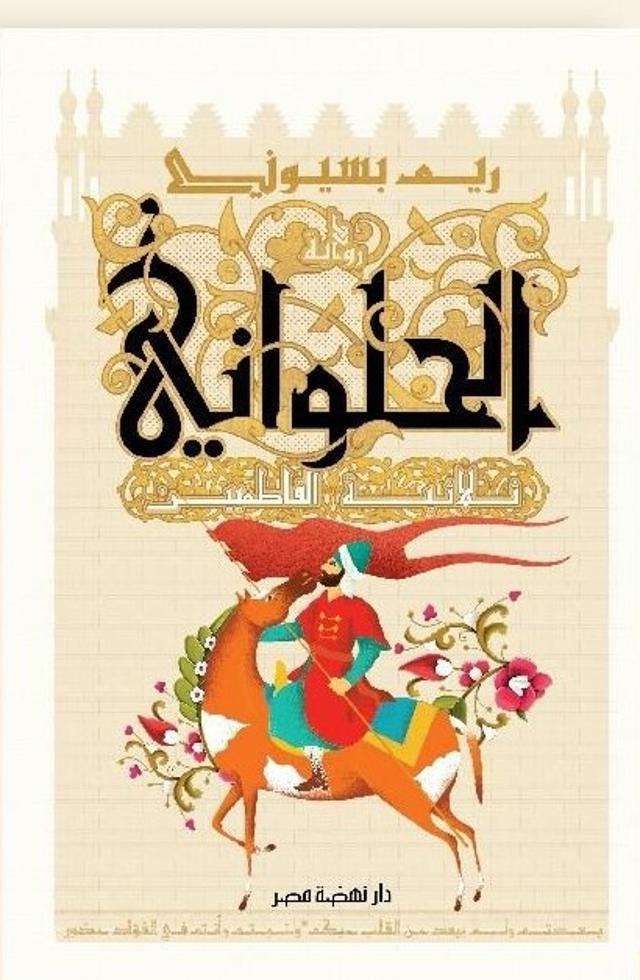
What drives your characters? They appear grey and flawed as they navigate the dramatic twists and turns in their lives, yet they are all endearing. How difficult is it to convey the nuances of power hierarchies and cultural practices?
I intentionally want to create human characters. Humans are flawed but can also be sympathetic in different situations. I am not interested in good and bad or evil and kindness. I am interested in motivations and pressures and circumstances that lead to actions. When I was young I was sick and tired of didactic historical fiction. Characters were one dimensional and not human. I could not sympathise or love them. How can you love something artificial?
You are a prolific writer. What does your writing schedule look like? How long did you take to write Al-Qata’i or Al Halwani: The Fatimid Trilogy? How difficult is it to make the switch from writing an academic book on say, sociolinguistics to writing historical fiction?
It took me 10 years to write my three trilogies. They are related and as with history, stories are always intertwined. I spent a long time researching Islamic history and I enjoyed the whole process. I usually write my academic books in English and my fiction in Arabic. This separation makes life easier. I tried to write fiction in English but could not express myself at all.
Do you think your novels would get more traction if you wrote in English? How do you feel about having your novels translated? Do you fear that however syntactically correct the translation might be, the magic of the original will be lost? Do you struggle with the language you think in and the language you write in?
I can only express my emotions and pour myself in Arabic. I can write fiction only in Arabic. English is my professional language. I have been really lucky with the translators of my work, so far. They have captured the meanings really well. Of course, if I write in English I would get more readers in the English speaking world but then I wont be true to myself. I am bilingual so I think and write in two languages but I love only one, Arabic.
Most established writers speak about the ease of writing their first novel and how because of heightened expectations they have to struggle with their subsequent works. Having bagged prestigious awards do you feel this pressure and, if yes, how do you deal with it?
I agree. Once you get your first prize the pressure builds. I have recently received my fifth prize, in fact, an international one – The Sheikh Zayed Award for Literature. I now feel more responsible and more anxious. I need to keep my standard and not disappoint my reader and more importantly, I need to work on myself.
Historical fiction writers often get asked if their work is legitimate or “is this a true story?” Do you get that a lot too? Do you end up explaining your writings? What are you working on next?
I get this question all the time. My answer is: everything is true to me otherwise I would not write it. You see if I did not feel that everything is true the reader will also realise and not ask the question. To be sincere to my work, I need to only write what I feel is true.
My next book is a really challenging project. So wish me luck.
Lamat R Hasan is an independent journalist. She lives in New Delhi.


