I had been writing school plays and plays in the colony where I lived and participating in fancy dress competitions since I was a kid. I was also making posters of Amitabh Bacchhan, Sanjay Dutt and Pooja Bhatt, who was a big star towards the end of my school days. While I was still in college, I wrote a couple of radio plays. Then, I wrote a couple of episodes of the show Khatta Meetha with Shafi Inamdar and Farida Jalal. I even acted in an episode. I was studying English Literature at college but my plan was to go to film school abroad. Then, at 21, my best friend and I decided to form our own production company. This was back in 1995, the same year Amitabh Bacchhan Corporation Limited (ABCL) was formed. We wrote three concepts. One was science fiction, another was Unchi Manzilen, a story about people who lived in high rises in Bombay, and so on. We thought we’ll make shows; we thought we’d change the world. We went to ABCL and tried to sell our ideas to them. We waited for almost nine months and realized they weren’t taking us seriously because we were very young.
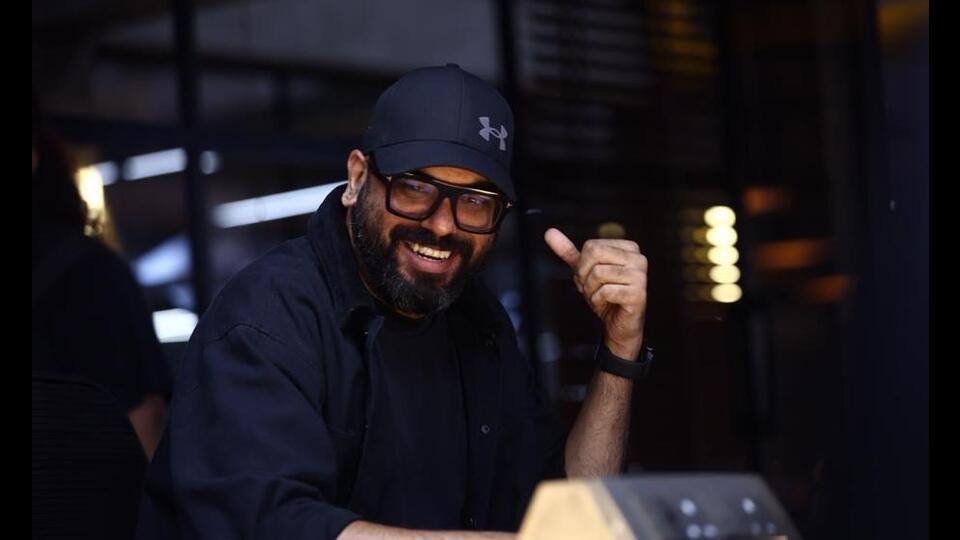
Screenwriter Suparn Verma (Courtesy the subject)
So then we thought of taking up jobs at Channel V. We tried but didn’t get a job there either. In the meantime, my best friend Vivek wrote poems and published them online. Through his poems, he met a girl from Norway, and fell in love with her. Today, he is settled in Norway with kids. I, on the other hand, continued on my journey. Thankfully, soon, I got a job at Rediff, which I took up because of the lure of free internet. My parents were journalists and I was anyway writing so I joined Rediff as a journalist. I had one of the best editors in town in Nikhil Lakshman and I got to interview many filmmakers. I interviewed Shekhar Kapur when Bandit Queen was about to get released. Then, one of those days, while I was waiting for an interview to begin, I began crying on Juhu beach, thinking, “Why on earth am I interviewing people? I should be making my own films.” That was always my plan. Then I applied to a film school but realized the fees for a three year course were about a crore rupees and that no scholarships were available. I was from a middle-class background so that dream was dead.
But in the meantime, I kept writing, and one day, I met Ram Gopal Varma, who was making his Telugu film Deyyam. I saw the edit and said, “That is Pet Sematary.” He jumped and asked, “How do you know?” I was a huge Stephen King fan. Then he asked me to write for him. So I wrote one version of Bhoot, which I eventually made as Aatma. Then I wrote a version of Sarkar; I wrote a version of Aankh Micholi. I learnt a lot from Ram Gopal Varma in six months; I learnt screenplay writing from him. He’s the best writer ever. Every morning, at 7, we’d meet, discuss scenes and I’d write. His thinking process was genius. However, writing with him was more of penning down what he wants to do and I wanted to work on my own ideas.
Then, one day, I met Hansal (Mehta) who had a computer at his house. He was working on a film, which was supposed to be Abhay Deol’s debut. It eventually never got made. I contributed to the script. Then, I’d written a script for a producer from Nagpur, who had only ₹1 crore. Hansal said he’d make it and my first film as a writer, Chhal, was made. Then, Harry (Baweja), wanted to make a sex comedy. I used a lot of my childhood and adolescence influences and wrote a film which became Yeh Kya Ho Raha Hai. Harry had heard my idea about a nuclear bomb in Bombay which I had narrated to Ramu. Ajay (Devgn) heard it and liked it as well. So, then Harry said, “The Rock (A 1996 Hollywood thriller). Ajay Devgn and other stars and you are writing it.” I gave the idea my spin and it became Qayamat.
Ajay liked my work and he introduced me to Rohit Shetty, who wanted to make his film at the time. I, in the meantime, wanted to make Sarfarosh 2 and approached John M Matthews with it. But he had other ideas. So I narrated my idea to Rohit (Shetty). He liked it and Zameen happened. In the meantime, Sanjay Gupta, who was the DOP on Qayamat, was looking for a script to make his first film and he had John (Abraham) in mind. Initially, he pitched a romantic film to John but John wanted to do an action film. So, I came in and narrated an idea to John which he liked. That’s how Karam was made which starred John and Priyanka (Chopra). Then, there were some other films which never got made. Overall, it was an interesting phase.
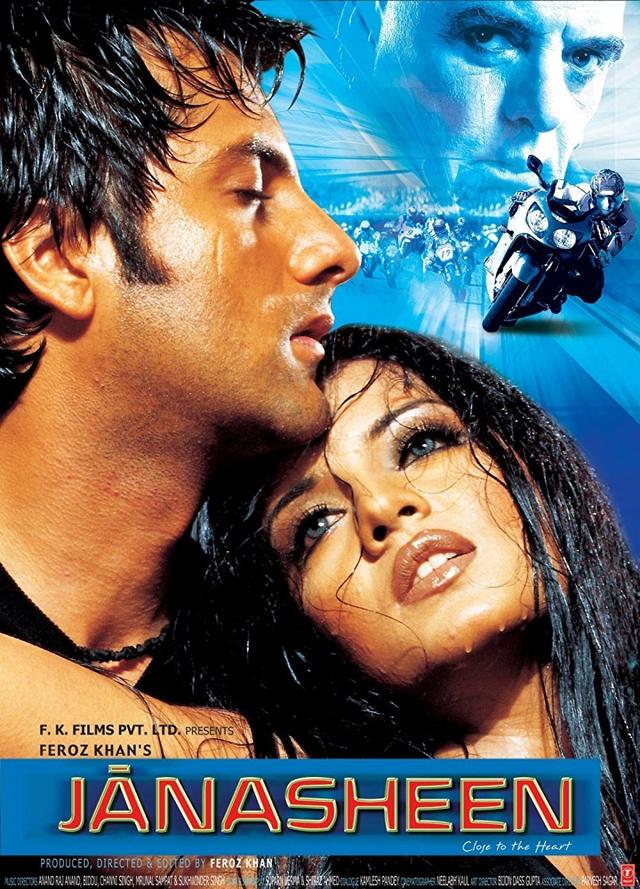
A poster of Janasheen (2003) (Publicity material)
Sometime around then, Ramu introduced me to Firoz Khan. Fardeen Khan and I became friends and Firoz Khan and I became friends and that’s how Janasheen happened; Janasheen was four years in the making, and around that time I started thinking that now I want to start directing and not just write. I took all the ideas I had and made Ek Khiladi Ek Haseena. The songs were superhits; the film did decently but wasn’t a superhit. Anyway, I didn’t know how to capitalize on my film. I didn’t want to make my next film immediately so, for the next few years, I was in exile.
Then, one day, I got a call from Sanjay Gupta, and I made Acid Factory for White Feather Films. After that, I made my version of Bhoot as a film called Aatma, which was set in an apartment and starred Bipasha (Basu). I also made a film called X: Past is Present, which was 11 filmmakers making one film. I was doing corporate films and ad films at this point anyway and I also wrote and directed a few episodes of the TV Show Dar Sabko Lagta Hai which Raj & DK (Raj Nidimoru and Krishna DK) were experimenting with at the time. Around the same time, I got a call from Nikhil (Advani) and got a chance to direct the show Hasmukh. Then, I got to direct one of the earliest web series called Ye Ke Hua Bro for Voot. While Hasmukh was being done, I got a call from Raj & DK who showed me the edit of the first season of The Family Man and asked me if I would write and direct the second season. I agreed. Along the way, I did other stuff as well but essentially, that’s my journey so far in a nutshell. This year, I have around four to five shows lined up where I’m involved in different capacities – one of them is Bandaa, for which I’m the creative producer.
One could say you’ve had two phases in your career. In the first, did you take up whatever came your way?
Look, it’s a very odd profession. You want to write what you want to but at the same time, you have to make a living as well. Plus, every Friday decides your fate. Every Friday presses a reset button in life. You may have put everything you had into a project but all that may not matter at the end of the day. Sometimes, critics bash your work and their words can really hurt. It’s a mixed bag and you are balancing life and creative ambition with the money that you need and the career that you want to have. There is only so much you can say no to.
Today, fortunately, it’s a bit different. I am literally cherry-picking what I work on. But initially, that wasn’t the case. I learnt to say “no” very late in my life. The day I learnt to say “no,” my life changed. Otherwise, I operated under a fear of another kind: What if I say “no” and rub people the wrong way? Will I find work? These fears block you. I used to think, “What if I filed a case against somebody?” Then I realized that when you file a case against somebody, they respect you more. These are things you learn in life. Success teaches you nothing; it’s failure that you learn everything from. I think one must keep taking chances because, at the end of the day, you can’t keep playing safe. Nothing is safe.
What’s your process of writing?
There have been times when I have written a script for the last scene that I had in mind. For instance, in the case of Aatma, I had a last scene in mind where the mother gives up her life to save a child. I wrote the whole script leading up to that scene. In the case of Chhal, I had this idea of a circle where the first and the last scene are the same. Zameen, for me, was a script where everything that happened were all connected to a plane hijack. My style, in general, is to throw a lot of balls in the air and then connect them. I love that magic trick in screenwriting. Combining many seemingly different ideas into one coherent idea is what I love.
I do not follow any process at all. I sit down, put on my music, zone out, and write. I usually don’t start writing till I see a scene. Then I either start writing towards that scene or from the scene but I have to see a scene. Also, I believe writing is rewriting. You have to keep writing to better your screenplay. I know that some people write beat sheets and 20 pages of character graphs but I can’t do that. I sometimes discover my characters while writing a scene and through the actions they take. I have sometimes written screenplays without even writing a story. I had the basic story in mind and I directly jumped into it.
Look, I write more or less every day. For me, it’s a job. And when you have been doing something every day, your mind develops a sense for it. It’s like cooking. If you cook every day, you don’t add salt with a measuring spoon, you have your sense of how much salt to add.
You have been in the industry for about three decades. With the studios coming in now, how has the writer’s life changed?
Two-three things: if you are writing for a series, what writers never had to do earlier in India is to work in a Writers’ Room. In America, because of their TV history, they would have nine to 10 staff writers working on a sitcom. So they always had this culture of a team writing together. India is a market where the story, screenplay and dialogue are often written by different people. A lot of these writers come from regions of the country where Hindi is not the operating language. Or say, some of them may not have a flair for dialogue.
I think it’s a mixed match of structures which works better in a writers’ room helmed by a showrunner who can use the right ideas coming from different people and retain the core idea of a scene or of the entire script. Another thing about the Writers’ Room is that the theme should be that bad ideas too are welcome. Nobody speaks gold all the time. If the environment of the room is to welcome bad ideas, then you will eventually find good ones. You never know what comes from which idea. I personally enjoy the process of working in a Writers’ Room and leading it.
Now, coming to the studio part of the question; they have employed executives who generally know their job. I think, as a writer, you need to respect the studio and take their points of view. Today, half my job is showrunning and the other half is directing. Showrunning is people management. I treat studio executives as my audience. And an audience cannot give you feedback on what exactly to change, in the right words, but they have a valid reaction. Then, it’s my job to figure out what their concern is and how to best address that while safeguarding my vision.
Because the truth is that if I make a terrible show, the executives will lose their job. We must also understand that no fool rises to the top in the corporate world. Studio executives do have brains. It’s about creating that rapport with them which will enable you to make the best show you can. Either you convince them, or they convince you, but the exchange is important.
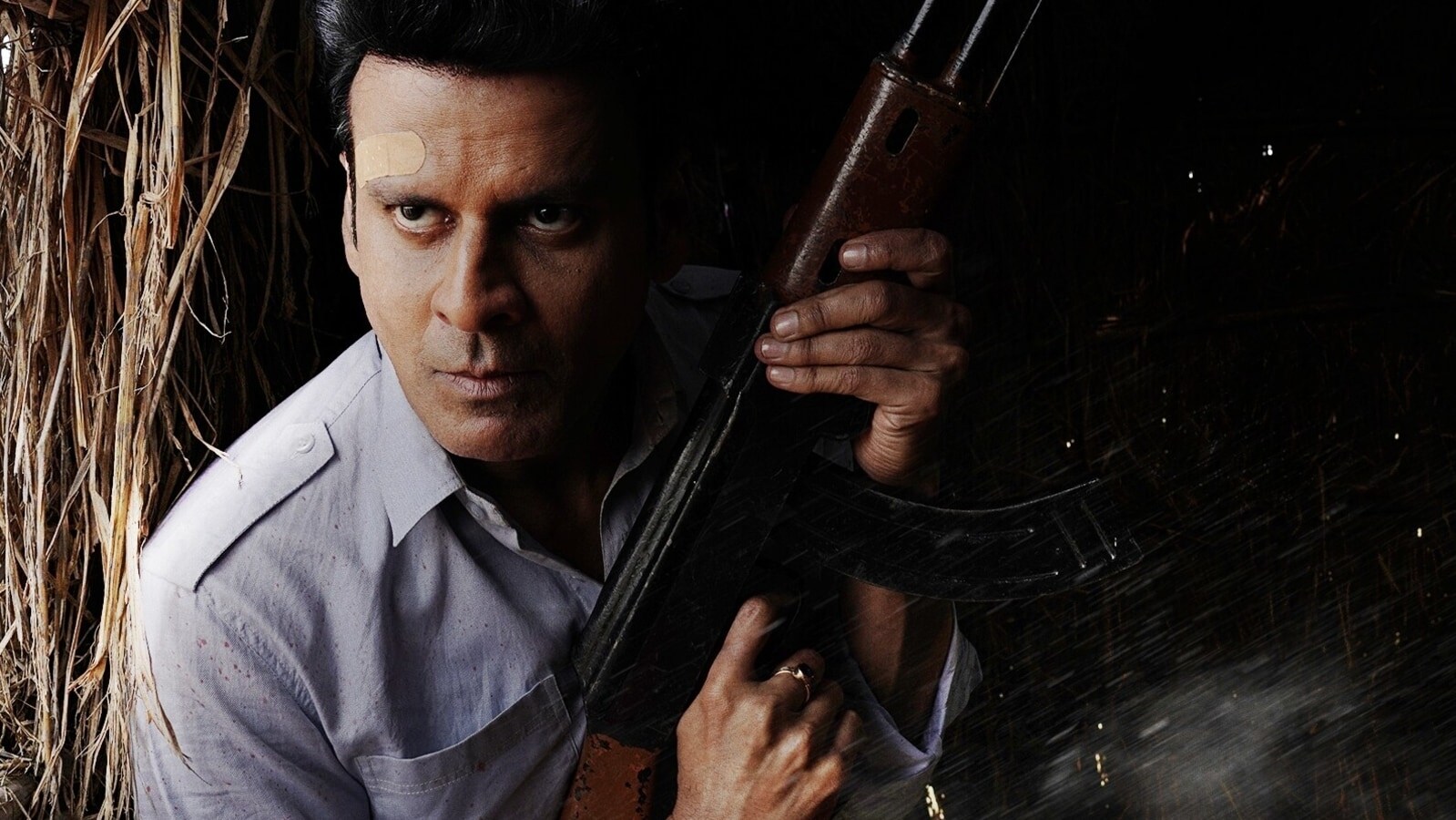
Manoj Bajpayee in The Family Man Season 2 (Amazon Prime)
Family Man Season 2 is one of your biggest successes so far. Could you walk me through the journey of writing it?
I saw the edit of Season 1 and started working on Season 2. The writing happened so quickly that we started shooting Season 2 before Season 1 was released. Then, when Season 1 came out, it was such a big success that we had to change a few parts of Season 2. We stopped shooting for a month, rewrote a few sections and then shot further. Honestly, it was the best collaborative process of my life. Raj & DK come from a place where there is no ego in the room.
Everybody is heard and everybody is taken seriously. To my benefit, they had been my friends for 15 years and I had even worked with them earlier. That definitely helped because we got along beautifully on the work front as well. Otherwise, in the industry, working with friends could turn out to be dangerous because if there is a professional glitch, you’re putting the friendship at stake. But thankfully, we had a blast working together.
Raj Nidimoru and Krishna DK (Manoj Verma / HT Archive)
Which films and filmmakers have influenced you?
I think (Quentin) Tarantino influenced all of us when we broke into the scene, and I am no exception. I have also been a big fan of screenplay structures in general. I have been a big fan of (David) Fincher; I have been a big fan of Brian De Palma’s editing technique. I’ve loved Hitchcock for the longest time, and I still do. Luckily, I was exposed to South Korean cinema 25 years ago. I saw Barking Dogs Never Bite by Bong Joon Ho when it was released and Kim Ki-duk’s The Isle 25 years ago.
I’ve seen a lot of South Korean cinema, and also seen the quality and the stature of those industries change. I’ve seen the times when Japanese cinema was considered great and Korean and Hong Kong cinema not really being up there. Then, Japanese cinema went down and South Korean cinema came up, and Hong Kong cinema nearly vanished. I’ve loved Australian cinema; I’ve loved Iranian cinema. I’ve been watching cinema rabidly since I was a child. We didn’t have a TV because my mother thought I wouldn’t study at all if we had one. So I used to go watch TV at my neighbour’s house. I made friends with people who had TVs and VCRs. Sometimes, some people shut their doors and windows and I’d hear the film but not see it.
I heard Evil Dead before I saw it, and had nightmares for a week when I actually watched it film later. I have sold old newspapers to rent VCRs and watch films because I didn’t have much money in those days. Then, there was this one arrangement I had with boys around me where I used to read the synopsis for all films and recommend that film to them. If everybody loved the film I recommended, I wouldn’t have to pay the ₹2 for that film but if everybody hated the film, I would have to pay the entire amount. The only film that screwed me over was one of the best films I have ever seen – The Untouchables by Brian De Palma. It was a slow burn in the beginning and the people around me hated it.
If you hadn’t chosen to be a writer, what would you have been?
An actor, a director (which I did become); I would have been anyone in the world of films. I had to come here eventually.
Mihir Chitre is the author of two books of poetry, ‘School of Age’ and ‘Hyphenated’. He is the brain behind the advertising campaigns ‘#LaughAtDeath’ and ‘#HarBhashaEqual’ and has made the short film ‘Hello Brick Road’

 E-Paper