Imagine India at the cusp of the 18th century.
The mighty Mughal empire is crumbling as Marathas and other regional powers assert their military might, new forms of art emerge from minuscule hill kingdoms on the northern fringes of the subcontinent, and sure-footed European powers expand their influence through a mix of trade, diplomacy and assimilation.
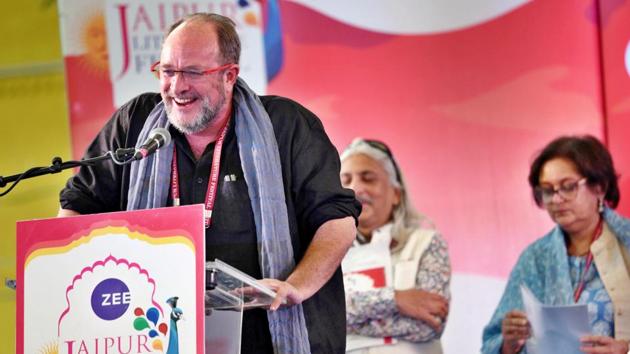
One of the opening sessions at the Jaipur Literature Festival focused on the possibilities and the tumult of 18th century India. The major highlight of this period was the rise of the European powers but Harvard professor Maya Jasanoff pointed out that the process of ascension was far more complex, and nuanced than is thought of popularly.
“The Europeans should be seen in the same vein as the invading Marathas or other forces,” she said.
The English began with a disadvantage against the French and the Dutch, who had already settled in, but quickly caught up owing to one major advantage: the advent of the modern banking system.
The Bank of England was set up in 1694 and allowed the government to build and maintain an army by borrowing from the market, instead of increasing taxes and thereby burdening the common man. Indeed, it was that burden that caused the collapse of French imperialist dreams in the subcontinent and triggered the French revolution.
Jasanoff argued that much of the expansion of the English could be seen as an economic war strategy – for example, the East India Company borrowing from rich Bengali money lenders to finance its armies that grabbed more land, and maximized revenue, only to pay back the lenders, and repeat the cycle again.
{{/usCountry}}Jasanoff argued that much of the expansion of the English could be seen as an economic war strategy – for example, the East India Company borrowing from rich Bengali money lenders to finance its armies that grabbed more land, and maximized revenue, only to pay back the lenders, and repeat the cycle again.
{{/usCountry}}“In fact, the most important battle of all, the 1757 Battle Of Plassey, could be termed a financial coup,” she said – after the panel pointed out that the British had struck a deal with a powerful Marwari business community that hated Nawab Shiraz-ud-Daula. This deal rendered most of the Nawab’s army useless. “Plassey was less battle and more an arranged match… and Clive a Trumpesque figure,” she said.
But not all battles were won on the field, nor were the Europeans always ahead. Dalrymple and Jasanoff pointed out that the armies of the Nizam of Hyderabad and Tipu Sultan were almost equally matched with the British. Moreover, historian Yashaswini Chandra argued that the history of this period was not linear – many Rajput kingdoms like Mewar and Jodhpur were allies of Aurangzeb when he attacked the Muslim kings of the south.
In fact, as Chandra said, the distinct character of Rajput art and paintings began to flourish only after Aurangzeb’s reign ended and the Mughal hold weakened.
And not all Europeans were conquering forces. Many, including the French, Dutch and the English were important constituents of regional courts, such as Awadh, where they leveraged local knowledge. “The Europeans dressed like locals and commissioned what we known as the Company School of Art,” Jasanoff said.
Historian BN Goswamy pointed out to the many forms of local art that flourished during this time in the small northern hill towns – Chamba, Noorpur, Guler – in a manner reminiscent of the renaissance-era towns of Tuscany. “They were so small that you could cover four kingdoms in a day. But they produced exquisite art,” he said.
Neither was violence the sole preserve of the European conquerors. Surgeon-turned-historian Uday Kulkarni showed that the Maratha army heaped misery upon Bengal during their conquest in the 1740s. “They worked on a scorched earth policy, and burnt down granaries and villages, so that the nawab of Bengal’s army couldn’t even get supplies,” he added.
In short, the end of the world at the beginning of the 18th century didn’t look too different from the world we inhabit today, the panel agreed – complex, unfamiliar and chaotic. But in that melee emerged creativity, invention and hope of a new future.
Follow @htlifeandstyle for more