
 E-Paper



Report: Kashish Pride Film Festival 2025
Held across three venues in Mumbai, the festival, that presented 152 films from 48 countries and had 12 competition categories, showed that a gathering of cinephiles can also be a powerful forum for social change

 Prefer HTon Google


Queer people in Mumbai have a hectic social calendar every June, which is designated as Pride Month to commemorate the Stonewall Uprising of June 1969 in New York. Its anniversary is now celebrated by queer folks and allies in many parts of the world, including Mumbai, through a range of events that bring the community together.
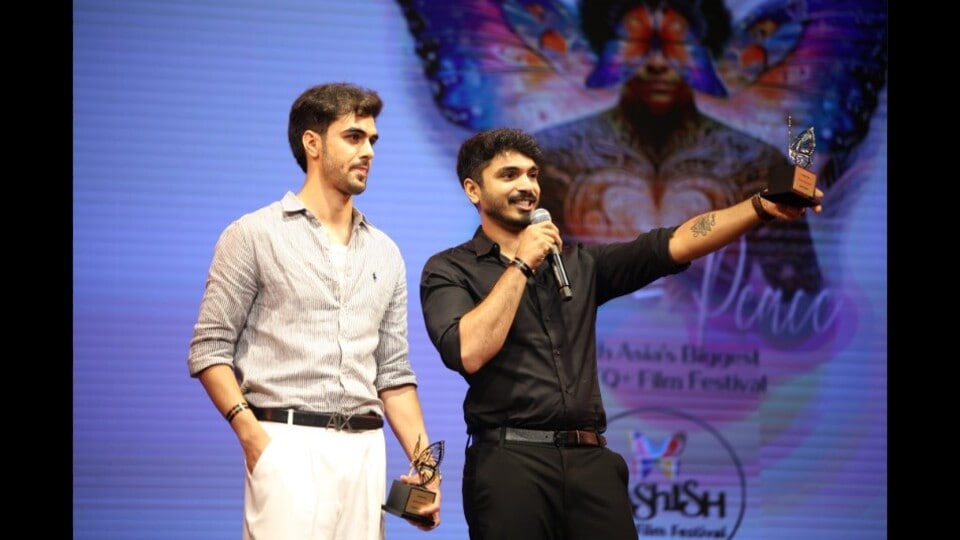
While the most visible face of queer political and creative expression is a pride march, Kashish Pride Film Festival reminds us every year that a gathering of cinephiles can also be a powerful forum for social change. Held from June 4 to 8 across three venues — Cinépolis in Andheri, St Andrew’s Auditorium in Bandra, and Alliance Française at Churchgate — it enabled audiences from various parts of the city to enjoy the festivities.
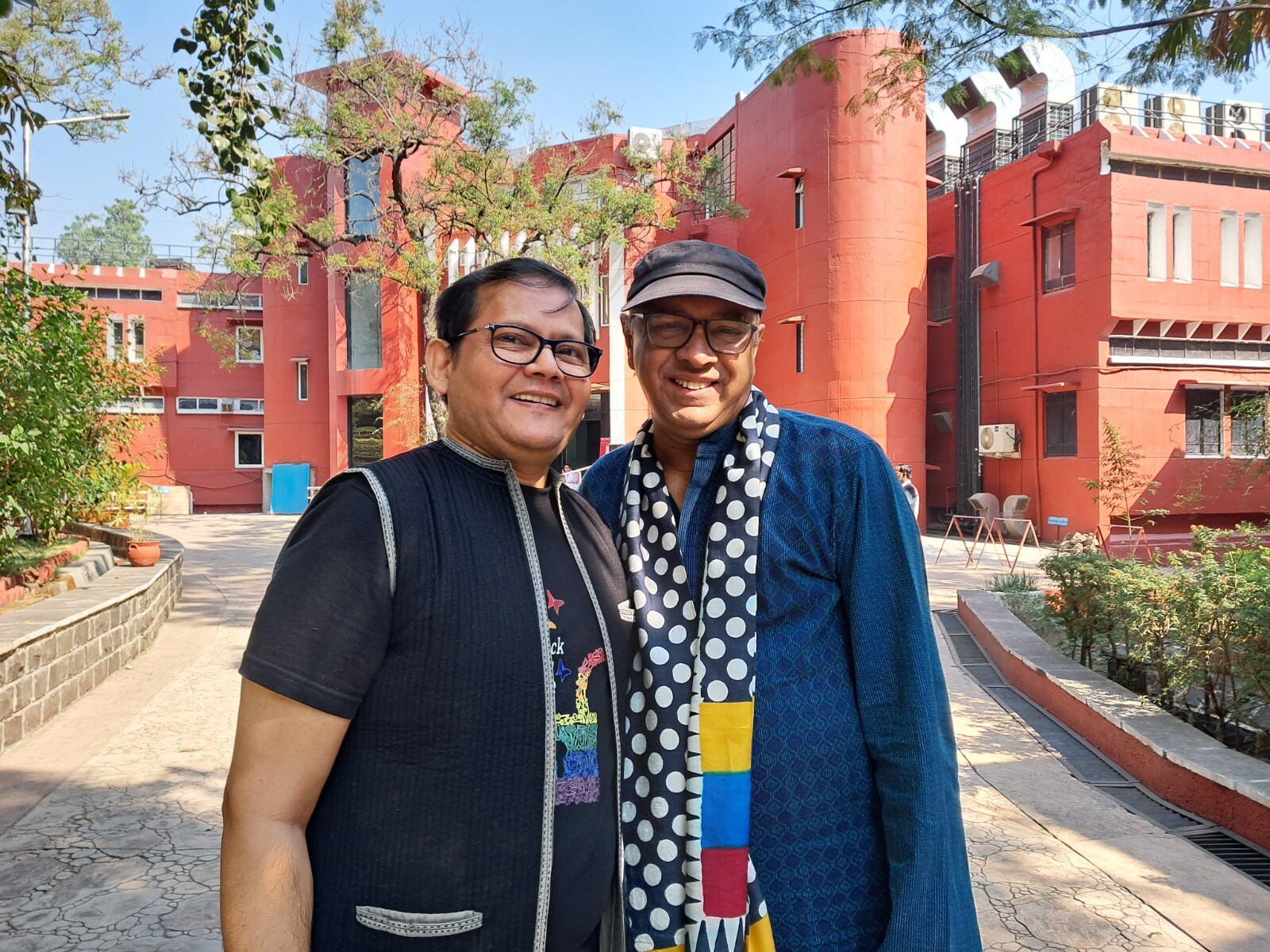
Sridhar Rangayan and Saagar Gupta, who have been partners for three decades and had also approached the Supreme Court of India as petitioners in the marriage equality case, are the driving force behind the festival. “With the backlash against queer rights everywhere in the world, there is a serious funding crunch but we are grateful to everyone who believes in our cause for stepping forward and supporting us,” said Rangayan, who is the festival director.
Gupta, Kashish’s artistic director, added, “Catering to Indian sensibilities, and exposing local audiences to international cinema are equally important objectives. We have been able to provide a platform to several emerging Indian filmmakers and also screen films from Spain, Germany, Iran, USA, Serbia, Peru, Uzbekistan, Nigeria, Iceland, Greece, Bhutan and more.” The line-up included 152 films from 48 countries, and 12 competition categories.
Dalit non-binary filmmaker Shoi’s documentary Project Priyo endeared itself to audiences by looking at how caste shapes people’s experiences of gender and sexuality. For Shoi’s protagonists, intersectionality is not a buzzword to be thrown about in academic discussions; it is an integral part of their lives. Shoi said, “I am a queer person from the Chandal community in Krishnanagar, West Bengal. I did not grow up seeing people like myself on screen, so this film came from a selfish space.” The work uses quotes from Audre Lorde and bell hooks, emphasizing the history of solidarity between African American and Dalit activists.

Onir’s new film We Are Faheem and Karun pushed audiences to think about the impact of armed conflict on queer people in love. Set in a village near the India-Pakistan border in Kashmir, it depicts how a security officer from Kerala and a tour guide from Kashmir find a place in each other’s hearts. Like all epic love stories, it seems doomed from the start but that does not keep these young men from giving their love a chance. One of them is a Muslim, and the other is a Hindu. Faith is an important part of their lives. It gives them strength but never becomes an issue between them. Political turmoil is what keeps them apart.
Another film that struck a chord was Abhijith P’s documentary I Am Revathi, which focuses on the life of trans activist A Revathi who works with Bangalore-based NGO, Sangama. In the film, she talks about her guru, chelas and guru bhais in the hijra community as well as the violence she faced from her uncle during her transition, and sexual assault faced at police stations. Most importantly, the film celebrates her loving relationship with her dog Rocky.
During the discussion after the screening, Revathi said, “A supportive family is the foundation of a person’s well being. If parents stand up for their children and love them no matter what, no one else can dare to lift a finger or say something that is out of line.” She also appreciated the director of the film for his commitment to telling her story. “He is not from our community but he has done so much. He has put in his own money because he believes that our issues are worth talking about. His wife sold her jewellery to contribute,” she said.
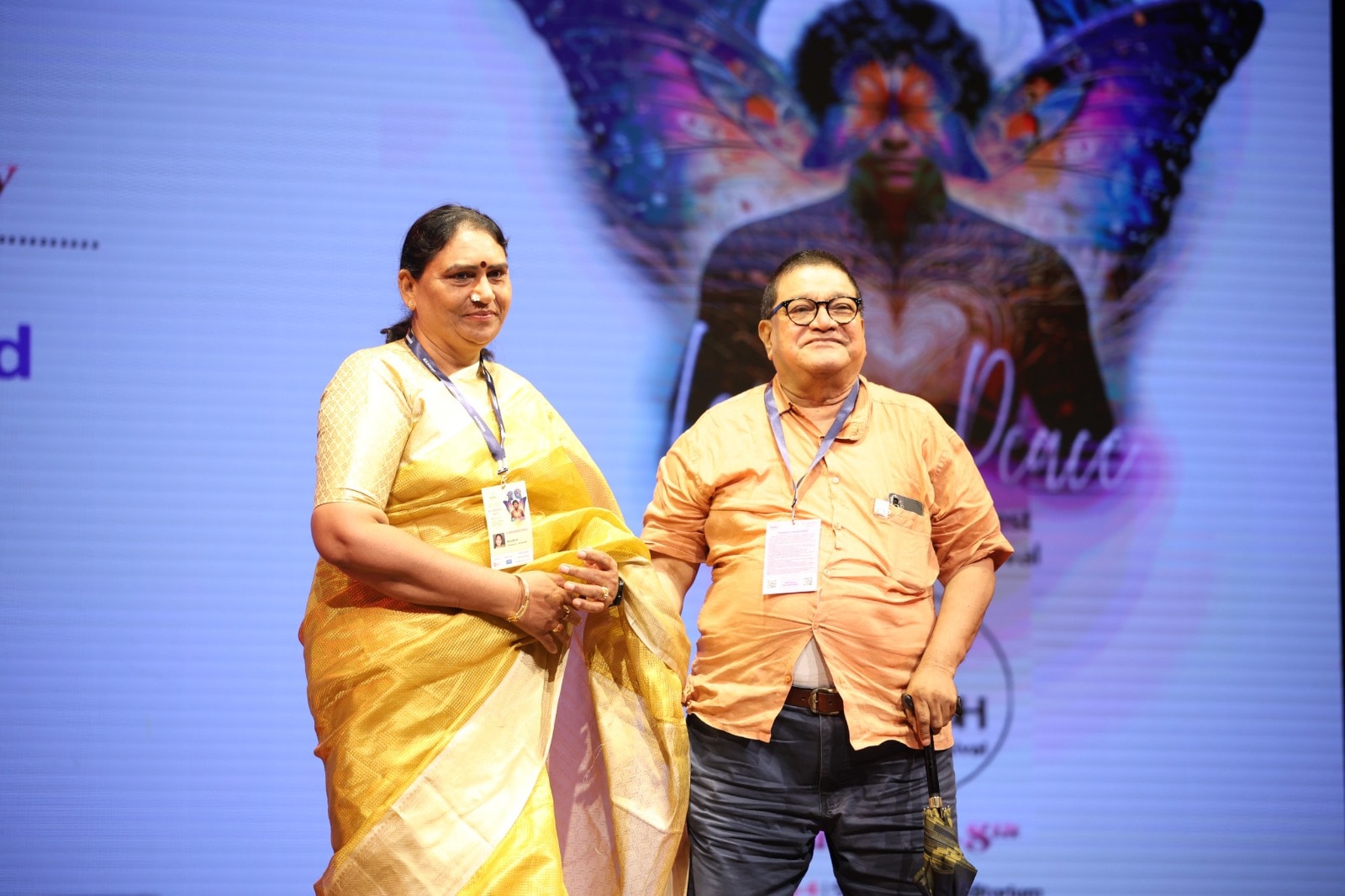
Sunita Malpani’s short film Because also made an impression because of its refreshing storyline. While there is nothing new about a queer relationship where one partner is out and the other is closeted, what sets this film apart is its portrayal of disability without equating it with lack. Here the able-bodied person is the one who is anxious and filled with self-doubt. The film also dives into the emotional complications that can arise when people want to take their relationship a step further, and also introduce their partner to their family.
On the international front, Irish filmmaker Darren Thornton’s film Four Mothers offered a humorous take on the relationship between four mothers and their queer children, who are all adults with lives of their own in addition to care duties at home. A novelist, who is about to go on a book tour to the United States, discovers that his friends have flown off to Spain for Pride celebrations. Apart from making arrangements for his own mother, he is supposed to look after their mothers too. It is tough to keep up with their demands but he cannot lose his cool.
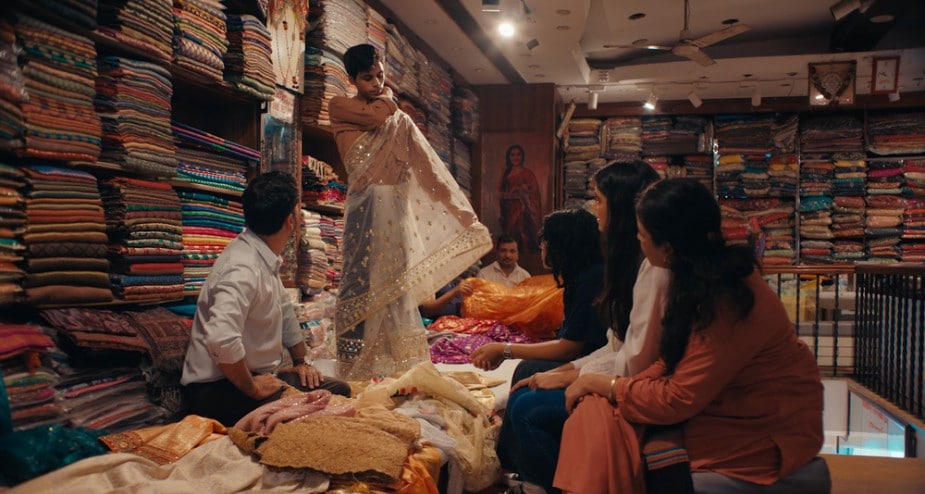
American filmmaker Shruti Parekh’s short Zari stood out for exploring how queerness, far from being a Western construct, thrives across cultural contexts. In this film, a young American queer woman of Indian origin visits India for a wedding. She detests being asked to wear a sari because it means conforming to gender norms upheld by her mother and sister. When she is dragged to a sari shop, she meets a salesman who models saris for customers. Later, she finds out that he is also a drag artist with a large social media following. Through this film, Parekh challenges the power dynamics that exist in queer spaces. Queer people from North America and English-speaking urban queer Indians often assume that those who do not have the same cultural capital and access are in need of liberation from their wretched existence. Here, the Indian salesman helps the privileged American woman gain confidence.
Sebastian, directed by Finnish-British filmmaker Mikko Mäkelä, was also worth watching. Here, a young writer moonlights as a sex worker to gather research for his debut novel. Switching between these two professional identities is not as smooth as he would like it to be. The film highlights questions of safety and consent in queer sexual encounters, especially when they are paid for. Moreover, it also persuades viewers to think about the possible perils of being unable to set professional boundaries not only as a writer but also as a sex worker.
Japanese filmmaker Satoko Nagamura’s documentary Two Moms showcased the personal journeys of lesbian couples who have chosen to be mothers with the help of assisted reproductive technology. The filmmaker herself is a lesbian navigating the joys and challenges of parenthood in Japanese society, which places a high premium on conformity.
Speaking of parenting, Bhutanese filmmaker Karma Jerry’s feature film Aum Penjor revolved around the relationship between a transgender singer who performs at clubs, and her adopted child. In a society where her own gender identity is lived out in the margins, she finds in herself the ability to care for another life. The abandoned baby whom she welcomes into her home helps her discover the maternal instincts that she never imagined she had.
After watching wholesome and authentic queer cinema at Kashish, it is hard to return to mainstream Bollywood and Hollywood fare that engages in tokenistic representation and the censorship of queer sexuality. The festival is a community space where queer people come to be themselves, wear clothes they like without fear of being bullied, forge new friendships, share meals, applaud queer creativity, and sing and dance.
There were panel discussions on casting trans actors in trans roles, queer youth and mental health, and on the depiction of the community in mainstream popular culture. Queer filmmaker and podcaster Ashish Sawhny said, “Deepa Mehta’s Fire was banned because people thought the institution of marriage would crumble if audiences saw queer characters. We have seen straight characters for so many years; it is a miracle that we haven’t turned straight yet.”
This kind of sassy banter made the festival a fun-filled space. Lauren Robinson aka Toto, a non-binary actor who acted in the web series Mismatched, drew attention to the lack of mentorship for people like themselves in the film industry and also spoke up about the prevailing lack of imagination among filmmakers. “I am non-binary. I want to play male and female roles too. Instead of assuming that I can play only a limited number of roles, they should think creatively about how to use make-up and costumes to expand the range of possibilities.”
It was heartening to see acclaimed filmmakers like Guneet Monga, Payal Kapadia, Aruna Raje Patil, Devashish Makhija, Vikramaditya Motwane, Anand Patwardhan, Bishakha Datta, Renuka Shahane, and Tanuja Chandra, show up as advisors, jury members and allies.
Filmmaker and educator Viveck Vaswani, an advisory board member at Kashish, said, “We need a lot more people from the Hindi film industry to stand with us. Moral support is not enough; we need movie stars to open their wallets and back the festival with money.”
It would also be great if straight and cisgender actors who have played LGBTQIA+ characters do the bare minimum and give back to the community.
Chintan Girish Modi is a journalist, educator and literary critic. He can be reached @chintanwriting on Instagram and X.


