
 E-Paper



Review: Audition by Katie Kitamura
Full of subtle tension, carefully observed ambiguities, and prose that is fluid yet precise, the Booker-shortlisted novel lays bare the deep vulnerabilities of an artist’s mind

 Prefer HTon Google


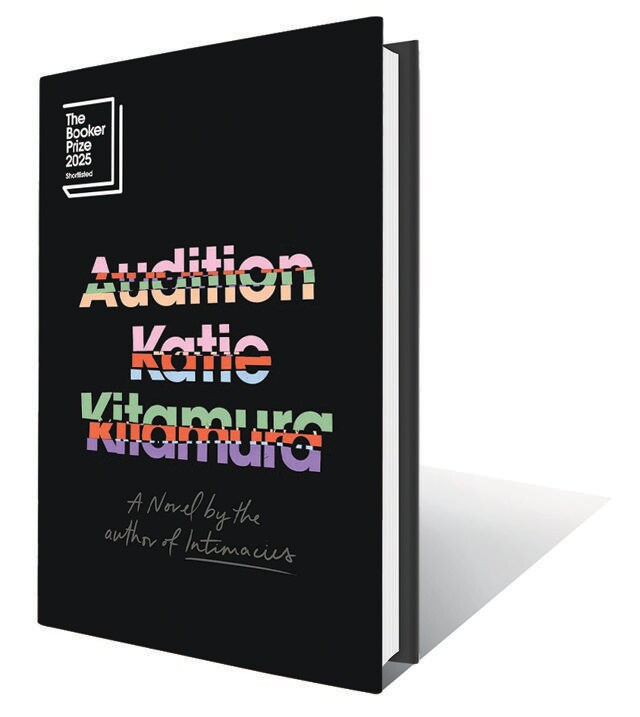
Katie Kitamura’s Audition, shortlisted for the 2025 Booker Prize, is a novel that is at once intimate and disorienting. Set against the New York theatre scene, it follows an unnamed actress, an accomplished performer in rehearsals for an upcoming play, who meets a younger man, Xavier, for lunch. This encounter, charged with ambiguity, spirals into a subtle exploration of identity, desire, and the parts we perform — for ourselves and the world.

When Xavier asks her out to lunch, her initial response ripples with undercurrents of forbidden desire. She is married to Tomas, and the encounter with Xavier complicates the boundaries of her personal and emotional life. As the story progresses, the interactions between them unfold with an almost imperceptible tension. Their conversations, shadowed by ambiguity, reveal as much about her inner life as they do about the world she inhabits.
The subtle tension and carefully observed ambiguities are part of the continuity of Kitamura’s work. Throughout her books — particularly A Separation and Intimacies — she has continually explored the delicateness of human relationships and the complex web of perception and identity. Audition carries these threads further, weaving them with even more precision and intensity.
Written entirely through the actress’ point of view, Audition oscillates between the external events of the plot and the intricate workings of her inner mind. Despite being monologue-y, it doesn’t stagnate, as Kitamura offers readers access to the actress’ mind. Her ruminations on her craft and her career, her observations of her interactions with Xavier, her shared history with Tomas, give readers a taste of what it’s like to be someone whose life is shaped by performance.
Halfway through, the novel shifts: almost like the second act of a play, the same characters appear, yet they are performing a different story. Xavier’s claim from the first half — that the actress might be his mother — resolves differently, reframing past events. This doubling sharpens the novel’s preoccupation with performance. Kitamura reconfigures the actress’ circumstances to show how identity can be easily rewritten, reframed, or even performed just with changes in the context. This repetition unsettles, and then Audition becomes as much about the act of storytelling as it is about characters, blurring desire, memory, and essentially “role-play” into one another.
Kitamura’s prose is fluid yet precise as she lays bare the deep vulnerabilities of an artist’s mind. Her sentences are measured, intentional and often trail into slippery ambiguities. Her writing, paired with the lack of quotation marks and standard dialogue markers, creates an unsettling prose that almost forces the readers to interpret the text themselves. While this may feel daunting to some, it unfolds as a rewarding challenge; the kind which seasoned lovers of literary fiction are willing to take on.
The cool, almost clinical, precision of the writing paired with the actress’ almost-detachment from her life heightens the sense of interiority. It gives a bird’s-eye view of the narrative while simultaneously plunging the reader into the actress’ mind. Instead of resolving questions, Kitamura layers them, leaving space for multiple interpretations.
Theatre serves not merely as a backdrop but as the novel’s central metaphor. The rehearsals, the repetitions, the constant observation, mirror the actress’ role in her real life. Every interaction — be it with Xavier, Tomas, or even herself — becomes a kind of audition, a trying and testing of new identities. Kitamura blurs the stage and life until they’re indistinguishable, thus performance being the only form of truth available. The two-half structure adds to this; Kitamura leans into theatrical mechanics — repetition, substitution — making the narrative feel like a staged performance. The climax explodes into a conclusion which is as fitting as it is disorienting.

Reading Audition feels less like following a plot than getting pulled into a current. It destabilizes the senses and pulls the reader into a rhythm that is hypnotic and, at times, suffocating. The prose begins to feel like stage directions, guiding the reader into a performance that is intimate and leaves you disoriented. Yet, this disorientation is what makes the book exhilarating and memorable.
Audition lingers long after the last page is turned. It ultimately reveals to us how fragile are the selves we present to the world, and how easily they can be rewritten. Its emotional charge and daring makes its presence on the 2025 Booker Longlist deserving.
Rutvik Bhandari is an independent writer. He lives in Pune. He is a reader and a content creator. You can find him talking about books on Instagram and YouTube (@themindlessmess).


