It may seem a contradiction in terms but change, in itself formless, is what changes all animate and inanimate forms. Change manifests itself in everything from materials, products, systems, institutions, processes and thoughts to relationships and emotions. From Heraclitus to Einstein, enquiries into change revealed diverse perspectives with each insight reaffirming the inevitability of change. In the contemporary world, change has helped individuals restructure their lives in order to ‘be the change you want to be’.
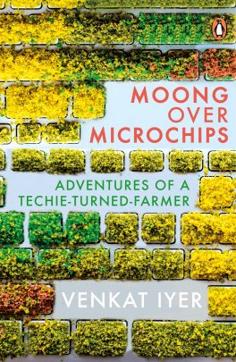
For software engineer Venkat Iyer, change meant a planned shift from a self-imposed fast-paced stressful urban existence to a more relaxed rural setting where time is plentiful and his life has a more nuanced meaning. The resolve to seek peace in a space he could call his own took root about 14 years ago and he moved to another world just hundred kilometers away from Mumbai. Convinced that a transition alone could not cleanse him of the city, he sought to be close to nature. Since farming alone couldn’t give him the equivalent of the monthly pay cheque he was used to, he was compelled to transform his consumerist lifestyle.
Iyer’s story is insightful and reflective and shows how personal resolve can answer the question of responsibility that comes tagged along with change. The responsibility towards self, society and surroundings can be intense and can generate much empathy for humans and other living creatures, including slithering reptiles. It soon became clear that the organic way of life was bringing back a lot of creatures to the farm. Even the colorful rooster did not need an official invite to join the flock of hens. Nature was in awe of itself, celebrating each new arrival.
The reader might wonder if such romanticism can last long, and whether ascetic living could be the new normal. Venkat relocated fairly easily despite having to battle people and their prejudices. Once he became part of the social milieu, he took support from the locals and extended cooperation to them too. The transition from managing microchips to cultivating moong was promising; harvesting 300 kgs of the common lentil as the first crop was a major morale booster.
{{/usCountry}}The reader might wonder if such romanticism can last long, and whether ascetic living could be the new normal. Venkat relocated fairly easily despite having to battle people and their prejudices. Once he became part of the social milieu, he took support from the locals and extended cooperation to them too. The transition from managing microchips to cultivating moong was promising; harvesting 300 kgs of the common lentil as the first crop was a major morale booster.
{{/usCountry}}Watch: Moong Over Microchips, Hyderabadi recipes and a graphic novel - all this on #Bookstack.
Moong Over Microchips is full of incidents and encounters, each teaching the author and the reader something new about human behaviour amidst challenging adversities. Curiously, the spectre of an economic imperialism that phrases everything in economic terms is yet to hit the countryside, where goodwill can still be the mode of intangible transaction. The old lady in the tribal hamlet of Boripada bartered the near-extinct Kasbai rice seeds for a pittance, unaware of the immense contribution she was making towards preserving the country’s biodiversity. Such humble contributions will eventually count in the progress of the nation.
It was clear, though, that his farm harvest alone would not make Venkat laugh all the way to the bank. But what did make him smile was the joy of seeing the seed he had planted push out of the soil. That he could grow most of his daily needs on the farm was satisfying too. All this may sound abstract for those who take the gloom and doom of the city for granted and pay a heavy price for it. They are unlikely to be moved by the idea that there is value in living under the open sky, amidst nature, with friendly pets, and consuming homegrown vegetables. Perhaps this is because, for many, anger and anxiety have overpowered love and sensitivity.
During times when farmers are being driven to suicide, this story may seem outwardly romantic and far-fetched. However, Iyer’s story is actually about his attempt to transform his stressful lifestyle and the grit it takes to make that idea work. That he found in farming a way to salvation is only an indicative possibility. The author’s message is that one can easily live without several things that are considered ‘essential’ by the market. A life emptied of avoidable materials and products can indeed provide value-added returns, devoid of any depreciation.
Read more: Review: Mother Earth, Sister Seed: Travels through India’s Farmlands by Lathika George
For those taking a hard look at where they are headed, Moong over Microchips offers a list of prerequisites that must be taken into account before they take the plunge. Another world is out there waiting to be explored for self amelioration. However, much will depend on what happiness means to the individual, and what price he or she is willing to pay to attain it.
Sudhirendar Sharma is an independent writer, researcher and academic.