From journalism to judiciary and from police to Parliament, do you see a trend of partisanship getting rewarded and excellence punished? In Under Cover; My Journey into the Darkness of Hindutva, AshishKhetan walks you through such a dystopia in the making.
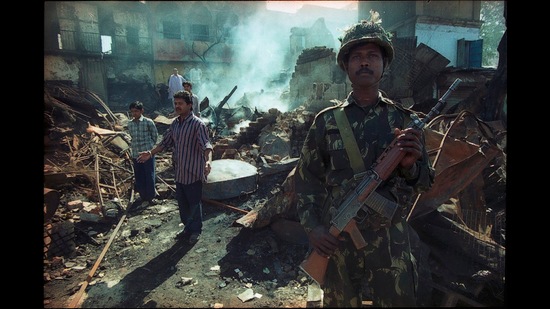
He shows, through a series of sting operations, that it takes decades of work to infuse hostility and create an ecosystem of fear, discord, and meek mediocrity. Once the groundwork is done, absurdity can strike anyone in the face, anytime. It is possible, for instance, that routine people savagely react one day to something distant and oddly unconnected. The judge, the prosecutor, and the defence lawyer can sometimes gang up to punish the victim or sabotage the trial. It is equally likely that the cops staging a daylight murder are rewarded handsomely and an honest investigator gets reprimanded or removed.
Khetan’s book is not ideal bedtime reading, but a sad thriller nonetheless. It is like a reality show whose characters we recognize. You sit up when he brings out the real, horrid stories behind news stories we have known. You meet people who muse over tea and snacks about how they hacked fellow human beings. Some recall committing rape and mutilation in the presence of family members. The stories are assembled through daring undercover operations backed by a few adventurous editors without whom these would not have been possible.
{{/usCountry}}Khetan’s book is not ideal bedtime reading, but a sad thriller nonetheless. It is like a reality show whose characters we recognize. You sit up when he brings out the real, horrid stories behind news stories we have known. You meet people who muse over tea and snacks about how they hacked fellow human beings. Some recall committing rape and mutilation in the presence of family members. The stories are assembled through daring undercover operations backed by a few adventurous editors without whom these would not have been possible.
{{/usCountry}}Parts of the book have been reported in Tehelka and shown on TV exposes. The author revisits them to connect the dots to conjure up the larger picture of the politics of hate surrounding us today. It uncovers the shadowy world of messy local politics, of bigots and slumlords, in Gujarat and beyond. These are stories of conceit and deceit, the pragmatism of religion, and miscarriages of justice. Many have led to convictions of high-profile individuals despite the police not doing their job.
Khetan invades the world of Babu Bajrangi, the prime accused in the Naroda Patiya massacre, in which over a hundred Muslims perished. Bajrangi concedes that the state’s leadership had a firm grip on the riots. He is blasé about arranging 23 revolvers bang in the middle of the riots. His associates marvel at having the police on their side while rioting. Out on bail, he said he had only two enemies, Muslims, and Christians. Bajrangi spent his free time abducting or snatching Hindu girls from their Muslim husbands. He claimed to have “rescued” 956 such girls. Each of these numbers is a human story never written. Bajrangi applauds the state’s leadership but laments that the VHP bigwigs pocketed funds raised in the name of Hindus.
In the Best Bakery case, in which a mob of Hindu zealots burnt alive 14 people, Khetan shows how the justice system was gamed. His stings reveal that the public prosecutor had dropped key witnesses, exhibited wrong documents as FIRs, failed to protect star eyewitnesses, and aided in turning witnesses hostile. Above all, he establishes that the deceitful prosecution was more of a rule than an exception. He quotes a comment by the Supreme Court, “…When fences start to swallow the crops, no scope will be left for survival of law and order, and truth and justice.”
The book begins with a biographical note, about his early life and humble background, and climaxes with his escapades at Tehelka. There may be questions around the ethics of sting journalism or why he hones in on Hindutva but the mysteries he solves are priceless. He shows how the Hindutva project makes examples out of liberal thinkers and artists. Noteworthy is the case of sculptor Chandramohan who was hounded and denied his degree for imagined acts of blasphemy. It is through the Hindutva project that Khetan tracks BJP’s rise to power from Gujarat to Delhi. The last part of the book is devoted to the deep state running shadowy networks for the manipulation of minds and institutions.
Ashish Khetan believes that the deep state was perfected in Gujarat through persistent trials. The playbook includes suspected snooping on rivals — both within and outside the party — bureaucracy, judiciary, media, and even private individuals of interest to the rulers. Could it be coincidental that today’s phone tapping scandal is believed to be a deep state manoeuvre? And that is why the book is not about the distant past but a portrayal of our journey to the present. Like a rough guide to India’s democracy and where we are headed.
Vipul Mudgal heads Common Cause, a civil society watchdog.