
 E-Paper



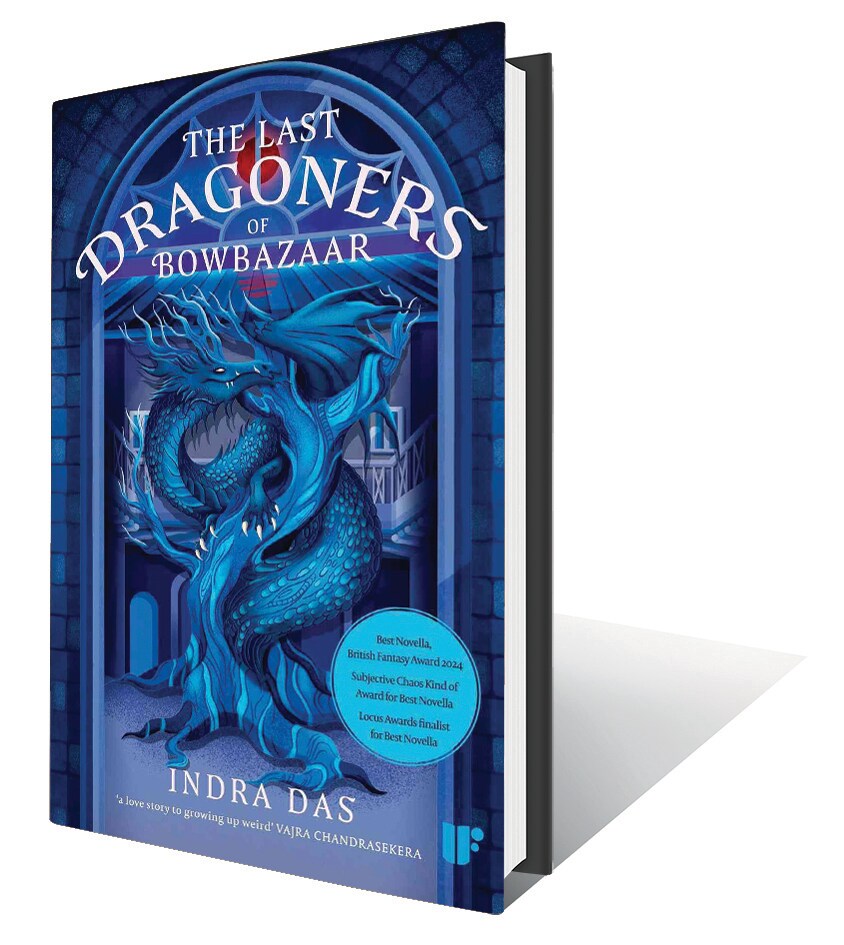
Review: The Last Dragoners of Bowbazaar by Indra Das
The award-winning fantasy novel with queer undertones that examines identity and belonging instantly sucks in the reader with its evocative and dreamlike prose

 Prefer HTon Google


Originally published in the US in 2023, this is the moving coming-of-age story of Ru (Reuel George) who stood out at St Lorenzo School of Boys in Calcutta because of his unusual name, his Chinese-Naga looks, and his inability to conform to an ethnicity or religion. His classmates called him “the snake from nowhere”.
Ru’s parents find it difficult to dodge their son’s questions regarding their identity, or comprehend the impossibility of him being a nobody in a world stamped with ethnicities and religions. Their answer – that the Georges were “nomads” – did not help much. Ru continues to be a boy from “nowhere”.
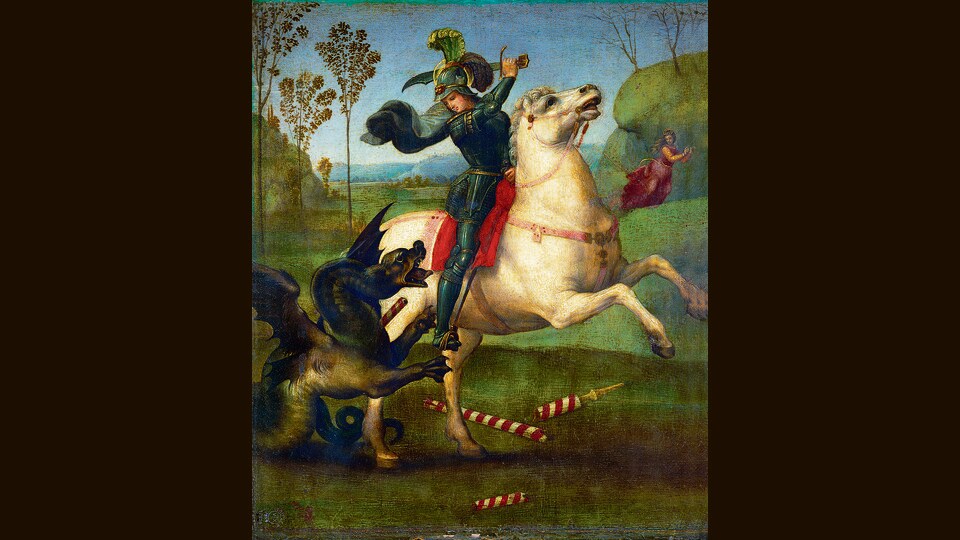
His mother tells him to remember that he is an “Indian”; his father, a one-time novelist with an impressive collection of fantasy fiction, emphasises that names do not belong to religions and that they are descendants of St George, who once slew a dragon.
The St George connection is empowering and after punching an Anglo-Indian boy in school for hurling racial slurs at him, Ru announces that his family descended from dragon-killers. This was his “currency for respect” at 11. Just then, his parents decide to pull him out of school.
He settles into home tutoring, still wanting to understand the mysterious origins of his secretive family, who spoke the “fire tongue”, had no relatives or visitors, and keep some rooms, in their old-style large house in Bowbazaar, locked.
When he persists, his parents tell him that even if they shared the family’s origins, Ru would not believe them. At other times, he is treated to his mother’s you’ll-get-a-slap and his fiction-writing father’s humourous spin on their ancestry.
Meanwhile, his parents carry on with secretive activities at home – such as maintaining huge aquariums with sleek black dragons or drakes, or treating themselves to dragon platters, or the one time when he sees his mother take a mouthful of kerosene and lick a drake with her glowing tongue of fire.
When Ru witnesses such surreal events, he is made to have “halahala” – the Tea of Forgetfulness. He challenges his mother once, “Why won’t you let me remember?” Her reply: “You deserve to be real in this world. It’s not an easy thing to be stuck between worlds.”
Nevertheless, Ru was badly stuck, till Alice is invited to his 13th birthday. Alice’s parents, the Chens, who lived in Chinatown, run the Crystal Dragon restaurant from the ground floor of the Georges’ sprawling home. Alice and Ru become thick friends, bonding over being othered at school for having “narrow eyes”. Both experienced identity conflict and discrimination and found it difficult to navigate their cultural differences and assimilate in school.
Alice forces Ru out of his cocoon and shows him Calcutta’s cafes and bookstores. In her company, Ru drops his pretences, allows her to see the family’s treasures, and ponders over his nowhereness. He also lets her read the half-charred copy of The Dragoner’s Daughter, written by his father, which contains important clues to who the Georges were and where they came from, and gifts her a dragon tooth pendant, which his grandmother had once got in exchange for a hundred drops of her own blood.
When Alice mistakes Ru’s grandfather’s portrait as his grandmother’s and tells him that Ru (with his long hair, which she once tied up for him in a scrunchie) would be a “totally pretty girl”, he isn’t offended. “…there wasn’t much difference between men and women in our culture. They would just be the same, and sometimes men were pretty, and women were handsome or had beards…” he explains to her.
The book’s queer undertones are unmissable: Ru’s grandmother, Didima, tells him that his grandfather was a girl when they first met. “The serpent knows no gender…,” she says as she coaxes him to drink the Tea of Forgetfulness.
The concoction did not make Ru forget. On the contrary, he remembers every single detail such as his trip to another dimension, sandwiched between his parents when he was about four years old. Other experiences came back to him as visions. He dreamt of serpents and dragons, and a world where the sky and sea were one.
READ MORE: Interview: Indra Das, author, science fiction and fantasy novels
“How much halahala courses through my veins, churned by serpents in our garage? How much forgetfulness have I drunk at my parents’ behest, to protect me from our impossibility?” an adult Ru, who carries many fragmented memories, thinks to himself as he struggles to make peace with the gnawing awareness of his complex origins.
The Dragoners of Bowbazaar won Indra Das the British Fantasy Award for best novella. He is also the Lambda Literary Award winner for his debut novel, The Devourers (2015), and a Shirley Jackson Award winner for his widely acknowledged short fiction, which has appeared in various publications.

Das’s prose is evocative and dreamlike and instantly sucks in the reader even though the subject matter is fantastical.
My favourite sentences are: “She tsked and beat the bed harder than before, raising a cloud of motes that defined the light from the window, and framed her like a charcoal drawing…” and “It hurt the eye to look at the egg – a fractal shimmer gave it a spiralling depth, as if it held an infinite curling staircase within its spherical shape, an unhatched Fibonacci spiral hiding gelatinously within its shell”.
The novel examines identity crises and othering by focussing on the second-generation immigrant experience of Ru, a young person with north-eastern features, whose winged dragon family, quite literally, landed in Calcutta, from an unknown dimension of the universe.
This is a wonderfully haunting and a highly recommended read.
Lamat R Hasan is an independent journalist. She lives in New Delhi.


