Three plays. Three short autobiographical sketches, another two translated excerpts, all held together by a masterful essay that delves into the lives of India’s historically condemned communities that continue to bear the brunt of colonial-era laws that demarcated social groups based on flawed ideas of hereditary criminality. This comprises the slim-yet-impressive Vimukta, the first such collection of creative texts on communities that were criminalised 150 years ago by the Criminal Tribes Act.
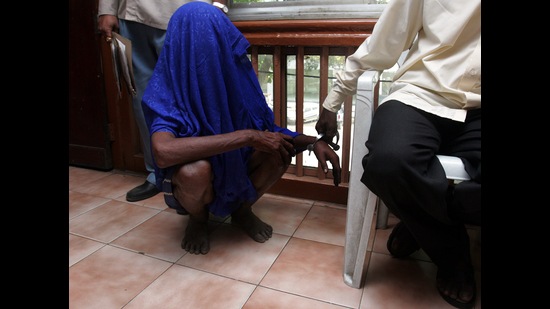
Edited by Daxkin Bajrange and Henry Schwarz, the book offers powerful, if somewhat unevenly translated, texts as vignettes of the life of these communities in post-Independence India. It shows how, decades after those laws were repealed, the country’s policing and criminal justice systems continue to view these communities as hereditary criminals. The reverberations of caste are loud as policemen and politicians are seen using caste logic to condemn communities based on prejudice, which itself originated with a flawed understanding of crime.
The book refuses to glide past stereotypes and, instead, chooses to tackle them head on, and explore their genesis. Who is considered a criminal, and what does he look like? What are considered suspicious professions, who are condemned to a life of precarity so that they remain perpetual targets of law enforcement personnel, and who can exercise a right of ownership on property, land, body and self?
Many of the sketches and excerpts are in first person, and often wrenching – even the ones that don’t deal with graphic accounts of violence. In one memorably-translated text from Gujarati novelist Dhruv Bhatt’s Timirpanthi, the mother of a young nomadic boy displays no emotion when her elder child is beaten to death by the guests at a wedding on the suspicion that he stole money – the child’s parentage seals his fate in the eyes of the upper-caste aggressors. The wretchedness of the system has been etched into the minds of the tribespeople, so much so that the father exclaims, “Our boy’s life was destined to come to an end; he would have died some other way if not this.” The father’s helpless resignation to the prejudice that undermines his community’s dignity and condemns members to a less-than-human life serves as an indictment of legal strictures and socio-moral codes.
{{/usCountry}}Many of the sketches and excerpts are in first person, and often wrenching – even the ones that don’t deal with graphic accounts of violence. In one memorably-translated text from Gujarati novelist Dhruv Bhatt’s Timirpanthi, the mother of a young nomadic boy displays no emotion when her elder child is beaten to death by the guests at a wedding on the suspicion that he stole money – the child’s parentage seals his fate in the eyes of the upper-caste aggressors. The wretchedness of the system has been etched into the minds of the tribespeople, so much so that the father exclaims, “Our boy’s life was destined to come to an end; he would have died some other way if not this.” The father’s helpless resignation to the prejudice that undermines his community’s dignity and condemns members to a less-than-human life serves as an indictment of legal strictures and socio-moral codes.
{{/usCountry}}The book, however, is not about darkness. The editors are careful to infuse their narratives with dignity. A short autobiographical excerpt talks about the tribal leader Bhimrao Jadhav, who fought to denotify the so-called criminal tribes after independence and lobbied the government to tear down the barbed-wire fences that the British erected around their villages to demarcate them as criminals. An actor from the Chhara community talks about how she built her career on stage, and her dreams of nurturing young talent from her community. A young filmmaker tells his story of domestic strife and professional commitments, detailing how his parents were forced into bootlegging, and how that led to the tragic death of his father. Yet, he is hopeful. “I am a bright and successful documentary filmmaker, and not too bad a person, if I may say so myself,” he says.
I wondered whether the editors thought of including more regions in their anthology, and expanding beyond Maharashtra, Gujarat, West Bengal and Andhra Pradesh; also, if they considered including poetry in the eclectic mix. As such, the collection is a little heavy on plays – after all, the stage is the strength of Budhan Theatre, the best-known example of these communities taking charge of the narrative and talking about their lives. But it is a happy coincidence. The plays are among the best translated pieces in the book, and are vividly rendered. I hope that the editors also consider including translations of pieces by denotified communities from West Bengal in future collections.
My favourite part of the book was its closing play – Budhan – based on a real-life incident in West Bengal in 1998 when a man, Budhan Sabar, was beaten to death by the police in Purulia district on the mere suspicion of theft. The play lays bare the perverse logic of shifting the burden of criminality on the most vulnerable communities and how they are unable to escape the trap of suspicion, prejudice and violence that ensures their precarity. Budhan’s death also shows how the criminal justice system continues to be based on the logics of caste and hereditary criminality that benefit dominant communities. As the ghost of Budhan asks towards the end: “Did my crime lie in the fact that I was a Sabar? Are we second-class citizens?”