
 E-Paper



Shloka Shankar: “Nothing is more fulfilling than being a literary midwife”
The founding editor of Yavanika Press on running an independent digital publishing house for chapbooks of poems, collections of prose, and hybrid writing

 Prefer HTon Google


What does Yavanika Press present a response to?
As far as I’m aware, there aren’t too many publications or presses in India that provide a home for chapbooks. The focus has always been on anthologies and full-length collections. Chapbooks are less daunting and easier to put together, even for writers in the early stages of their careers. They also allow for deeper engagement with smaller collections, offering the gratification of reading them in a single sitting while still encouraging multiple readings of select pieces. Chapbooks are an excellent medium for exploring a focused theme and then moving on to something entirely different in a full-length work — or vice versa. There’s more scope for experimentation without the overwhelm.
You focus mainly on micro-poetry; are you also branching out?
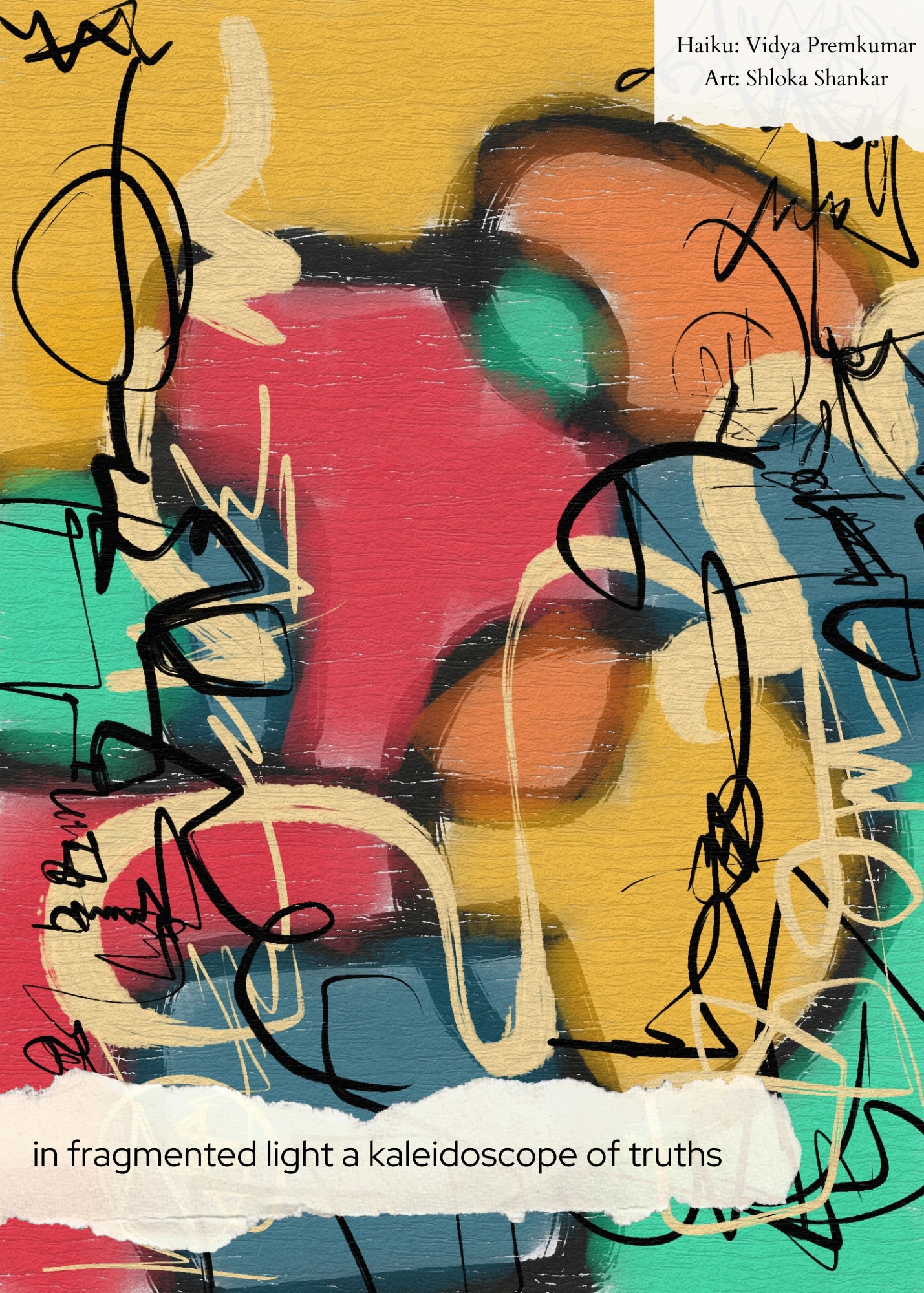
I founded Yavanika Press in 2018, and we began by publishing Japanese short forms, poetry, short prose, and mixed-genre chapbooks. In 2020, we introduced mini chapbooks, which contain 10 poems, all under 10 lines. We continued to publish poetry chapbooks — typically featuring 15-20 poems under 25 lines — until 2024, but we’ve now stopped publishing them entirely. We’d like to more categorically explore the potential of poems under 10 lines and see what people come up with. It never ceases to surprise, delight, and inspire us.
For longer forms of writing, we still offer short prose and mixed-genre options, including hybrids and the unclassifiables.
What spurred the decision not to use poems longer than 10 lines?
A major factor was time constraints and lack of staff. It takes significantly longer to thoroughly review poetry chapbooks and provide editorial feedback. The process often involves weeks of back-and-forth with authors to reach a consensus. Poems under 10 lines, on the other hand, have a magnetic pull that has always left me in awe. How can so much be conveyed in so few lines? Not a single word feels out of place, and there’s ample dreaming room in these pieces. We relaunched Sonic Boom after a two-year hiatus with a focus on poems under 10 lines, and carried that decision forward to the press as well.
Why do you specialise in publishing mainly e-books?
We are a small team of editors spread across different cities and countries. As a result, much of the production and execution is something I handle alone, with minimal support. I don’t have the bandwidth to manage the logistics of printing, distribution, shipping, and all the other processes that come with physical books. Additionally, a large percentage of our authors live overseas, and international postage costs continue to rise. I want readers to experience the thrill of downloading a chapbook they like and enjoying its contents straightaway.
What insights have you gleaned from this mode of e-publishing over the years?
It’s been especially exciting to launch first-time authors through Yavanika Press — Michelle D’Costa, Aswin Vijayan, Rahana K Ismail, and Vidya Premkumar, among several others. As I mentioned earlier, poets tend to feel more comfortable exploring different formats and are more willing to take creative risks. Another upside is working with editors to closely hone your poems and ensure they’re the best they can be — even if it means killing two or more darlings to improve the overall narrative or flow of the collection. Since each chapbook contains 15-20 poems, it’s crucial that the overarching theme is clear and resonates throughout. For me, the best part about editing is making those connections and sequencing the pieces with our authors to help bring their voice and vision alive on the page.
You mentioned how exciting it is to discover innovative work and to launch new writers. What other values do you attribute to your publishing work?
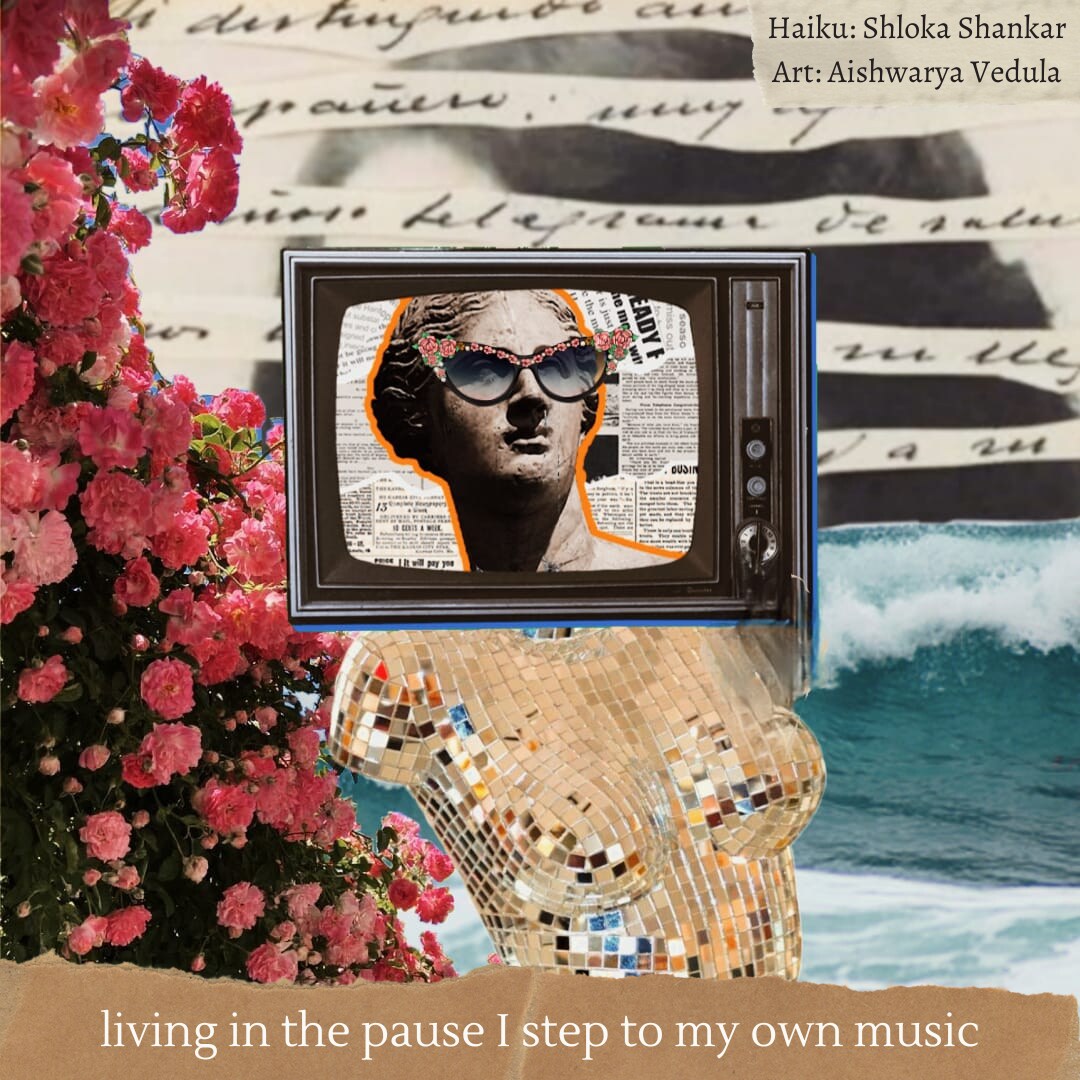
Yavanika Press is open to collaborative manuscripts, and we are especially interested in mixed-genre work. For instance, we published two ekphrastic chapbooks in 2024 and two haiga-only collections in 2023. We aim to provide an authentic space where writers feel comfortable enough to push the envelope each year.
You have, entirely without fanfare, published a lot of titles. How many have you brought out so far, and over what period? Are there any statistics on sales, downloads, site traffic, etc that strike you as interesting?
We brought out 85 titles between 2018 and 2024 (our reading period is currently open for this year). On average, we pick the top three chapbooks in each of our categories: mini chaps, poetry, Japanese short forms, short prose, and mixed genre. Some books do exceedingly well, some plateau after the first few months, and others have fewer than 10 to 15 downloads. We can’t always predict how well a book will do, but the onus of promoting it falls equally on both the author and the publisher.
Apart from genre, what considerations guide your selection of a manuscript? In what ways does your taste as a poet/writer come into play, if at all?
We’ve always had a penchant for showcasing fresh voices and perspectives, whether it’s someone’s first book or fiftieth. We look for attention to detail, craft, experimentation — works that disrupt our expectations. I try not to let my personal proclivities take over, but that’s impossible, given that every reading and decision is ultimately subjective. It helps that I work with like-minded editors, as well as those with differing opinions, so that we can make well-informed decisions as a team.
How is your approach to book design affected by the medium of digital publishing?
I don’t think it has been, really. In fact, it has made things supremely easy because I don’t need to fuss over margins, bleeds, and all the rest of it. Our aesthetic is clean, crisp, and minimal. All our titles are available as standard PDFs, accessible across multiple devices.
How would you describe the source of your drive to publish others?
Nothing is more fulfilling than playing the role of a literary midwife and helping someone bring their book to life. We don’t worry too much about sales since we’ve realised that a book’s reception is not entirely in our hands. What we can control is the quality of our e-chapbooks and our commitment to pushing the boundaries of what we find engaging, exciting, and thought-provoking. If it makes a difference to even one reader, our job is done.
The fact that we receive 30 to 50 chapbook submissions every year shows that we’re doing something right — and that people are willing to put their faith in us to produce a literary work of merit. That’s drive enough to keep us going.
You also founded and edit the literary journal Sonic Boom. How do the journal and the press fertilise each other?
Sonic Boom was founded in 2014, and Yavanika Press came later as a natural extension. We wanted to continue showcasing work that aligned with the journal’s aesthetic. Many of our journal contributors have gone on to publish their chapbooks with us, and we are eternally grateful for this cross-pollination.
How do you share sales proceeds with your writers?
We follow a royalty-sharing model of 20:80 (authors 20%, press 80%) for a period of two years, paid quarterly. Apart from a minimal submission fee, authors incur no other cost.
What are some of your future plans for Yavanika Press?
We plan to bring out a Best Of volume in print once we reach our first 100 titles. After that milestone, we may go on hiatus to refresh and regroup. It’s been a thoroughly enjoyable learning experience.
Suhit Bombaywala’s factual and fictive writing appears in India and abroad. He tweets @suhitbombaywala.


