Growing up in the 1970s-1980s, it was impossible not to engage with the endless variety of Sunil Gangopadhyay’s literary output. Starting his career as a rebellious young poet of the ‘Krittibaas’ group, he had moved seamlessly on to prose, producing a clutch of fine short stories and then his first novel Atmaprakash (Self-Revelation) in 1965, which signalled a new note in Bengali fiction.
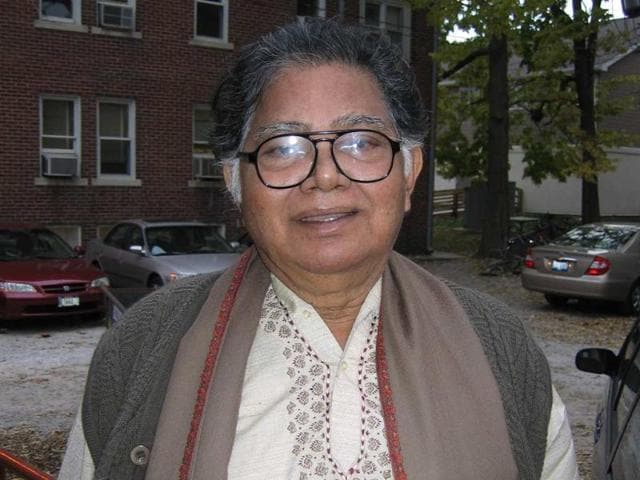
Of all the literary gifts Sunil possessed, perhaps the most enviable one was his ability to write lucid, seemingly effortless Bengali prose that was much imitated by tyro writers but proved devilishly difficult to reproduce.
But it was Sunil’s poetry that achieved the most instant connect with Bengali adolescents. His love poems addressed to ‘Neera’, in particular, had the ability to crystallise a certain moment and mood in our collective growing-up. His compatriot Shakti Chattopadhyay, on the other hand, struck an elusive and elliptic lyric note that needed more maturity and training to unlock.
Sunil’s poetry was urban and irreverent, and lent itself easily to the Bohemian myth-making, which appears to have been cultivated consciously by the Krittibas group. Much of this material found its way into Sunil’s poetry and prose, most famously in his novel Aranyer Dinratri (Days and Nights in the Forest), adapted to film under the same name by Satyajit Ray.
In the 80s, Sunil moved more magisterially into prose when he started serialising a massive two-volume chronicle of 19th century Calcutta. The novel, Shei Somoy (Those Days), was a sprawling, carnivalesque romp through what was arguably the most interesting times in the history of the city. Though faulted by pundits for its insufficient historical rigor, it was immensely readable with a set of unforgettable characters. Sunil produced two more such grand chronicles, Pratham Aalo (First Light) and Purba-Pashchim (East-West), but they did not possess the narrative zest and energy of Shei Somoy.
{{/usCountry}}In the 80s, Sunil moved more magisterially into prose when he started serialising a massive two-volume chronicle of 19th century Calcutta. The novel, Shei Somoy (Those Days), was a sprawling, carnivalesque romp through what was arguably the most interesting times in the history of the city. Though faulted by pundits for its insufficient historical rigor, it was immensely readable with a set of unforgettable characters. Sunil produced two more such grand chronicles, Pratham Aalo (First Light) and Purba-Pashchim (East-West), but they did not possess the narrative zest and energy of Shei Somoy.
{{/usCountry}}In the same decade, Sunil – like many of his peers – tried his hand at children’s literature. He proved to be an instant hit with his ‘Kakababu and Shontu’ stories with its eponymous mystery-solving uncle-nephew duo, two of which – Bhoyonkor Sundar (Terrible Beauty) and Sobuj Dwiper Raja (King of the Green Island) – can hold their own against adventure stories in any language. Another classic was Jaladasyu (Pirate), a swashbuckling story set in Bengal during the times of the Portuguese.
From the 90s, Sunil’s writing began to show signs of fatigue and over-production. By then, many of us had outgrown our adolescent loyalties to Sunil and moved on.
But the sense of grief at his passing seems to indicate that we need to acknowledge our debt to Sunil Gangopadhyay and to his alter ego, the footloose Nillohit, who forever boards a train for Dikshunyapur, the city of lost directions.