Former FICCI chief Naina Lal Kidwai on Thursday expressed surprise at the fiscal projections in the interim Budget as Union finance minister Nirmala Sitharaman said India will reduce its budget gap sharply in 2024-25 to 5.1% of gross domestic product (GDP).
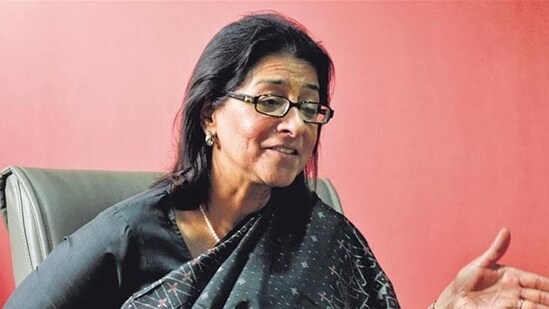
Many anticipated a commitment to maintain the fiscal deficit at 5.3%; however, the government's announcement of a tighter deficit target of 5.1% caught observers off guard. This move, Kidwai noted, exceeded original expectations and the levels accepted by the markets.
“The budget was a bit of a surprise because many of us were expecting a commitment to stay with the fiscal deficit at 5.3%... The government has announced a fiscal deficit of 5.1%, which is even stricter than what they had originally indicated and which the markets had readily accepted,” she told ANI.
Expressing curiosity and caution, Kidwai questioned the basis on which the government projected robust revenues to sustain the 5.1% deficit target.
“We don't know on what basis they believe that the revenues will be good and healthy enough to enable the fiscal deficit at 5.1%. Because on the other hand, there has been no scaling back of capital expenditure,” she said.
Kidwai, however, hailed the increased cap-ex and reduced fiscal deficit target as two significant positives emerging from the budget.
{{/usCountry}}Kidwai, however, hailed the increased cap-ex and reduced fiscal deficit target as two significant positives emerging from the budget.
{{/usCountry}}Prime Minister Narendra Modi's government resisted the temptation of spending trillions of rupees on schemes for the poor in its last budget before elections and instead stuck to the path of fiscal consolidation to attack investors.
"In this budget, capital expenditure has been raised to a historic high of 11.11 trillion rupees ($133.90 billion), while keeping the fiscal deficit in control. To put it in the terms of economists, this is a sweet spot," Modi said after the budget presentation.
The fiscal consolidation will help the Indian government to make a stronger case for a higher sovereign credit rating in the coming months, economists said. S&P and Fitch rate India at BBB-, while Moody's rates the South Asian country at Baa3, the global ratings agencies' lowest investment grades.