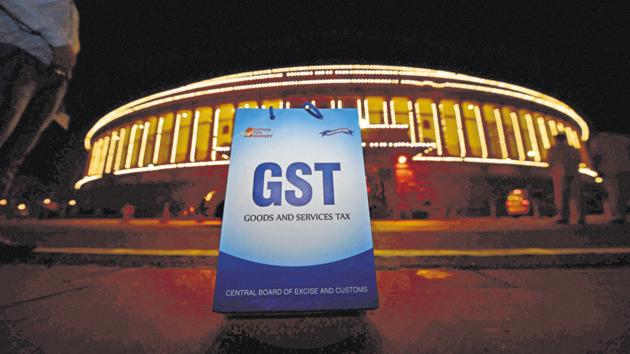
The Goods and Services Tax (GST) was passed in a joint session of parliament on 1 July, 2017. It is the biggest tax reform in the history of the country. GST’s rollout abolished a plethora of regional taxes and ushered in a unified indirect tax regime across the country. This change was expected to cut red tape, facilitate movement of goods and services across state borders and widen the tax base by bringing erstwhile evaders into the system via the input tax credit radar. It was a radical reform.
Reforms of the scale of GST require a political compromise in our federal structure. This was especially true for state governments, which were surrendering most of their fiscal autonomy. To compensate for this sacrifice, the centre guaranteed 14% annual growth in taxes collected by the states in 2015-16 for a period of five years, ending in 2022.
As it turns three (on July 1), GST faces many challenges. The most important of these is its ability to meet expectations of higher revenues. GST collections have failed to meet budget targets in 2018-19 and 2019-20. The Centre’s GST collections in 2018-19 and 2019-20 were only 78% and 90% of budgeted targets. Budget Estimate (BE) figures were revised downwards from Rs 7,43,900 crore in 2018-19 to Rs 6,63,343 crore in 2019-20. Even the 2020-21 BE figure is Rs 6,90,500 crore. This suggests that the centre initially overestimated GST’s revenue generation capacity. To be sure, some of this was also on account of a slowing of economic growth (but more on this shortly).
GST rates have been changed many times in the GST Council. Finance minister Nirmala Sitharaman herself termed this as a big problem while speaking at the HT Leadership Summit in December 2019. “I am not saying that people did it (reduced rates) thoughtlessly, but in the enthusiasm to reduce taxes, that framework which was originally agreed at stage one of GST was distorted”, Sitharaman said, explaining that lowering the tax rate impacted the input tax credit and transferred more taxes to the buyer. A Reserve Bank of India report on state finances corroborated Sitharaman’s point. Against revenue neutral rate of 15.3% which was recommended by the Arvind Subramanian Committee, weighted average GST rate has been falling continuously and was just 11.6% in July and September 2019.
{{/usCountry}}GST rates have been changed many times in the GST Council. Finance minister Nirmala Sitharaman herself termed this as a big problem while speaking at the HT Leadership Summit in December 2019. “I am not saying that people did it (reduced rates) thoughtlessly, but in the enthusiasm to reduce taxes, that framework which was originally agreed at stage one of GST was distorted”, Sitharaman said, explaining that lowering the tax rate impacted the input tax credit and transferred more taxes to the buyer. A Reserve Bank of India report on state finances corroborated Sitharaman’s point. Against revenue neutral rate of 15.3% which was recommended by the Arvind Subramanian Committee, weighted average GST rate has been falling continuously and was just 11.6% in July and September 2019.
{{/usCountry}}Receipts are bound to suffer in this context.
Finally, the Indian economy has also been caught in a slowdown in the post-GST period. The Covid-19 disruption to the economy will only complicate these challenges. The adverse effect on GST collections due to the slowdown and Covid-19 inflicted lockdown and subsequent economic contraction will create a big problem as far as fulfilling the Centre’s guarantee of ensuring 14% growth in state taxes is concerned. Constitutionally, the centre is committed to providing for this shortfall. This has triggered discussions on market borrowing to make these payments.
States have been expressing their concerns about timely settlement of GST claims even before the Covid-19 disruption. HT reported in January this year that certain states demanded real-time access to GST data to help compensate for their revenue shortfall. After settlement of all claims, IGST should be equally distributed between the Centre and states.
With difficulties on the revenue front likely to increase, Centre-state tensions may get worse. This could trigger a discussion on inclusion of one important tax head which has been kept out of GST, namely petrol and diesel. Currently, petrol and diesel are outside the ambit of the GST and both the Centre and states levy their own taxes.
While states are entitled to a share in basic excise revenues, the centre has been keeping back windfall gains from lower crude prices by increasing taxes under special excise duties and cess, which is not to be shared with states. For example, out of the Rs 32.98 per litre of excise duty on petrol in Delhi, only Rs 2.98 per litre was basic excise duty. State VAT was Rs 18.56 per litre.
If crude oil prices continue to be low for a long period, which is likely given the global economic situation, we might see a demand for inclusion of petrol-diesel prices under GST, although this could mean states give up their rights to levy their own Value Added Tax on fuel, an equal distribution of petroleum revenues could help state finances.