The Goods and Services Tax (GST) Council on Monday failed to arrive at a consensus on borrowing to meet the revenue shortfall of ₹2.35 lakh crore in the current financial year, paving the way for a majority of states to start borrowing from the market, even as some dissenting states indicated they would weigh legal options.
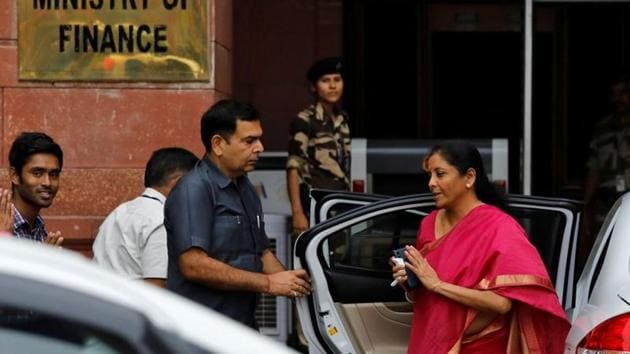
Briefing reporters after the meeting, council chairperson and Union finance minister Nirmala Sitharaman late on Monday said: “We were not able to arrive at a consensus.” She added that neither the Centre nor the council could stop states from borrowing if they chose so.
She said that the majority of states were willing to borrow, and the Centre was committed to facilitating them. An official present at the meeting said on condition of anonymity that 21 states opted for the first borrowing option of ₹1.1 lakh crore. Ten states rejected the borrowing plan, and insisted that the Centre should borrow the entire amount, compensate states fully for their GST shortfall and repay the loan from the compensation cess levies on sin products and luxury goods.
“Union FM’s announcement that she is going to permit 21 states to borrow as per Option One is illegal. Option One involves deferment of compensation payment beyond 5 years for which a Council decision is necessary as per AG’s opinion. No such decision has been made in the Council,” Kerala finance minister Thomas Isaac said in a series of tweets after the meet. “It is unfortunate that Union FM [Sitharaman] does not propose a decision in the Council or even make a statement what she is going to do but choose to make the announcement in the press conference. Why does Centre refuse to take a decision in Council? Total disregard for democratic norms,” he added.
{{/usCountry}}“Union FM’s announcement that she is going to permit 21 states to borrow as per Option One is illegal. Option One involves deferment of compensation payment beyond 5 years for which a Council decision is necessary as per AG’s opinion. No such decision has been made in the Council,” Kerala finance minister Thomas Isaac said in a series of tweets after the meet. “It is unfortunate that Union FM [Sitharaman] does not propose a decision in the Council or even make a statement what she is going to do but choose to make the announcement in the press conference. Why does Centre refuse to take a decision in Council? Total disregard for democratic norms,” he added.
{{/usCountry}}The finance minister from another dissenting state said on condition of anonymity: “This is not good for cooperative federalism. The chairperson rejected our demand to evoke the dispute resolution clause provided in the GST Act. All options are open. Even dialogue is an option. It is unfortunate that the matter could not be resolved even after a series of matter.”
Monday’s was the third meeting of the council since August 27 (41st meeting), when the Centre gave two borrowing options to states to compensate them for the ₹2.35 lakh crore shortfall in their share of revenue from the indirect tax this fiscal year. Two days after the 41st meeting of the council, the Centre circulated detailed terms of the two borrowing options to states.
The first option allowed states to borrow only ₹97,000 crore (later raised to ₹1.10 lakh crore) on account of the GST implementation, but exempted them from paying either the principal or interest. Under the second option, states could borrow the entire shortfall of ₹2.35 lakh crore, which included revenue losses arising from the Covid-19 pandemic, but they would have to bear significant interest costs.
Option 1 provided for payment of interest and the principal from the compensation cess levied on luxury products and sin goods such as liquor, cigarettes, aerated water, automobiles, coal and tobacco products. In Option 2, only the principal was to be paid from the compensation fund. While 21 states communicated their preference for the first option, 10 states ruled by non-National Democratic Alliance (NDA) parties rejected the plan. Under this background, the 42nd meeting of the council took place on October 5.