
Sign in

Amitabh Kant asked ‘why India still developing, not developed nation'. His reply

Amitabh Kant responded with an explanation on the criteria used to determine a country’s development status.

Published on: May 21, 2024, 16:27:44 IST
Share
Share via
  • facebook
  • twitter
  • linkedin
  • whatsapp
Copy link
  • copy link

Former NITI Aayog CEO Amitabh Kant explained why India is still classified as a developing nation rather than a developed one despite being one of the top five economies in the world after he was asked about the same. Amitabh Kant was asked on X (formerly Twitter), “My question is simple and the question is why India is still not regarded as developed nation but developing nation despite being top five economies of the world. @amitabhk87.”
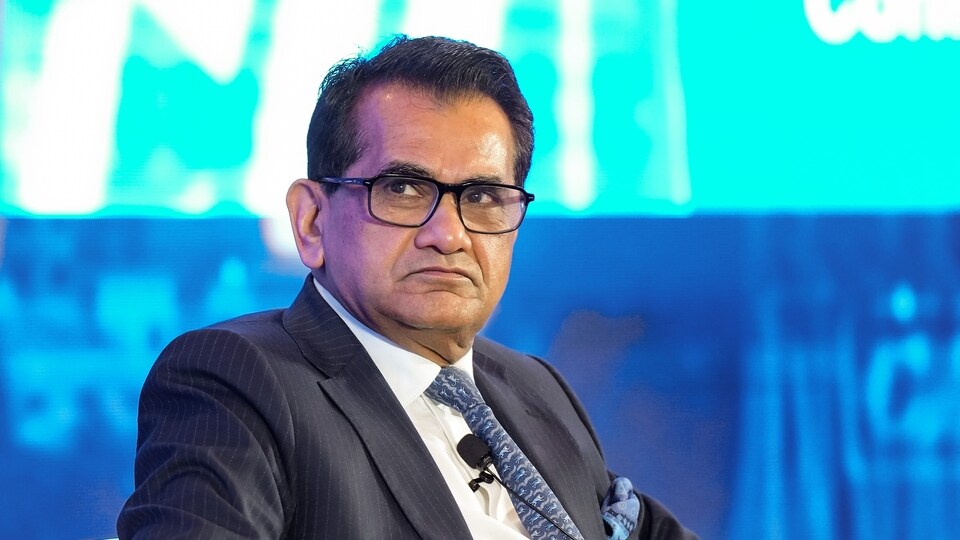
India's G20 Sherpa and former Niti Aayog CEO Amitabh Kant during the CII Southern Region Annual Regional Meeting 2024 and conference on 'Deccan Conversations: Accelerating Our Growth Story, in Bengaluru. (PTI)

Read more: Elon Musk is eyeing this India neighbour for Starlink internet service?

To this, he responded with an explanation on the criteria used to determine a country’s development status. He explained, "A developing country is technically a country where the Gross National Income per capita is $11,905 or less. Even China, Brazil & Malaysia are regarded as developing countries."

Read more: Prashant Kishor's stock market prediction: ‘If BJP fails to win 370 seats…’

This comes as Jefferies said that India's GDP is expected to reach $5 trillion in the next four years surpassing Japan and Germany. India will become the third-largest economy by 2027, it said, adding that India's stock market will grow to nearly $10 trillion by 2030, making it "impossible" for large global investors to overlook the country.

Read more: Harsh Goenka's 'have you met next PM?' post features an old photo of him with…

Jefferies noted, “Over the next 4 years, India’s GDP will likely touch $5 trillion making it the 3rd largest economy by 2027, overtaking Japan and Germany, being the fastest growing large economy with the tailwinds of demographics (consistent labour supply), improving institutional strength and improvement in Governance."

  • HT News Desk
    ABOUT THE AUTHOR
    HT News Desk

    Follow the latest breaking news, major developments and agenda-setting stories from India and around the world with the newsdesk at Hindustan Times. Operating round the clock, the desk brings together experienced editors, reporters and correspondents to deliver fast, accurate and contextual reporting across subjects that influence public policy, governance, business, society and international affairs. The HT News Desk covers politics, elections, government policies, the economy, business and markets, science and technology, the environment, law and order, infrastructure, education, climate issues and geopolitics, while closely tracking developments across states, institutions and global capitals. The team also leads coverage of major breaking news events, policy announcements, court proceedings, natural disasters, public emergencies and significant international developments. Reports published by the newsdesk are based on information gathered from reporters on the ground, official statements, government agencies, court records, regulatory filings, recognised institutions and other authoritative sources. Stories undergo editorial scrutiny and verification processes to ensure accuracy, fairness and relevance, and are updated as events evolve and additional information becomes available. Whether covering a key political decision in New Delhi, an economic policy shift affecting millions, a landmark court ruling or a major global event, the HT News Desk aims to provide readers with reliable, fact-based journalism that delivers not only the latest developments but also the context and analysis needed to understand their wider implications.Read More