E-Paper



Apple Got the Jump on Tariffs, Deciding Years Ago to Make iPhones in India
Tim Cook sought new factory locales outside China, a prescient move that along with a new $100 billion U.S. investment will shield the company—for now.


 Prefer HTon Google


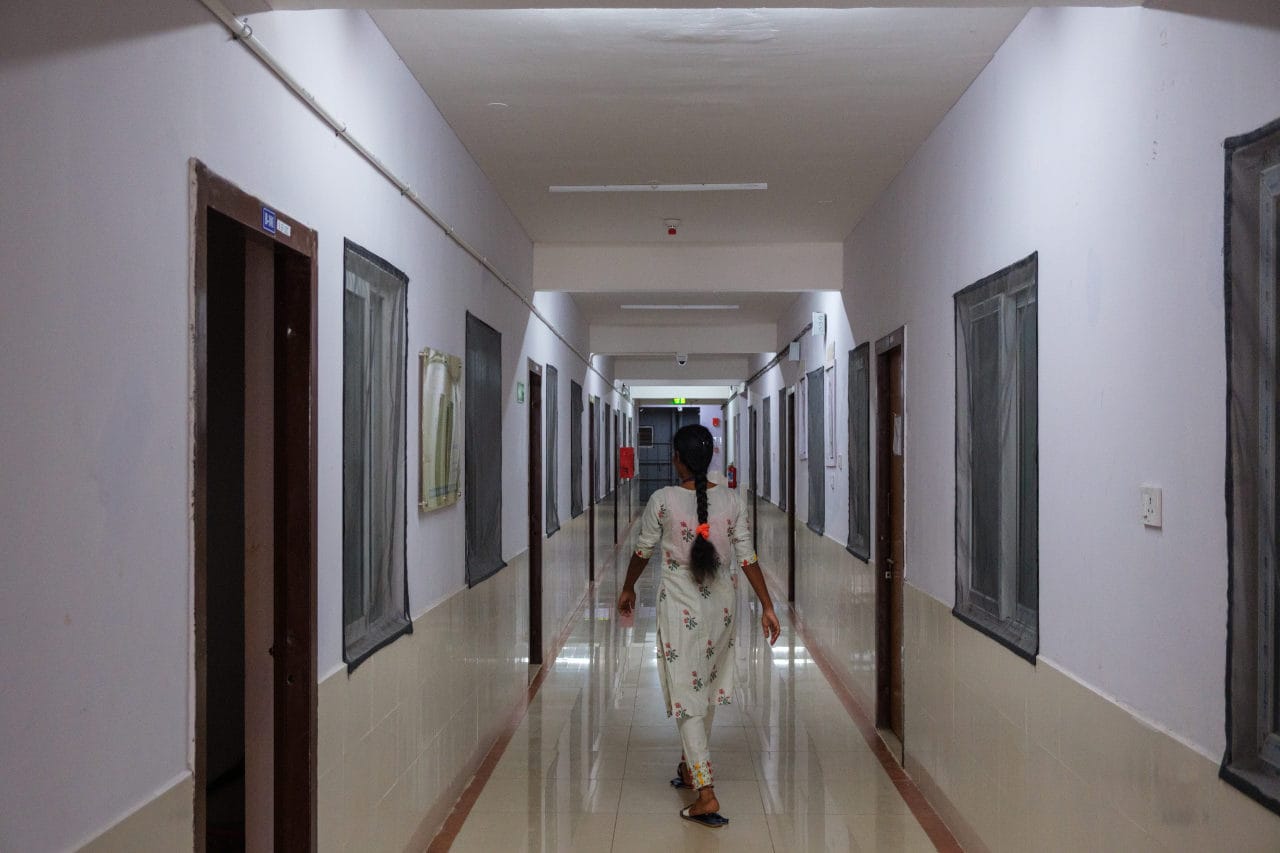
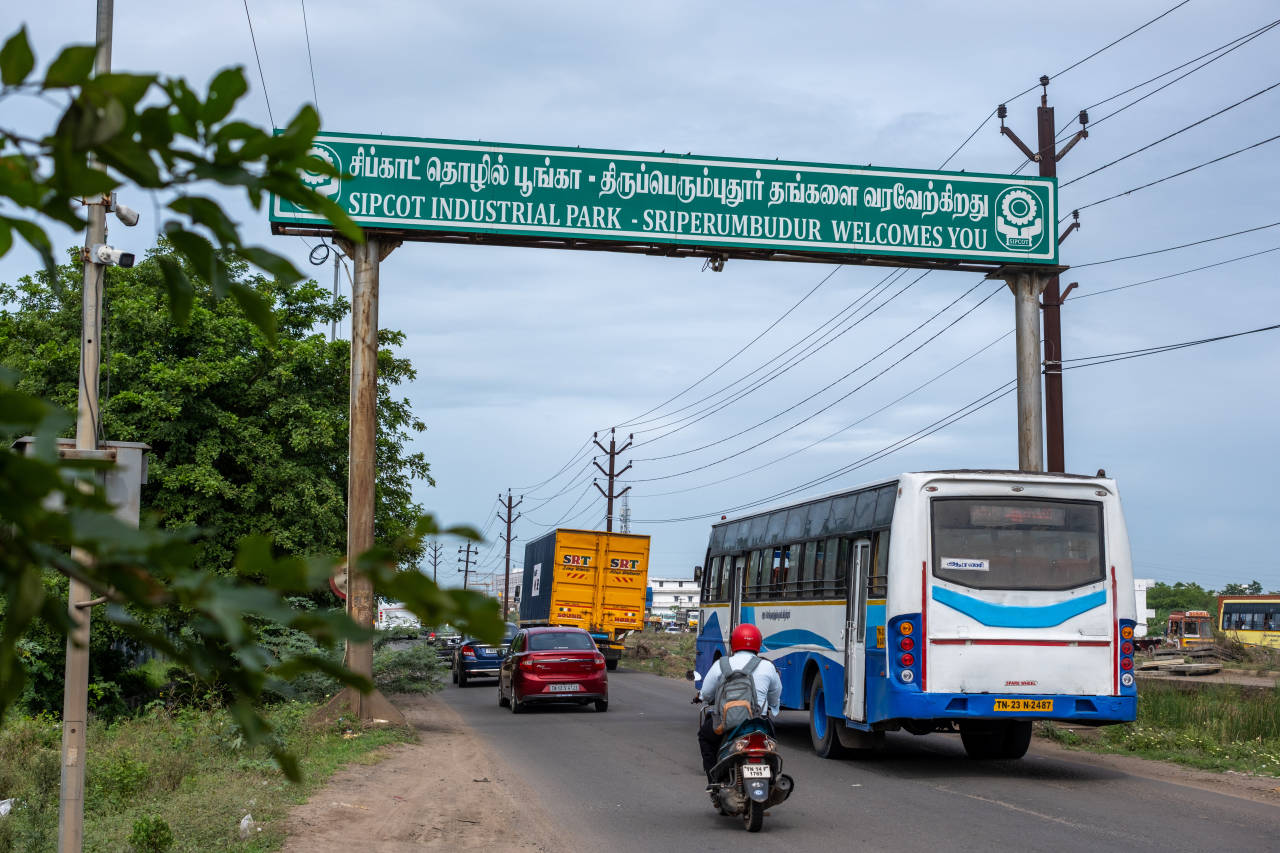
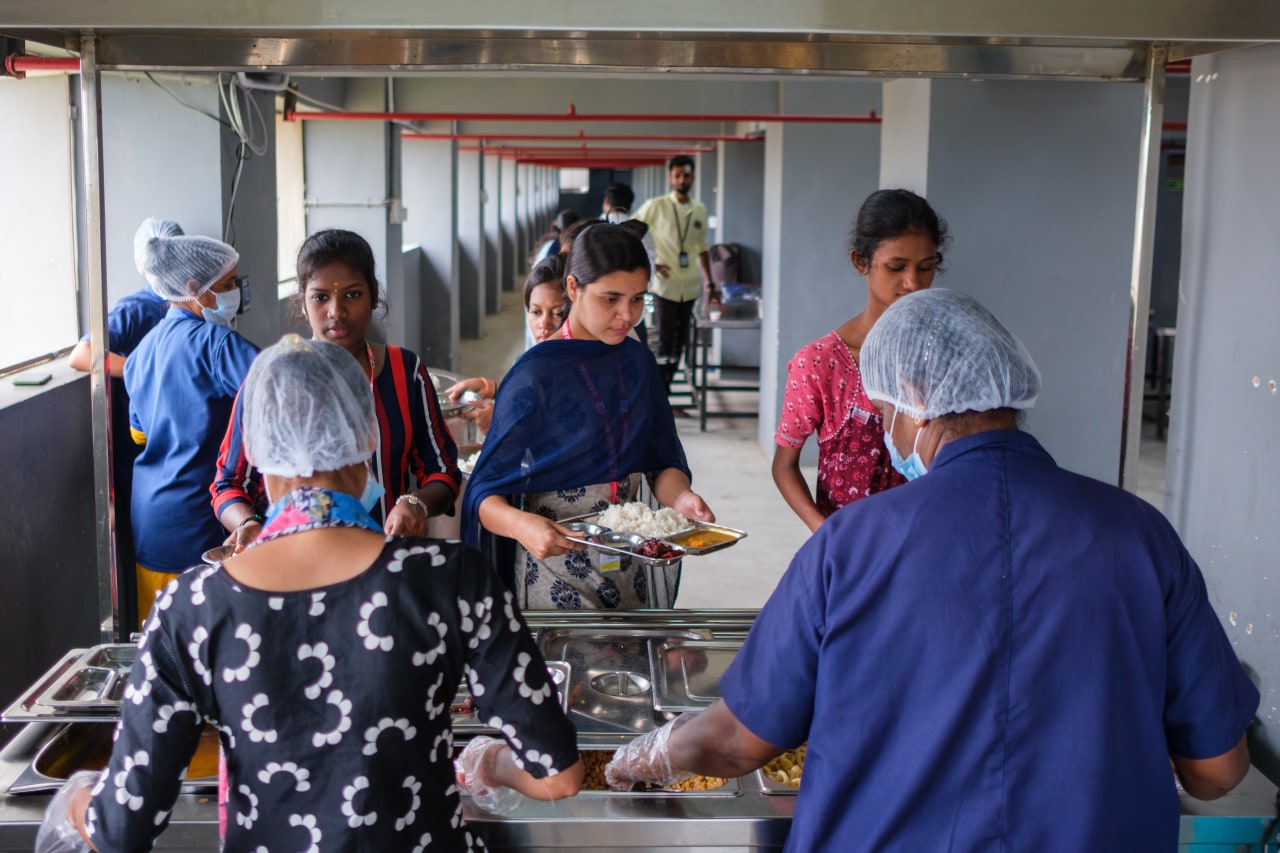
SRIPERUMBUDUR, India—Dozens of women wearing ID badges streamed from their rooms in a year-old dormitory for Foxconn workers and headed to a company cafeteria on a recent day for a menu of lentil-and-vegetable stew, beetroot and rice.
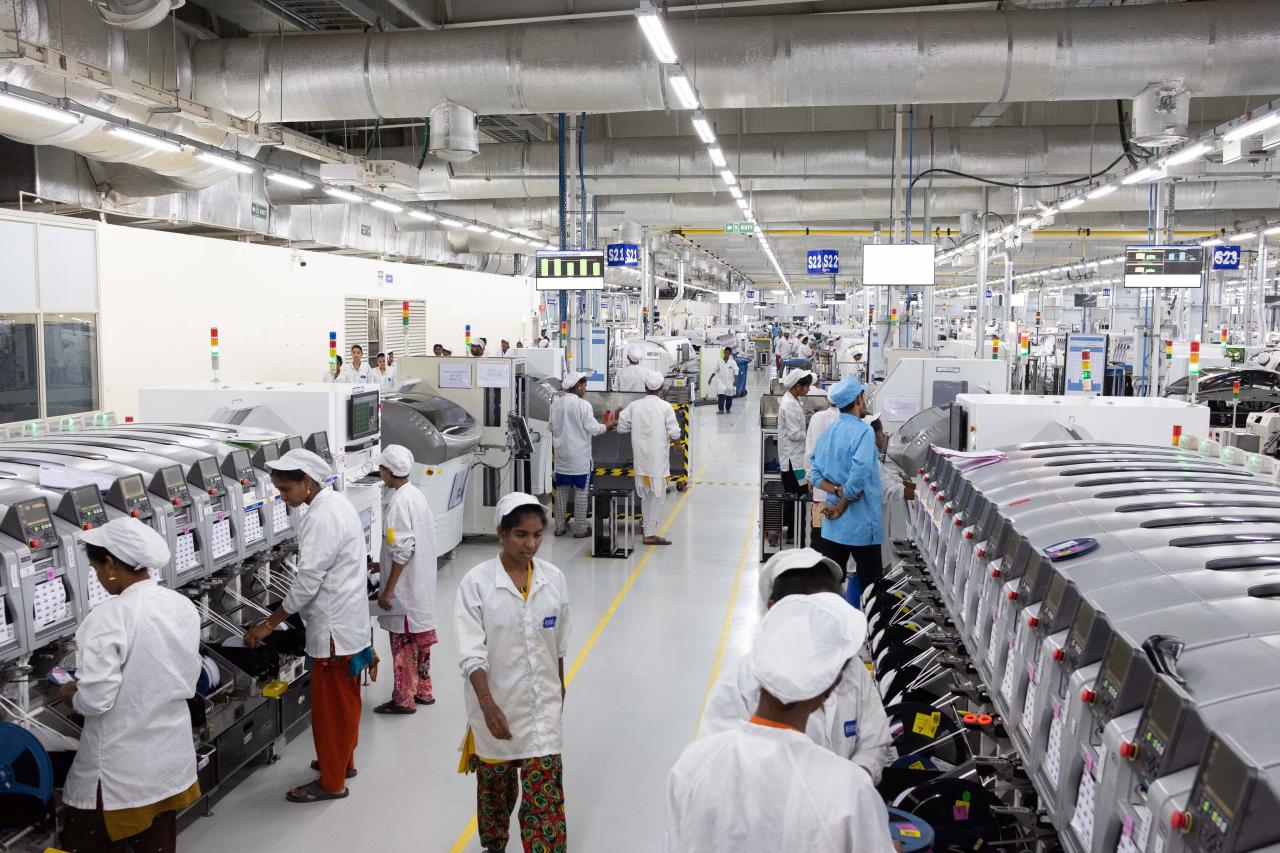
White buses waited outside to ferry them to a factory where the Apple contractor builds iPhones.
Women working on assembly lines in India form the backbone of a strategy Apple chief executive Tim Cook set in motion years ago. He first looked to boost Apple’s position in India’s growing smartphone market after sales in China slowed. Those early steps now leave Apple well-positioned for the intensifying trade rivalry between the U.S. and China.
A year after a 2016 meeting between Indian Prime Minister Narendra Modi and Tim Cook, the company began assembling iPhones in India on a relatively small scale. Apple next pushed suppliers to develop India as an alternative manufacturing hub when President Trump in his first term threatened tariffs on Chinese-made iPhones and, later, when the pandemic slowed iPhone production in China.
The company saw India as the only country outside of China that could assemble iPhones at adequate scale and competitive cost. India’s iPhone production capacity is expected to more than double when two new production centers gear up in the next two years. That will allow Apple to increasingly rely on India, instead of China, to supply iPhones to the U.S.
Cook said last week that most iPhones sold in the U.S. came from India during the April-to-June quarter. He didn’t elaborate on Apple’s long-term plans for supplying the U.S. The company, which declined to comment, reported iPhone revenue in the last fiscal year at $201 billion.
For years, Apple’s iPhone gold mine depended largely on Chinese manufacturing and sales. The creation of China’s iPhone supply chain over the span of two decades is widely seen as Cook’s greatest business achievement. It helped the company wring trillions of dollars of value from its most popular device.
Yet Apple’s lucrative position in, and its dependence on, the authoritarian nation—America’s most pressing economic and geopolitical rival—has become the company’s Achilles’ heel.
On Wednesday, Cook’s skill at navigating treacherous trade waters surfaced at the Oval Office, where Trump announced that Apple and other companies making domestic investments would be exempt from new global tariffs. Cook, who stood alongside the president, pledged a company investment of $100 billion in the U.S.
Apple’s commitment falls short of Trump’s prior demand that it make iPhones in the U.S. Yet it proved enough to afford protection for now. Apple investors showed their appreciation Wednesday, driving up its market capitalization more than $200 billion. Cook’s India strategy had looked increasingly risky after Trump publicly criticized it and then announced steep tariffs on the country.
The result of the president’s announcement appears to be that Apple will continue to pay a 20% tariff on iPhones imported from China and none on ones from India.
Over the past nine years, India went from producing zero iPhones to as much as 14% of Apple’s worldwide total, according to estimates provided by Abhilash Kumar, a senior analyst at TechInsights. The technology analysis firm expects that share to double in 2025.
Even so, India will need to up its game to catch China. When Apple unveiled the first iPhone in 2007, China already had a dense ecosystem of manufacturing supply chains, talent and infrastructure. In less than a decade after the iPhone’s release, China was building more than 200 million of them a year.
In India, Apple faces a snarl of government regulations, spotty infrastructure and inexperience with precision manufacturing of complex components that go inside iPhones.
China, which still accounts for about 80% of all iPhones assembled, has applied pressure behind the scenes on suppliers to slow Cook’s plans. India has seen reductions in the number of Chinese training personnel, as well as delays in machinery shipments, according to people familiar with the matter. Suppliers indicate they are navigating those hurdles, these people said.
Apple continues to diversify its supply chain, such as making metal smartphone frames in Vietnam, camera components in Malaysia as well as some of its more basic iPhone chips in the U.S.
In the race for iPhone proficiency, India has shown a unity of purpose rare for its fractious political system. It has a better educated, tech-savvy workforce compared with a decade ago. “We think the ecosystem is developing well,” said Ashwini Vaishnaw, India’s minister for electronics, information and technology. India’s iPhone exports reached more than $17 billion for the 12 months that ended in March, he said.
Help wanted
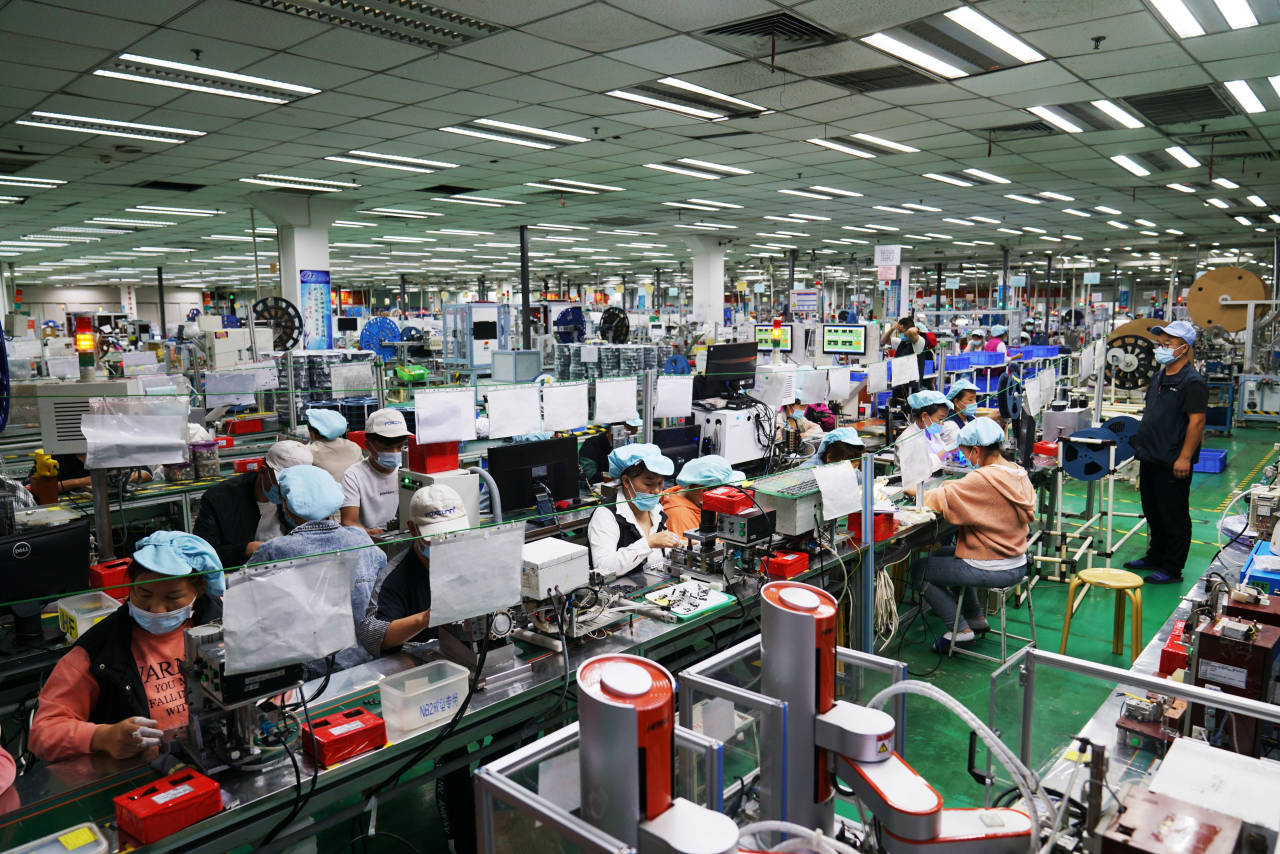
Parts of India are starting to mirror the productivity of Zhengzhou, China’s so-called iPhone City, where hundreds of thousands of workers make the devices.
At the Foxconn plant in Sriperumbudur, around 40,000 workers, more than 80% of them women, work in three eight-hour shifts. For entry-level assembly workers, monthly earnings start at around $200 a month, lower than in China. Entry-level workers there can earn $700 to $1,000 a month for the same job and sometimes more during periods of higher demand.
After the completion of two new production centers, the iPhone manufacturing hubs in India’s south are slated to employ some 150,000 workers screwing together Apple’s most ubiquitous device. The expansion predates Trump’s second-term tariffs by years.
“The ramping up is the result of fairly long-term planning,” said Arun Roy, secretary of industry in the Tamil Nadu government. “It’s not a sudden decision they have taken.”
India has upgraded its infrastructure and unveiled a program of manufacturing subsidies that have successfully promoted smartphone manufacturing. States offered their own inducements to draw Apple suppliers and other tech manufacturers.
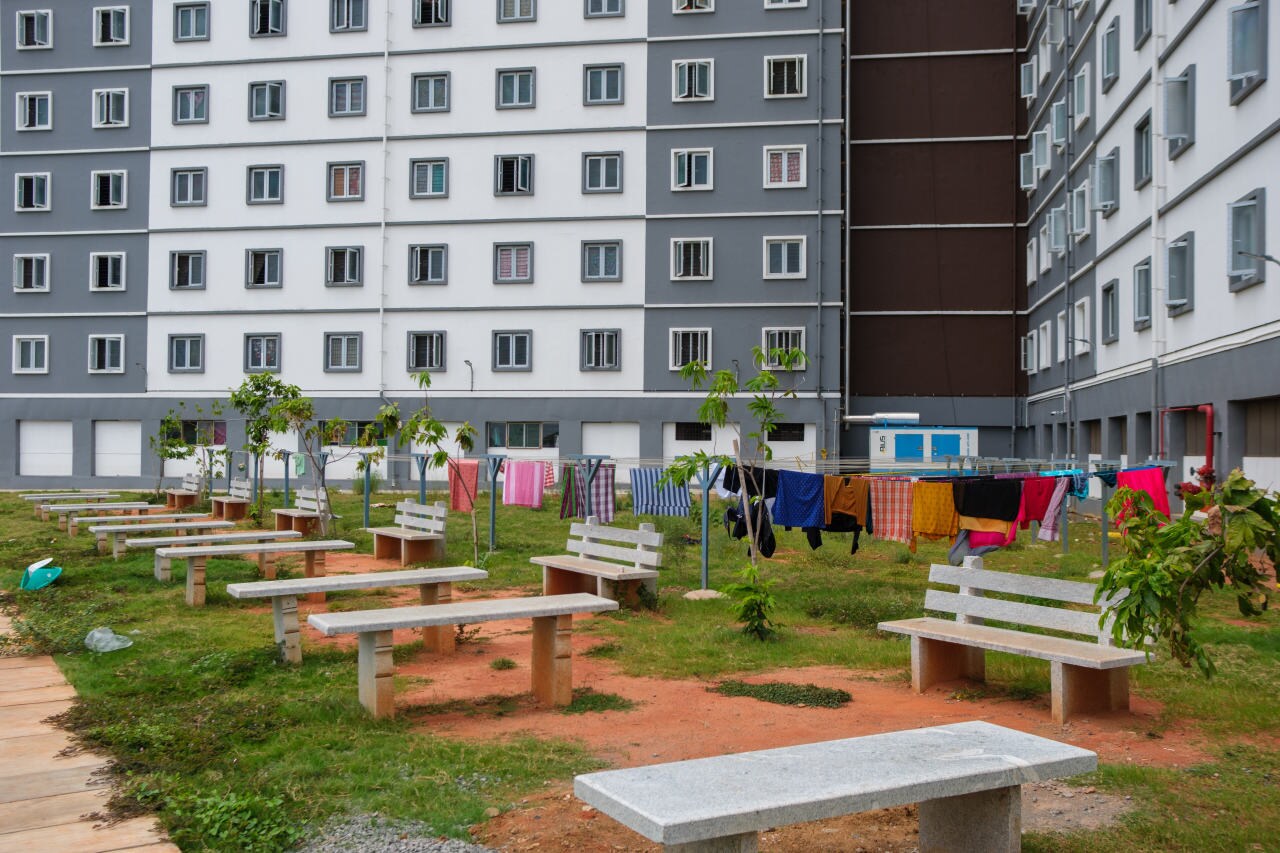
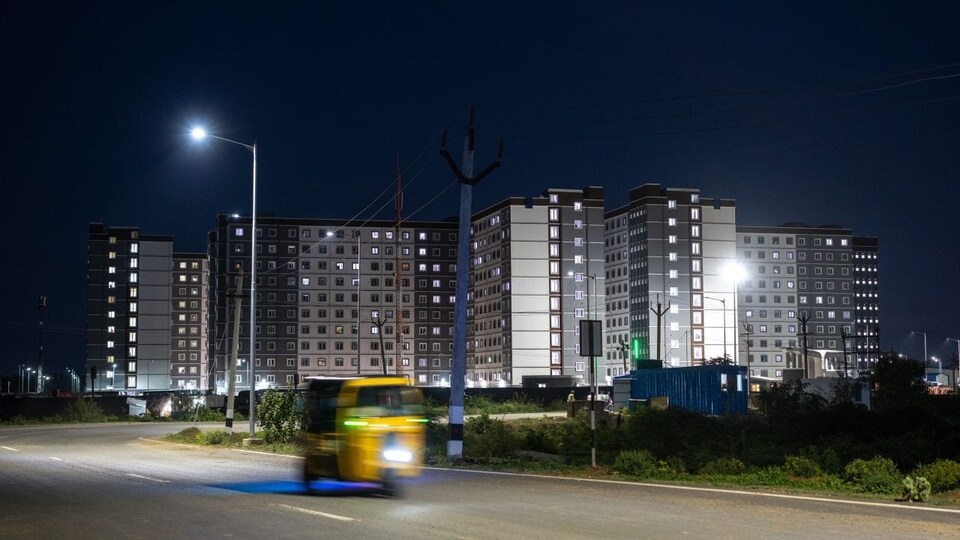
In an industrial park in southern India, 13 newly painted gray-and-white 10-story dormitory buildings are part of a 20-acre neighborhood built by the Tamil Nadu government to house iPhone workers. More than 6,500 people live there, and there is room for 12,000 more.
An 18-year-old woman eating lunch at the dorm traveled nearly 1,000 miles from rural eastern India for an assembly line job. “I looked on Google,” she said.
The high-school graduate started work this year for Foxconn, the Taiwanese firm that is one of Apple’s biggest manufacturing suppliers.
When Foxconn’s chairman Young Liu came to India last August, India’s Prime Minister Narendra Modi presented him a bouquet of roses before the two men discussed Foxconn’s future investment plans.
In Tamil Nadu, state industries minister T.R.B. Rajaa picked up Liu from the airport, draped a silk scarf around his neck, a mark of respect, and drove him to the site of the new dormitory. On the trip, he pitched investment ideas, including new factories to make smartphone components that are now imported.
“It’s a good thing to make that every second count, right?” the minister said.
Tamil Nadu is acquiring land for an airport near the Foxconn facilities for passenger and cargo flights. Elsewhere in the state, Indian conglomerate Tata Group, which has taken control of two smaller Taiwanese suppliers with Apple’s blessing, is building its own factory to assemble iPhones, making it the firm’s first domestic supplier. The company also is building worker housing.
In the neighboring state of Karnataka, Foxconn is investing $2.5 billion in new manufacturing on 300 acres. A state official previously said that more than half the company’s investment would go toward a new iPhone assembly facility. The overall development qualifies Foxconn for an $800 million incentive payment, a state official said.
Foxconn and Tata declined to comment.
Playing catch-up
Technology analysts say India has made strides in final assembly, the lowest-value piece of iPhone production. What comes next—making the precision components inside iPhones, such as cameras—will be more difficult to master.
China-headquartered firms maintain a dominant share of precision manufacturing, according to an examination of Apple supplier disclosures from Tufts University professor Chris Miller and Vishnu Venugopalan, who previously headed Tamil Nadu’s investment promotion agency. Of Apple’s 187 top suppliers, more than 150 of them have facilities in China, compared with 14 in India, as of fiscal year 2023.
“China is about 20 years ahead of the U.S. and India in terms of the scale, volume, or infrastructure they can churn out for Apple or any high-tech company,” said Navkendar Singh, analyst at tech researcher IDC Asia/Pacific.
Apple and its suppliers in India require new infrastructure, new workforce training and policy support to reach the level of industrial coordination China achieved over past decades. Most smartphone components are imported to India and many face tariffs. Manufacturers in India are allowed to bypass the tariffs if the parts they import are for phones that will be exported.
Some supply chain experts say India might find it tough to match the production-friendly policies of China’s authoritarian system. Chinese officials helped facilitate the transport of hundreds of thousands of migrant workers for temporary work during critical periods of Apple’s production calendar. Work shifts can stretch to 12 hours during peak demand.
An effort in Tamil Nadu to allow 12-hour shifts was dropped after Indian labor activists and workers complained. In the first years after Apple’s Taiwanese suppliers moved to India, the firms were hit by labor unrest, often over food and accommodations. In one instance, hundreds of workers fell ill with food poisoning and staged a mass protest, drawing headlines worldwide.
Foxconn has hired mostly female factory workers in India, which is uncommon in many parts of the country where women seldom work outside the home. The new dorm for Foxconn workers, where women sleep six to a room, has rules similar to those at university hostels—no men on the premises, for one—intended to reassure parents in the socially conservative country.
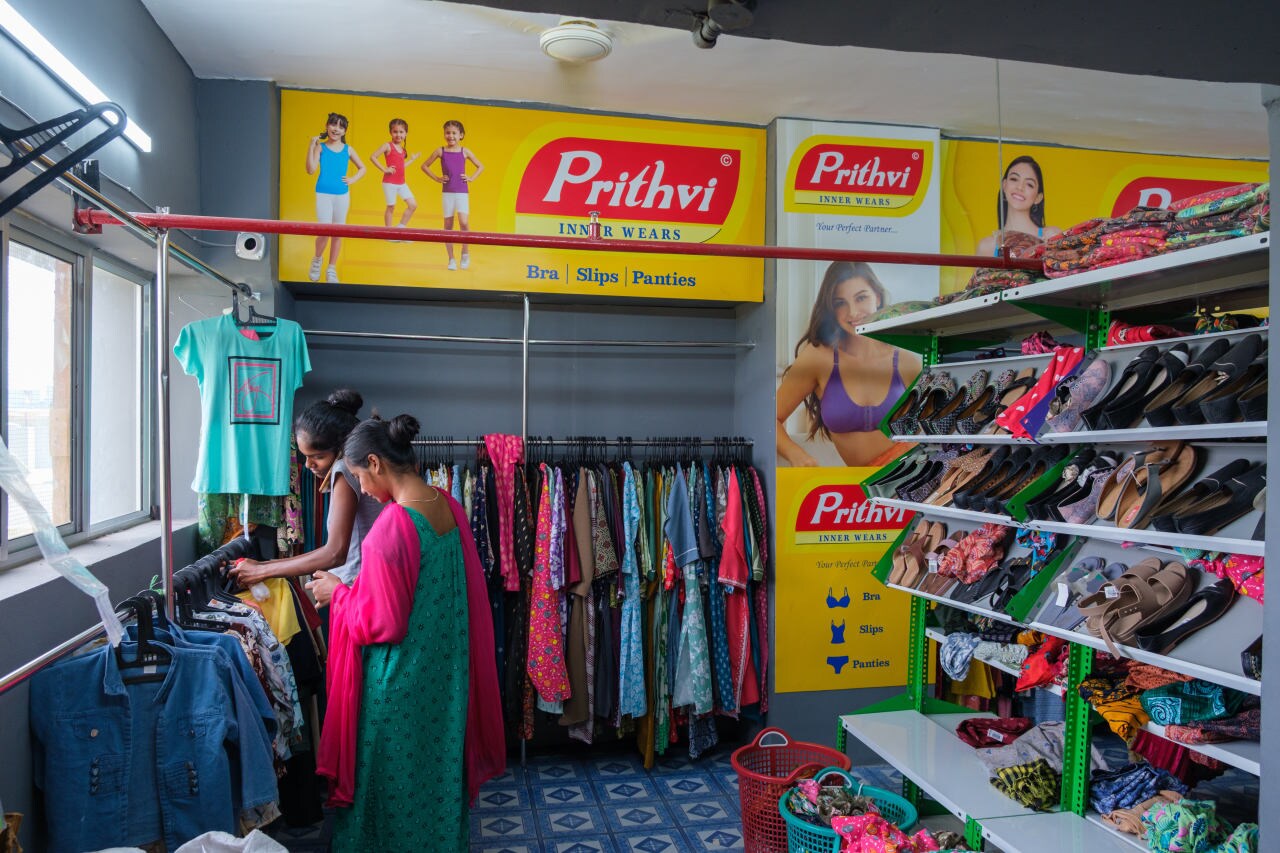
The dorms have a grocery and a clothing store, as well as ping-pong tables and badminton courts. Workers can order birthday cakes at a ground-floor bakery.
New confidence
When Apple began manufacturing iPhones in India, its smartphones had higher rejection rates compared with China’s. Foxconn’s chairman last year said India’s rates were nearly on par. India has started making the iPhone Pros, the higher-end models that make up a large share of U.S. demand. “That shows a certain amount of confidence,” said Singh, of IDC.
Translating a new iPhone blueprint into a system for tens of thousands of workers to follow is a task that still largely takes place in China. Apple is experimenting with doing part of that work in India for the base model of the iPhone 17, said people familiar with the matter.
Indian officials believe a significant increase in the number of iPhones produced in the next year or two will make it more practical for some foreign suppliers to consider setting up shop in India. They are studying Apple’s supply chain to see which firms would benefit from local operations.
In March, India announced manufacturing subsidies of $2.7 billion for smartphone and other electronic components, including machinery. A month later, Tamil Nadu announced matching grants.
In May, Foxconn said it was investing $1.5 billion in a new plant, which, according to a person familiar with the matter, will employ around 14,000 workers in Tamil Nadu.
Apple might be able to reproduce key components of its Chinese supply chain in India in as little as five years, said Kevin O’Marah, founder of supply chain research firm Zero100.
“It’s not the next China. Nothing is the next China,” O’Marah said. “But it will be a meaningful production center for Apple and other device-makers.”
Write to Tripti Lahiri at tripti.lahiri@wsj.com, Yang Jie at jie.yang@wsj.com and Rolfe Winkler at Rolfe.Winkler@wsj.com