Brent crude oil futures crossed $100 a barrel on Wednesday, reaching their highest level in more than six weeks. The price touched $100.19 a barrel during trading. This was the first time Brent went above the important $100 level since July 24. Brent was at $99.93 a barrel, up $2.01, or 2.05%.
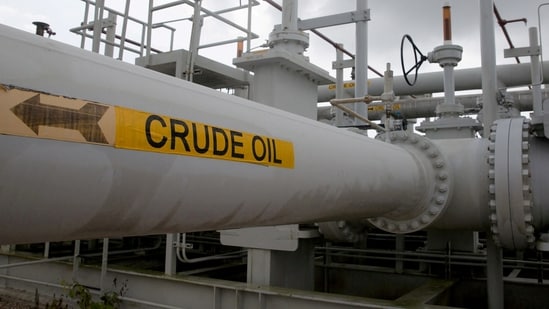
US West Texas Intermediate (WTI) crude also rose, gaining $1.49, or 1.60%, to $94.52 a barrel. Reuters reported the rise, linking it to growing fears that the worsening Middle East conflict could disrupt oil supplies.
Middle East conflict is pushing oil prices higher
The main reason behind the latest jump is the intensifying conflict in the Middle East. Investors are increasingly worried that fighting could affect the movement of crude oil from the region. Brent prices have now risen by around 25% since early August.
Hopes for a permanent solution to the six-month-old US-Iran conflict have also weakened. Since the Iran war began on February 28, Brent has climbed as high as $126.41 a barrel. That peak was reached on April 30, showing how strongly the conflict has affected crude prices.
Houthi attacks add to supply fears
This week, Iran-backed Houthis attacked energy facilities in Saudi Arabia. The attacks set some oil installations on fire. This has raised fears that the conflict could spread further across the region. A wider conflict could put more oil infrastructure at risk and make it harder for crude to reach global markets. The attacks have also raised concerns about oil shipments passing through the Red Sea.
{{/usCountry}}This week, Iran-backed Houthis attacked energy facilities in Saudi Arabia. The attacks set some oil installations on fire. This has raised fears that the conflict could spread further across the region. A wider conflict could put more oil infrastructure at risk and make it harder for crude to reach global markets. The attacks have also raised concerns about oil shipments passing through the Red Sea.
{{/usCountry}}Also read: Oil prices surge 3%: Why Brent is nearing $100 as Middle East war risks grow
Red Sea has become an important alternative route
The Red Sea has been an important alternative route for oil shipments because crude flows through the Strait of Hormuz have been heavily reduced. Oil movement through Hormuz has been severely affected since the Iran war began on February 28.
Any further disruption in the Red Sea could therefore make it even harder to move crude from the Middle East to global buyers. This is one of the reasons traders are becoming more worried about future oil supplies.
Supply risks are growing
Hamad Hussain, senior climate and commodities economist at Capital Economics, said markets appear to be preparing for a longer Middle East conflict. He said traders are also worried that the latest military escalation could disrupt oil flows from the region. Hussain said this in comments cited by Reuters.
Oil tanker attacks are another major risk
Hussain said an important risk is whether the recent attacks on oil tankers reduce ship-to-ship oil transfers in the Gulf of Oman. These transfers have been important for keeping oil supplies moving to global markets.
They have also helped prevent oil prices from rising even more sharply. If these transfers decline, less crude could reach buyers, putting additional upward pressure on prices. Hussain warned of this risk, according to Reuters.
Banks are raising their oil price forecasts
The growing supply concerns are also changing expectations among major banks. Goldman Sachs, Bank of America and HSBC are among the banks that have raised their forecasts for crude oil prices in recent days. Their higher forecasts show that the market is becoming more concerned about the possibility of prolonged supply disruptions.
Also read: Gold price today: Why gold is falling as oil rises and Fed rate hike bets grow
Oil flows through Strait of Hormuz have fallen sharply
The Strait of Hormuz remains one of the biggest concerns for the global oil market. Before fighting resumed on August 30, around 8 million to 9 million barrels per day (bpd) were moving through Hormuz.
That was roughly double the previous week's volume, according to Rystad Energy Chief Economist Claudio Galimberti. But oil flows have fallen sharply since then. More recently, less than 2 million bpd was flowing through the Strait, Galimberti said.
Oil market may be facing a longer-term problem
Jeffrey Currie, co-chairman at Abaxx Markets, said the market may be treating the latest increase in energy prices as a temporary event, as reported by Reuters. But Currie argued that the problem is bigger than a short-term price shock. He described the situation as structural, meaning the risk could remain for a long time.
Currie also called the additional cost being built into oil prices a “security premium” linked to geopolitical risks. Currie said this premium could become even larger if the conflict and supply risks continue. Currie made these comments.
Some oil-producing countries outside OPEC are increasing their production. The United States, Canada and Guyana have all ramped up oil output. This extra production can help increase global supply and reduce some pressure on prices. However, it may not be enough to fully offset the disruption caused by the Middle East conflict.
Global oil supply could still fall this year
The International Energy Agency (IEA) said last month that global oil supply could fall by 4.3 million bpd this year. That would represent a decline of around 4% in global oil supply. This expected drop is important because the market is already dealing with concerns over oil flows from the Middle East. If supply falls while geopolitical risks remain high, crude prices could face further upward pressure.
Why Brent is above $100 now
The latest move above $100 is mainly a result of rising fears over oil supply. The combination of the US-Iran conflict, attacks on Saudi energy facilities, risks to Red Sea shipping and sharply lower flows through the Strait of Hormuz has made traders more nervous.
At the same time, major banks are raising their oil price forecasts and the IEA expects global supply to decline this year. Together, these factors are pushing investors to price in a higher and longer-lasting geopolitical risk premium for crude oil.
What happens next
The key question for oil markets is whether the Middle East conflict continues to spread and whether more oil infrastructure, tankers or shipping routes are disrupted. If oil flows through Hormuz and other key routes remain restricted, supply concerns could become stronger.
That could keep Brent prices above $100 a barrel and potentially push them higher. If the conflict eases and oil shipments return to normal, some of the geopolitical premium could come out of prices. For now, however, the market is focused on whether the latest attacks mark the beginning of a longer and wider disruption to Middle East oil supplies.