Can the Indian economy continue to grow and expand even as the world fights inflation and possibly even a recession? Can India continue to be the fastest-growing major economy, creating jobs and prosperity and at the same time keeping inflation in check?
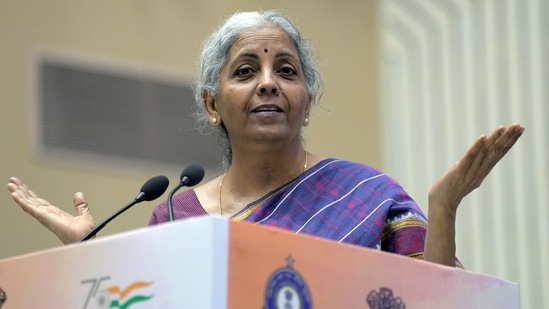
It’s going to be the litmus test, in many ways the defining moment, for finance minister Nirmala Sitharaman. But Sitharaman believes she has the formula to keep the Indian economy humming despite the global macro-economic headwinds. She plans to keep the Indian growth story on track through ambitious capital expenditure or Capex programme this fiscal.
The Narendra Modi government’s ambitious Capex plans come in
the backdrop of a rethink on big government spending in the developed world, particularly the United States.
What is Capex?
Capital expenditure (Capex) refers to investments on upgrading existing or building new physical assets by the government or private businesses. These assets are factories, buildings, machines, computers, etc. Now, as businesses expand, Capex has a multiplier effect on the economy, creating demand and unleashing animal spirits.
Sitharaman and her team are hoping that a thrust on Capex will ease supply-chain bottlenecks and revive demand. So, while capex can add to the productive capacities of the economy, boosting long-term growth, it will also spur job creation and consumption.
{{/usCountry}}Sitharaman and her team are hoping that a thrust on Capex will ease supply-chain bottlenecks and revive demand. So, while capex can add to the productive capacities of the economy, boosting long-term growth, it will also spur job creation and consumption.
{{/usCountry}}It was a strategy the government adopted – a trend seen in other countries as well – to shield the economy as much as possible from the impact of the pandemic.
Sitharaman's Capex thrust
Sitharaman and her team are already walking the talk. In the last Budget, the government announced a 27 per cent jump in the government’s planned Capex for this fiscal.
Crucially, Sitharaman hopes government spending will crowd in or suck in private Capex into the economy. The government has ambitious plans to exponentially ramp up spending on expressways, logistics parks, metro systems and housing – much of this work will be sourced out to private contractors.
For long, the government has been wary of excessive borrowing and spending, even on Capex, worried about crowding out the private sector. But clearly, there is a change in mindset at North Block now. Sitharaman’s team has tried to dispel any concerns about the government eating into the private sector’s share of national savings.
Only last year, then Sebi whole-time member G Mahalingam had asserted “that (government borrowing) crowds out all the corporate bond market”. Krishnamurthy Subramanian, then chief economic advisor, asserted it’s a specious argument that “relies on the pool of savings being static”. Subramanian asserted that if the government spends more its pushes growth and increases savings, leading to a crowding-in of private investment.
Private investment has been comatose since the global financial crisis in 2008 largely due to the twin balance-sheet crisis in the banking and corporate sector. To revive private investments, particularly in manufacturing, the government has taken a raft of measures in recent years – from the introduction of the GST and the Insolvency and Bankruptcy Code (IBC) to the thrust on infrastructure creation and corporate tax rate cuts. So far, nothing has worked.
Globally, aggressive fiscal and monetary policies kept economies afloat during the pandemic. Simply, the governments went on a spending spree while central banks cut benchmark rates to stimulate demand. This may have triggered a possible overheating of the global economy, leading to an inflationary surge, believe some economists. There is now a rethink in the developed world on big government spending. In the US, for instance, President Biden is now talking about reining in government stimulus for the economy to tamp down inflation.
Sitharaman is trying to keep deficits in check by trimming government subsidies including on MNREGA, a politically contentious move.
The Reserve Bank of India has already begun raising repo rates to rein in demand-pull inflation. But the inflationary spike in India is in part a consequence of global supply-side bottlenecks triggering a rise in commodity prices. A normal monsoon will help in easing the elevated food prices. Sitharaman has allayed concerns around inflation, arguing India is better placed than other countries.