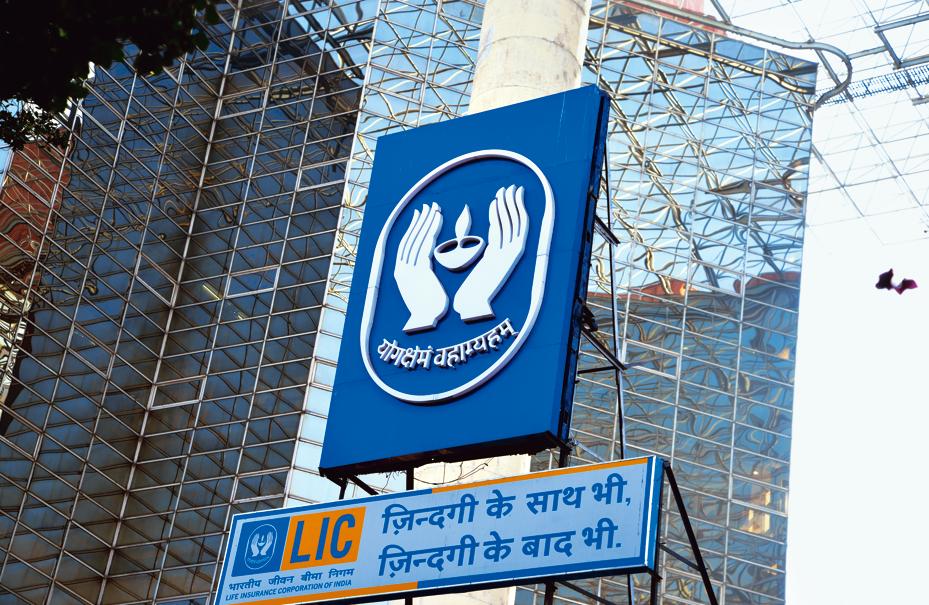
Continuing with its efforts to make India an attractive investment destination, an amendment has been approved to permit foreign direct investment (FDI) in the Life Insurance Corporation of India (LIC) with the existing policy further simplified. According to government sources, FDI up to 20 per cent is now allowed under the automatic route in LIC.
Other minor enhancements in the existing FDI Policy have also been carried out to provide an updated, consistent and easily comprehensible FDI framework. The FDI policy reform will further enhance ‘ease of doing business’ in the country, leading to larger FDI inflows and, thereby, contributing to the growth of investment, income and employment.
The government has approved listing of shares of LIC on the stock market through an initial public offering (IPO) by part-sale of the government’s stake in it and raising fresh equity capital for LIC. Foreign investors may be desirous of participating in the IPO of LIC. However, the existing FDI policy did not prescribe any specific provision for foreign investment in LIC which is a statutory corporation established under LIC Act, 1956. As per the policy, FDI in permitted sectors is allowed up to the limit indicated against each sector/activity subject to applicable laws/regulations.
“Insurance” is a permitted sector under Para 5.2.22 of the FDI Policy. However, the FDI Policy currently lists only “Insurance Company” and “Intermediaries or Insurance Intermediaries” under the “Insurance” sector. LIC being a statutory corporation, is not covered under either “Insurance Company” or “Intermediaries or Insurance Intermediaries”. Further, no limit is prescribed for foreign investment in LIC under the LIC Act, 1956; the Insurance Act, 1938; the Insurance Regulatory and Development Authority Act, 1999 or regulations made under the respective Acts.
{{/usCountry}}“Insurance” is a permitted sector under Para 5.2.22 of the FDI Policy. However, the FDI Policy currently lists only “Insurance Company” and “Intermediaries or Insurance Intermediaries” under the “Insurance” sector. LIC being a statutory corporation, is not covered under either “Insurance Company” or “Intermediaries or Insurance Intermediaries”. Further, no limit is prescribed for foreign investment in LIC under the LIC Act, 1956; the Insurance Act, 1938; the Insurance Regulatory and Development Authority Act, 1999 or regulations made under the respective Acts.
{{/usCountry}}As the present policy caps foreign investment in public sector banks upto 20 per cent on government approval route, it has been decided to allow foreign investment up to 20 per cent for LIC and such other corporate bodies.
Further, to expedite the capital raising process, such FDI has been kept on the automatic route, as is in the case of rest of the insurance sector.
Also, with an intent to improve and enhance the overall FDI Policy, certain changes and alignments under various provisions of the FDI Policy, are also carried out to provide greater clarity and updated, consistent and easily comprehensible FDI framework.
The reform in the FDI policy will have several benefits. It would facilitate foreign investment in LIC and such other bodies corporate, for which the government may have a requirement for disinvestment purposes. The reform will facilitate ease of doing business and lead to greater FDI inflows, and at the same time, ensure alignment with the overall intent/objective of FDI policy. Increased FDI inflows will supplement domestic capital, technology transfer, skill development for accelerated economic growth and development across sectors, to support the implementation of Atmanirbhar Bharat.
The measures taken by the government with FDI policy reforms, investment facilitation and ease of doing business, have contributed to India attracting record FDI inflows in the recent past. FDI inflows in India stood at $ 45.15 billion in 2014-2015 and have increased since then. Despite the Covid-19 pandemic, India attracted the highest-ever FDI inflow to the tune of $81.97 billion during the financial year 2020-21 and this is 10 per cent higher as compared to the previous financial year 2019-20 ($74.39 billion). These increasing trends in India’s FDI are an endorsement of its status as a preferred investment destination amongst global investors.