Major economies such as the US, the UK, the European Union (EU) and Japan can’t bulldoze India to get unfettered access to its vast and growing market without meaningful engagement in terms of technology transfers and investments, two officials from two economic ministries have said.
Prime Minister Narendra Modi has already declared that “Atmanirbhar Bharat” (self-reliant India) is the focal point of economic policies, and this is not an isolationist approach but a strategy to more closely integrate with global supply chains, the officials said requesting anonymity.
On the other hand, EU members and other western countries feel there is a need for more clarity about the Atmanirbhar Bharat initiative and greater predictability about trade and investment regimes, according to several senior diplomats who didn’t want to be named as they aren’t authorised to speak on such issues.
One of the two officials said: “Many MNCs [multinational companies] have set up plants in Asian countries, while keeping an eye on the lucrative Indian market. They need to change their approach now. India is not a closed market. Set up manufacturing facilities in India and get full access to the Indian market, so that its people will get jobs, the economy will grow and the market will expand further. It is in their interest to invest in India.”
Several countries have concerns about India’s changed policies that encourage local goods and services. Last year, the government amended public procurement rules to encourage “Make in India” and prohibited the floating of global tenders of up to ₹200 crore to encourage domestic micro-small and medium enterprises (MSMEs), the officials said.
{{/usCountry}}Several countries have concerns about India’s changed policies that encourage local goods and services. Last year, the government amended public procurement rules to encourage “Make in India” and prohibited the floating of global tenders of up to ₹200 crore to encourage domestic micro-small and medium enterprises (MSMEs), the officials said.
{{/usCountry}}Many of these countries want free access to certain sensitive areas, such as India’s dairy and agriculture markets, which could be detrimental for the country’s rural and farm economies. That was one of the reasons for Modi’s decision to opt out of the Regional Comprehensive Economic Partnership (RCEP) agreement in Bangkok in November 2019.
The RCEP was initiated by the erstwhile UPA regime and the current government believes it is weighted in favour of China. The government has imposed about eight dozen anti-dumping duties on Chinese goods. “Despite this, Chinese goods are entering India though other countries. Hence, the government is applying ‘rules of origin’ strictly, which is not liked by many trade partners,” the first official said.
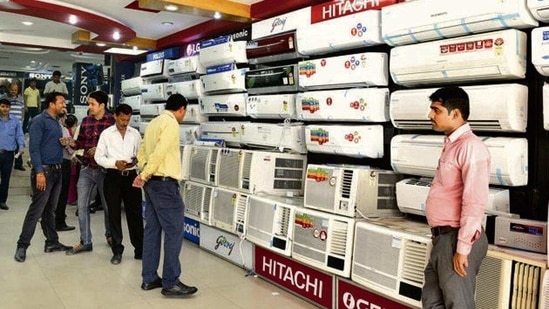
The official confirmed that Japan had protested India’s decisions to put ACs in the restricted list, leading to an 87% fall in Japanese AC imports to 74,000 units in January, from 553,000 in the same month a year ago. “India has told of its willingness to provide all kinds of help – land and financial incentives – to all MNCs, including Japanese AC makers, in order to facilitate the setting up of their manufacturing facilities in India,” the official said.
A second official said the US is pressuring India to withdraw the 2% equalisation levy (EL) on non-resident e-commerce firms, which mop up revenue from the Indian market without paying any taxes. This is not only unjust but unfair for companies operating from India, the second official said.
“India will not succumb to such kind of pressure tactics. No EL will be levied on US-based digital giants if they set up permanent offices in India and pay taxes on the part of business conducted within the country,” the second official said.
The US Trade Representative (USTR) on Friday proposed retaliatory trade actions against India and some other countries that have imposed or are considering imposing digital service taxes such as EL.