On August 4, 2006, twenty years ago, IndiGo’s first flight took off from New Delhi for Guwahati via Imphal. The airline was launched with the objective of making air travel in India affordable, efficient, and reliable through a low-cost, no-frills model, and the choice of sector was based not on a whim of the founders but on practicality. Then guidelines required capacity to be deployed on non-metro sectors and by launching on one of these sectors, the infant airline was not only ensuring that it started its journey on a sector with robust traffic, decent fares, but also meeting its social commitments. The 20-year-old’s first flight captures its entire journey so far: practical, grounded, and delivering consistently as promised.
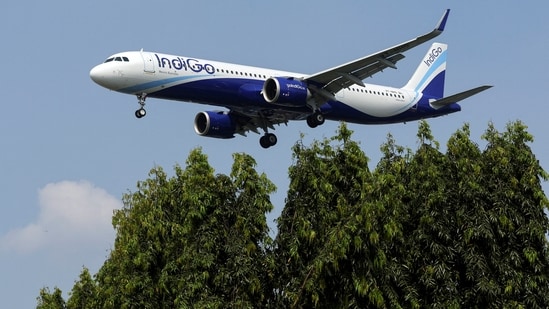
While doing so, the airline has made its two original founders billionaires, several top managers richer than they thought possible and shareholders happy. IndiGo has given the country one of its strongest brands, something that delivers consistently - despite many variables not in its control - and has helped connect small towns and cities in India that might not have been connected by air at all. Nobody and nothing can take away the much-deserved credit for this.
The Good Ole Days: 2006 to 2019
A small, lean and very energetic team worked around the clock to set up what was to become one of the most successful domestic airlines in India, led by Bruce Ashby (with prior experience with US Airways and United Airlines) who laid down the foundations of what would morph into IndiGo along with Steve Harfst (COO), Riyaz Peermohammed as the CFO, S.C. Gupta (former Indian Airlines) handling engineering, former Indian Airlines commander and industry stalwart Captain Shakti Lumba in charge of flight operations and Sanjeev Ramdas, head of airport operations and customer services. A few months after the airline’s launch, the core team was strengthened with the induction of former SpiceJet vice president Sanjay Kumar as chief commercial officer who was instrumental in selecting new viable routes, a critical input in the airline’s growth journey and eventual success.
The airline got off to a robust and strong start and within a short period had established itself as one of the most trusted low-fare airlines in the space, achieving break even and even turning in a small profit within two years of launch in 2008. By 2011, it had commenced international operations. Through 2008-2015, it was profitable, and in November 2015, the airline went public, listing at a premium over its IPO issue price of ₹765 per share.
{{/usCountry}}The airline got off to a robust and strong start and within a short period had established itself as one of the most trusted low-fare airlines in the space, achieving break even and even turning in a small profit within two years of launch in 2008. By 2011, it had commenced international operations. Through 2008-2015, it was profitable, and in November 2015, the airline went public, listing at a premium over its IPO issue price of ₹765 per share.
{{/usCountry}}Barring the fact that the two founders' shareholding in the company was diluted and it had more funds available to finance its expansion, very little changed at the airline even after its public listing. The company continued to quietly expand its presence on several routes and, to its credit, from 2007 to 2018 it remained profitable, a milestone that sets it apart from most airlines India has seen, barring Jet Airways in its initial phase.
It was the shutdown of rival Jet Airways (April 2019) that catapulted IndiGo to begin to dominate the Indian skies, surging past the 50 per cent market share. Although the airline had seen the handover of reins from Ashby to Aditya Ghosh, who was president and CEO of the airline from 2008 right through to 2018, it didn’t change its fundamental DNA. The airline expanded IndiGo style, remaining focussed on getting the job done and growing without drawing too much attention to itself, although, under the leadership of Ghosh, many felt a certain arrogance had begun to creep into the attitude of the airline employees, one that emanated from the top. Ghosh’s steady stint remains one which the crew recalls fondly even today.
An Unanticipated Crack Appears: July 2019
It was in July 2019, four years after the company listed on the bourses, that the first deep crack - one that was to redefine the airline’s future ownership and its management - appeared. US-based founder Rakesh Gangwal, who owned a 37 per cent share of the airline post the IPO expressed unhappiness at the way the airline was being run and objected to various related party transactions (RPTs) the airline had entered into, several of which were with businesses owned by his co-founder Rahul Bhatia.
The dispute turned into an ugly court case between the two former friends and co-founders, resulting in Gangwal's exit from the board and his complete dissociation from the business he had played a key role in shaping, albeit from a distance. The aviation industry was of the view that the loss was quite significant in view of the fact that it was Gangwal who possessed an in-depth understanding of the sector through his association with various carriers in the US , the network to assist IndiGo bridge the talent gap and the foresight to guide the business in the future. Although Bhatia tried to - and continues to - underplay this loss, few in the industry are convinced that IndiGo without Gangwal remains as strong a force as it was before. Post the resolution of the dispute , which also resulted in the exit of Ghosh, Bhatia held interim charge of the airline, until former United Airlines president Rono Datta was brought in to steer the carrier.
Post Pandemic: Bearing The Brunt and Size Isn’t Always Might, 2022-2024
In some ways, events of 2019 along with the repercussions of the pandemic changed both the way IndiGo functioned and the public perception of it. Two things happened : a lot of pent up travel demand led to crowded airports and flights and infrastructure that was accustomed to handling a certain number felt stretched. Citizens in revenge travel mode came to airports with more frayed nerves than before the pandemic. Reflecting the mood of the day, airports became more tense spaces as did the atmosphere on board flights.
This led to a number of incidents where passengers directed their anger and frustration towards airline staff . As the largest player, IndiGo in particular bore the brunt of it and was soon labelled the “most hated airline” in India, a tag it had done little to deserve. A few stray incidents might have found the overwrought staff culpable or reacting in an unexpectedly aggressive fashion but the blame for a majority of the scrapes were unjustifiably directed at the carrier.
The second unfortunate development was that the accumulated stress and strain after the pandemic also impacted the crew - commanders, first officers and cabin staff - who collectively and individually seemed the worse for wear-- and discontentment crept in that was previously absent. Exhaustion of crew became a permanent point of discussion and the alienation of the most important resource for any airline - the crew - from the management of IndiGo was complete. Several senior commanders also left the airline in search for greener pastures, where they could improve both their earning potential and work-life balance.
Besides dealing with an unhappier workforce, pressure on the airline - both in terms of making up losses which the pandemic exacerbated and a whole host of external factors - rose. In hindsight, it is almost impossible to apportion the blame for the drop in employee morale post the pandemic as this was a phenomenon across airlines (not just IndiGo) but as the largest airline, IndiGo had to shoulder more than its share of the brunt. As luck would have it, Datta’s stint at the carrier also coincided with one of the worst phases for the airline financially, grappling as it was with accumulated losses of close to ₹12,000 crore due to the pandemic.
The Big Anticipated Moment Comes: April 2025
But in characteristic IndiGo style, with the recovery of travel and its own disciplined manner of operating, the airline clawed its way back into profitability, and the good days were back by the time the airline brought in its new CEO. By hiring former CEO and president of KLM, Pieter Elbers, in September 2022, it had silently indicated the direction in which it was headed - a decision that remains one of its most controversial moves since inception and which most herald as “momentous”.
After deliberating this for almost three years, the IndiGo board, at the behest of the management, gave its nod for the airline to move into wide-body long-haul operations in a bid to metamorphose into a world-class network carrier and placed an order for 60 A350, with options for an additional 40. This would imply a complete DNA change for the carrier over time.
Under Elbers’s leadership, the airline meanwhile introduced IndiGo Stretch (business and premium economy seats on metro routes), launched a loyalty programme and signed many code share and interline agreements with airlines across the world, all in preparation for the induction of the wide bodies, which will begin to come in from the middle of 2028, as per current plans. Its approach to what it presents to the outside world and its social media push began to change as well, reflecting a fundamental shift from the old IndiGo: a new DNA was beginning to take shape.
A Tsunami Hits The Steady Ship: December 2025
As anyone who flies in India would be aware, December 2025 brought on an unprecedented crisis for the market leader, on account of a change in the rest and duty period requirements for crew as per a court directive. IndiGo management failed to prepare adequately for the change and paid a very heavy price for its negligence, which brought the country’s aviation sector to its knees at a time that proved an embarrassment for the Indian government.
The crisis, some analysts argue, was of the airline's own making and revealed at least four fault lines in the mother ship. One, the extent of the lack of accountability of the top management members (leading eventually to key exits, including the CEO) became evident during the crisis, as did the fact that the airline thought it could game the system and get away with non-compliance with rules set by the authorities.
It also highlighted for IndiGo two somewhat forgotten but long-established maxims: one can hire the best talent for a price, but one cannot leave everything in their hands, and two, while boards are often useful in happy times, they are of less value in a crisis. December 2025 established in no uncertain terms the inability or complete helplessness of the airline’s board to foresee or manage a crisis. Company insiders say that the board failed to ask the right questions (on the preparedness by the management for the policy change as dictated by the courts) and was caught napping, resembling its closest rival Air India’s board in more ways than one.
The crisis revealed the lows the relationship between the management and crew had reached: commanders and first officers, instead of supporting their carrier, were practically gloating over its loss of face and credibility. There was a reluctance to support their own airline in its time of need.
Twenty Years Hence
Barring a segment of commanders who perceive IndiGo’s big transformation as a positive for their career progression, there has been criticism of the decision to move into the long-haul full-service space, competing with network carriers across the globe. This view is primarily based on the fact that very few hybrid models under the same umbrella have delivered or resulted in success. The markets too had registered a muted response to Indigo’s big and momentous decision in 2025 and critics and aviation industry experts are far from convinced that this is what the doctor ordered.
Early response to some of the experiments - the loyalty programme and IndiGo Stretch to name a couple - as per industry sources have been less than encouraging although a spokesperson for the airline maintained that with 3.3 million fliers registered on its loyalty programme and with almost 16 percent of the customers using the points to come back as repeat customers, it was still early days and far too early to write off the initiative. He also added that load factors on IndiGo Stretch were robust for sectors of over two hours on the metro-to-metro connections.
This sums up where the airline with 430 operating aircraft (500 plus on order), over 65 per cent market share at home, covering 140 destinations within India and overseas and 68,000 employees stands today. From its high perch, the world looks like its oyster, ripe to be conquered. On its 20th birthday (August 4), it has presented itself extravagantly with a new CEO - Willie Walsh - who has taken charge as this went to press and has now been entrusted with the task of steering this carefully built ship with as much attention and nurturing as it was created with.