Reddit can be quite a cesspool of information but often comes up with the most pertinent of questions—this time it’s on Zerodha.
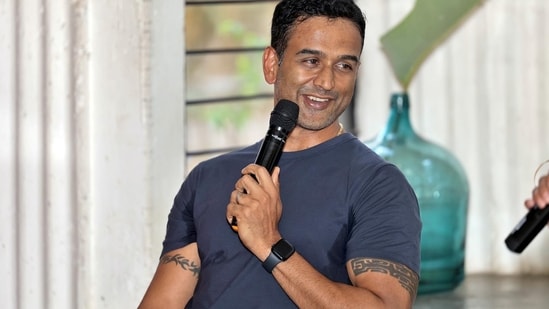
What does Zerodha do differently? How are they profitable? Why not a Zerodha IPO, when rival Groww is eyeing a listing and Jio Blackrock looks to upset the applecart of India’s largest retail stockbroker? Nithin Kamath chose to respond, but on X.
“I believe the philosophy with which we run Zerodha will be our real moat as a business,” the co-founder and chief executive of the Bengaluru-based company said. “It is very tough to stick to it as a public company.”
What followed was a story.
The Effect Of Compounding
“Things in business compound over time, especially if you like or love what you are doing and if you are lucky to be in the right place and time.”
The Kamath brothers were.
Nikhil and Nithin started Zerodha in 2010 with ₹10 lakh in upfront capital—“that is all the money that has gone into the business till date”. The company started off as a partnership because the exchange deposit requirement was lower. An equally important enabler was the NSE Now trading platform, which was free of cost to a broker registered with the National Stock Exchange.
That, along with a vendor who charged next to nothing for sending out contract notes and maintaining ledgers, gave Zerodha its business model—flat-fee brokerage: ₹0 for equity delivery (long-term investing) and ₹20 per order for intraday and F&O trades, size no bar.
{{/usCountry}}That, along with a vendor who charged next to nothing for sending out contract notes and maintaining ledgers, gave Zerodha its business model—flat-fee brokerage: ₹0 for equity delivery (long-term investing) and ₹20 per order for intraday and F&O trades, size no bar.
{{/usCountry}}To be sure, Zerodha’s growth was slow. Retail investors were wary of a low-cost broker. Any traction came via word of mouth and online communities, even as the company continued to invest—from its own coffers—on building its technology stack.
Then, the pandemic happened.
Critical Mass
Young professionals—locked down at home often with a salary cut or without a job—took to trading on Zerodha for its ease of use and low cost. By 2021, Zerodha was India’s largest retail stock broker and the Kamath brothers were India’s youngest billionaires.
“Our rise coincides with India’s rise,” Kamath said in his X post. “We were present at the right place and time, with the right products and initiatives… Any gyaan any founder gives eventually comes down to getting the timing right, and this has got everything to do with luck.”
Zerodha continues to be bootstrapped, which explains the “tres commas” net worth of the Kamath brothers as well as no investors pushing for profits or exits.
Zerodha Financials
To be sure, Zerodha is profitable—a rarity in India’s startup ecosystem.
Net profit of the Bengaluru-based brokerage rose 62% year-on-year to ₹4,700 crore in FY24, on the back of revenue from operations that increased 21% year-on-year to ₹8,320 crore. The profit margin is at a staggering 56-57%.
ALSO READ | Nithin Kamath On Zerodha’s Journey
“Now that there is no pressure to give any exit to any investor, we can continue doing what is right for the customer, sometimes even at the cost of the business—for example, our no spam or no tracking policy,” Kamath said in his X post.
“I believe that the philosophy with which we run Zerodha will be our real moat as a business. It is very difficult to stick to it as a public company.”