Chargers for phones are becoming quite the conundrum. Many phones, particularly the more expensive ones, don’t have bundled chargers with new phones. Popular examples include the latest Apple iPhone 13 series (and indeed last year’s iPhone 12 series), the Samsung Galaxy S series flagship phones, to name a few. Yet, there are phone makers who must bundle the charger, for the phone they are selling you comes with some sort of fast charging tech with adoption tweaked to suit a particular phone better.
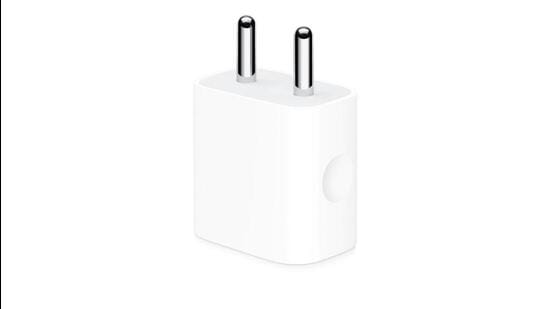
This leads us to the question – can you use just any charger with your phone? The quick answer is yes, but there are finer details which shriek out a resounding no. First things first, any charger will perform the basic functionality of sending electricity into your phone’s battery to charge it up. All chargers are rated in watts (W), and this rating tells us how quickly it does its job. The higher the rating (65W > 30W, for instance), the faster the charge capability. The lesser the power rating of a charger, the longer it’ll take for the phone to charge.
The wattage of a charger is a calculation of the volts and amperes. On any charger, you’ll see it scribbled such as 5V-3A (that’s a charging mode of 15W), 9V-3A and so on. Each charger will have at least one higher and lower rating for different charging speeds – depends on what you’re charging, heating etc. The more powerful it is, the more ratings a charger will be capable of, for failsafe and wider compatibility.
Keep an eye on the “W”
{{/usCountry}}Keep an eye on the “W”
{{/usCountry}}But this is where the simplicity of it all ends. No matter how fast the charger, it will remain limited by the watts that your phone is capable of handling. For instance, Apple says that your newer iPhones have fast charge that works with 20W chargers. In theory, that would mean the iPhones have a maximum capability of handling these many watts when any faster charger is plugged in. The Samsung Galaxy Z Fold 3 can and will use up to 25W, its maximum limit.
It is a function of many things, including the charging circuits, type of charging port, cooling mechanisms, current overflow protection and the exact battery configuration. In this case, even if you are to plug in a 120W or 65W charger with your iPhone lightning cable or the USB-C cable of your newest Samsung foldable phone, it’ll use a maximum of 20W or 25W respectively, from the available buffet.
Mind you, flip the argument and things will not work out as well. If you are to use a 5W or a 10W charger to juice up the battery of phone that is high capacity and supports fast charging, you’ll still be restricted by the lower capacity charger you’re using. And these low spec chargers may not even work with the much larger batteries of tablets, or barely be able to trickle charge.
Splitting batteries: divide to rule?
The specifics and the design of the battery has a bearing on how fast a phone can be charged. Any battery, when energy is transferred into it, heats up over time. the faster the attempt to charge, theoretically, faster the rise in temperatures too. That’ll slow down charge and wear out the battery health a lot quicker, over time. Phone makers are now using the smart trick of splitting the battery into two. You’ll not notice this from outside, but the charger will send dual lines of energy to charge these halves at the same time.
Think of it as two batteries in one phone. On paper, this method allows for batteries to hold the faster charging speeds for longer, because less heat is generated. The Xiaomi 11i Hypercharge, Xiaomi 11i, OnePlus 9 Pro and the Samsung Galaxy Z Fold series are some examples of dual-cell batteries. Each split has its own charging circuit in place, to monitor for current flow, temperature, and overcharge prevention. Xiaomi’s 11i phones lead the way right now with the capability of 120W charging – the fastest in the world of smartphones, for the time being.
Fast charging tech: Different takes
Android phone makers, many of them, have their own take on fast charging as well. That sometimes (not always, compatibility is improving) means you’ll not be able to utilise the full charge speed capability of your phone, even if you have a comparable fast charger. Certain features need the specific charger handshake, to be fully compatible. The current delivery, as well as how chargers are detected and handled by the phone, will vary.
For instance, OnePlus has the proprietary 65W Warp Charge 65T. Xiaomi has the 120W Hypercharge. Vivo has the 55W FlashCharge. Realme has the 65W SuperDart Charge. Different flavours of the same dish.
They aren’t all different names, but often have a tweak or two in place to work better with how the phone maker wants the fast-charging feature to work. It is rare, but it can happen. A lot will depend on the charger you use, particularly for third-party options. You’ll still get fast charge with any capable charger plugged in, perhaps just not the fastest the phone can handle.
What charger should I use?
Theoretically, you should be best off using an official charger that your phone’s manufacturer has made. If it isn’t bundled with the phone, buying one of those would be a safer bet – all the functionality and precautions would be available. That includes taking full advantage of the faster charging speeds.
If you are still finding better value in chargers made by accessory brands (perhaps a multi-port one for charging many things at the same time), it would be prudent to buy those made by well-known brands and not fall for those cheap knockoffs that are sold on various shopping websites.
That will also mean you’ll use a charger that’s up to date with the standards (USB PD or Power Delivery, Qualcomm Quick Charge etc.) as well as the safety standards and failsafe that’ll step in for any discrepancies in charge delivery. But then again, any recent charger will work with any recent phone. In a way, if you aren’t expecting to use all the fast-charging tech.