E-Paper



Maruti Suzuki’s green shift: New EVs, biogas plants, and a ₹70,000 crore commitment to India
Suzuki has committed ₹70,000 crore in new investments to scale up its manufacturing capacity to 4 million units annually by 2030.

 Prefer HTon Google


Suzuki Motor Corporation has outlined an ambitious roadmap to reclaim a 50% share of India’s passenger vehicle market — a position it last held in FY2018-19. The Japanese automaker plans a major product and capacity expansion push, positioning India as the cornerstone of its global growth strategy.
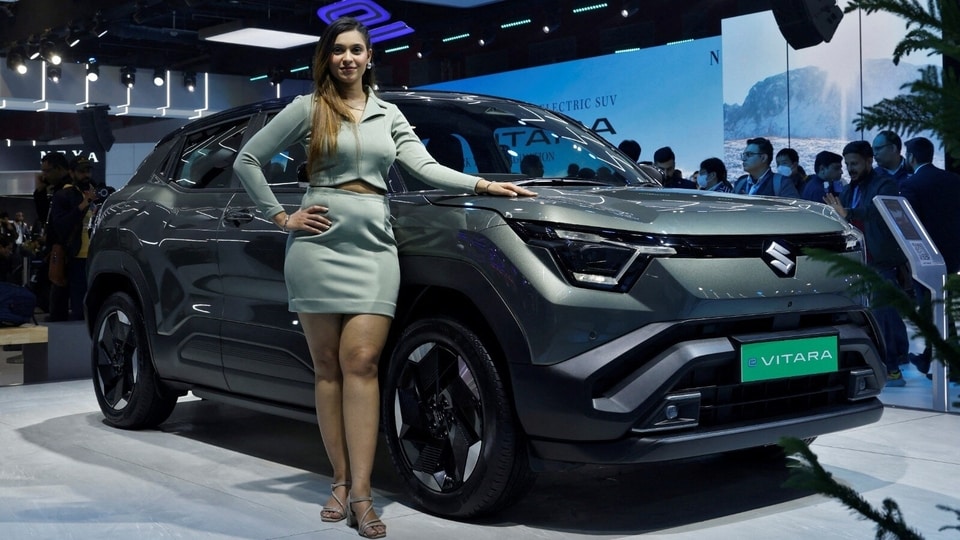
As part of this plan, Suzuki has committed ₹70,000 crore in new investments to scale up its manufacturing capacity to 4 million units annually by 2030, with 3 million units designated for the domestic market and 1 million earmarked for exports. A new SUV-heavy product offensive will be central to achieving this target, reflecting shifting consumer demand and India’s growing appetite for premium and electrified vehicles.
At present, Maruti Suzuki (Suzuki's Indian arm) has a portfolio which includes 19 passenger cars, ranging from economy hatchbacks like the Alto and S-Presso to strong-hybrid models such as the Grand Vitara and Invicto MPV. Under the new investment plan, this lineup will expand with eight new models, marking the company’s most aggressive product push yet. The upcoming wave will focus heavily on SUVs, including all-electric offerings — starting with the e-Vitara, expected to debut in December 2025 as the first of eight new SUVs.
Speaking to reporters on the sidelines of the Japan Mobility Show 2025, Toshihiro Suzuki, Representative Director and President of Suzuki Motor Corporation, underscored India’s pivotal role in the company’s future plans. “India continues to be Suzuki’s most critical market globally. We remain committed to achieving a 50% market share and becoming number one in electric vehicle production, sales, and exports,” he said.
Moreover, Maruti Suzuki is also expanding into renewable energy, with plans to set up nine compressed biogas (CBG) plants in Gujarat by 2027, in collaboration with Amul, Banas Dairy, and the National Dairy Development Board (NDDB). By FY2031, Suzuki projects that CNG and compressed biogas vehicles will make up around 35% of its powertrain portfolio, while hybrid and internal combustion engine models are expected to contribute 25% each, with the remaining share coming from electric vehicles.
The company’s renewed focus on multi-fuel technologies, electrification, and export expansion aligns with India’s transition toward cleaner mobility and evolving consumer preferences. Maruti Suzuki’s strategy signals a long-term bet on India as a key market and as a global manufacturing hub for the next decade.