Chandigarh The Punjab and Haryana high court on Monday upheld a Chandigarh court’s order awarding majority share in ₹20,000-crore property of Maharaja Faridkot Harinder Singh Brar to his two daughters —Amrit Kaur and Deepinder Kaur. The court also held that descendents of Manjit Inder Singh, brother of the Maharaja, would get their mother Mohinder Kaur’s share.
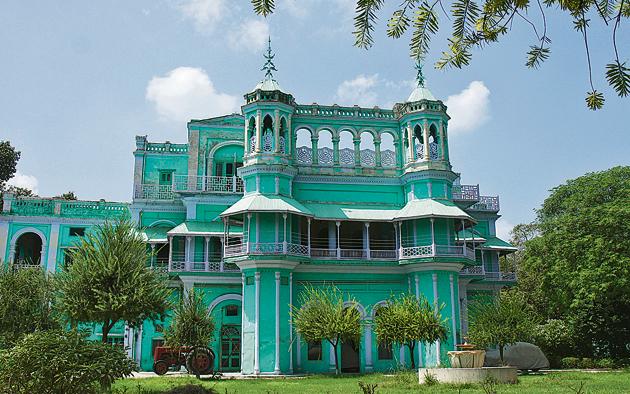
Crowned at the age of three in 1918, Harinder was the last ruler of the Faridkot estate and was married to Narinder Kaur. The royal couple had three daughters, Amrit Kaur, Deepinder Kaur and Maheepinder Kaur and one son, Harmohinder Singh. The son died in a road accident in 1981. One of the Maharajas of seven Sikh princely, Harinder died in 1989 and left behind prime properties in Punjab, Himachal Pradesh, Delhi and Haryana and Chandigarh.
Two lawyers associated with the case, senior advocate MS Khaira and Vivek Bhandari said the properties are worth over ₹20, 000 crore. As per the judgment, 37.5% share would go to each of the two daughters and 25% to the family of Bharat Inder Singh.
Maheepinder Kaur died a spinster, Deepinder Kaur died while this legal battle was on. Amrit Kaur lives in Chandigarh.
The property dispute started soon after Maharaja died in October 1989 after a ‘will’ surfaced, in which he had bequeathed his properties to the trust, Maharwal Khewaji Trust, with his daughter Deepinder Kaur as its head.
{{/usCountry}}The property dispute started soon after Maharaja died in October 1989 after a ‘will’ surfaced, in which he had bequeathed his properties to the trust, Maharwal Khewaji Trust, with his daughter Deepinder Kaur as its head.
{{/usCountry}}As of high court, the matter had reached in 2018 after a Chandigarh court declared trust as void and gave property to the daughters.
The high court bench of justice Raj Mohan Singh held that property would be inherited as per Hindu Succession Act— by both the daughters and their mother. Since mother Mohinder Kaur was alive at the time of death of Maharaja, she would also inherit the property and now would go to family of Manjit Inder Singh as per her will.
Amrit Kaur had staked claim on the entire estate on the basis of The Raja of Faridkot’s Estate Act, 1948. Bharat Inder Singh had staked claim on inheritance on the basis of rule of Primogeniture according to which property rights are granted to first born son or eldest living male blood relative. Deepinder Kaur had staked claim on the basis of validity of the will and trust created.
The court held that Estate Act, 1948 was not a valid enactment after commencement of Constitution of India and is not applicable for succession to the estate. As of rule of primogeniture, the court said, the succession has to be governed by the personal law of succession. Even rights and privileges conferred upon the ruler, came to an end with his death, being purely personal in character, it said.
As of the will in dispute, the court observed, trustees conspired to create the will to take over the property. “The will is proved to be forged, fictitious, fabricated and shrouded with suspicious circumstances..,” the court said.