The pandemic hit Ludhiana where it hurts the most- its industry. Beginning with the migrant exodus in March, which was triggered by the sudden announcement of the lockdown, the industry was faced with one challenge after the other throughout the year. The easing of the lockdown in May was of little help as the rising steel prices added fuel to fire even as the industry was struggling to bring back its labour, The weekend curfew announced by the state government wreaked havoc to sectors such as hotels, malls, cinema halls, gyms and saloons.
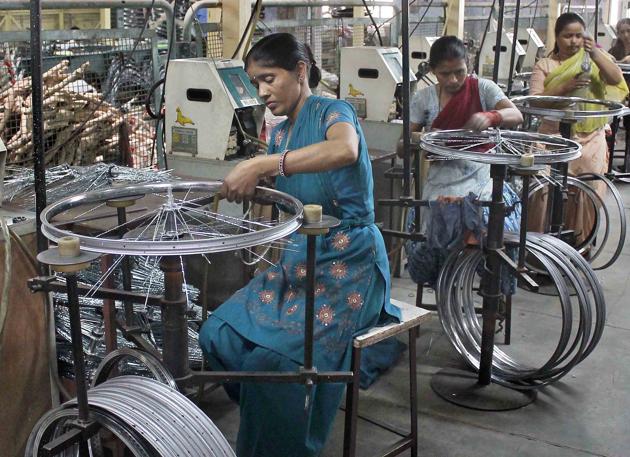
Shutting down of Atlas cycles in Ghaziabad on June 1 brought more misery for over 80 vendors in Ludhiana who supplied cycle parts to the firm.
The only silver lining for the industry in Ludhiana was the surge in the sales of bicycles post-lockdown when fitness was high on people’s minds.
The hosiery sector too had a difficult year. While the production was hit in summer months owing to the lockdown, the extremely low demand from showrooms and garment stores turned it into the worst year for the sector.
Towards the end of the year, the farmers’ protest against the Centre’s agricultural reforms brought the industry on its knees as goods trains stopped running and hit the supply.
Heart-rending migrant exodus
With work suspended due to the lockdown, several labourers found themselves suddenly out of work. Faced with economic uncertainty, at a place where they had come to make a living, many felt it was best to return to their native places. But with road and rail transport suspended due to the lockdown, the migrants had no choice but to head to their hometowns on foot or cycles. “Such was the panic of the pandemic that all we wanted was to go home and be with our families,” said Raju, a migrant worker from Sitamarhi district in Bihar, who has recently returned to the city after spending eight months in his native village. Even those who stayed back did not have it easy their employers refused to pay wages, citing losses. At an aluminium manufacturing plant in Macchiwara, around 200 migrant labourers protesting for wages were beaten up by the police.
{{/usCountry}}With work suspended due to the lockdown, several labourers found themselves suddenly out of work. Faced with economic uncertainty, at a place where they had come to make a living, many felt it was best to return to their native places. But with road and rail transport suspended due to the lockdown, the migrants had no choice but to head to their hometowns on foot or cycles. “Such was the panic of the pandemic that all we wanted was to go home and be with our families,” said Raju, a migrant worker from Sitamarhi district in Bihar, who has recently returned to the city after spending eight months in his native village. Even those who stayed back did not have it easy their employers refused to pay wages, citing losses. At an aluminium manufacturing plant in Macchiwara, around 200 migrant labourers protesting for wages were beaten up by the police.
{{/usCountry}}Shramik trains take away labour, hope
In May when the industry was planning to restart work, around 3 lakh migrants left the city on special Shramik trains, started by the government to take them home. This huge exodus left the industry in despair as it was already battling a financial crunch, and with its labour force gone, the chances of recovery seemed bleak. The labour-instensive hosiery industry, for which the months of May and June, are peak seasons, lost valuable production time for winter wear. There was a section of the industry which stated that since they had to work under severe lockdown restrictions and at 50% capacity, paying wages to all its labourers was becoming difficult.
Ludhiana becomes PPE’s manufacturing hub in state
As soon as the coronavirus cases in the country began to surge, the hosiery sector in Ludhiana shifted to making Personal Protective Equipment (PPE) kits. Over a dozen firms in Ludhiana received huge orders from Hindustan Latex Limited (HLL), a centralised disbursing authority, for making PPE kits in April and May.
Cycles sales see surge post lockdown
With a sharp rise in demand post-lockdown, cycle sales in Ludhiana surged post lockdown so much so that the manufacturers in the country, 90% of these in Ludhiana, produced nearly 10 lakh bicycles by the end of July. The flip side was that due to the rise in demand, leading brands like Hero and Avon in Ludhiana faced shortage of such components, leading to huge waiting time with dealers. Japanese firm Shimano, a major supplier, shifted its unit from China to Singapore, adding to the delay.
Atlas Cycles shuts down operations
After years of losses that were amplified during the coronavirus-induced lockdown, Atlas Cycles, one of country’s oldest bike-maker, shut its operations this year. The company wrapped up its last working unit in Sahibabad (Ghaziabad) on the World Bicycle Day. The iconic cycle company was into manufacturing business since 1951. The Sahibabad unit has the capacity to manufacture more than 4 million cycles per annum with a 1,200-strong workforce. The company has a running dispute pending before the National Company Law Tribunal. As per estimates, Atlas Cycles owes over Rs 120 crore to around 80 vendors in Ludhiana, a number of whom had been its suppliers for several decades.
Rising steel prices a cause of concern
As prices of steel escalated by as much as Rs 5,000 per tonne since September this year, the industrialists said a section of small and medium scale units are on the verge of collapse as the price hike has made it impossible to meet the confirmed orders. In a letter to PMO, the industrialists expressed fear that they are losing their market to competitors. While those having monopoly over the product, have decided to export as much as possible to get maximum benefits, it is the domestic manufacturers, who are bearing the brunt as not just they are facing scarcity, but the exorbitant rates make it out of reach. The price rise is having a direct impact on steel consuming industries such as bicycle, fastener, auto parts, sewing machines, machine tools, hardware and hand tools. The construction sector is also facing the heat of the price hike as the cost has increased manifolds.
Goods trains stop due to farmers’ protest
The strike and ‘rail roko’ agitations by farmers in September spelt disaster on exports in Ludhiana at a time when the businessmen were already reeling under losses due to the pandemic. Not only were the shipments delayed, the supply of goods from Ludhiana to the rest of the country was also severely hampered owing to non-movement of trains at the ports. The industry faced a huge deficit of containers due to imbalance in import and exports. The problem became so grave that the godowns used to stock goods were full to capacity in the absence of any movement with production taking a toll. Thousands of containers with export material remained stocked at dry ports in Ludhiana, while an even larger number of containers (around 8,000) with import material were stuck in transit. Officials at dry ports in the financial capital of the state witnessed a steep fall in Exim (export-import) business for the last two months. Dry Ports in Ludhiana’s Dhandari Kalan, Sahnewal, Focal Point and Kila Raipur account for 95% of logistics business in the region. The logistics business itself has shrunk by 50% in the months of October and November till the time the goods trains finally resumed.
Big Ben owner passes away due to dengue
Angad Ahuja, who was all of 33 and the managing director of Big Ben Group, passed away in October, sending shock waves in the Ludhiana business circuit. He was suffering from dengue.
Lockdown, cap on gatherings leaves marriage palace owners, tent dealers high and dry
Firstly the lockdown, then the cap on gathering limit took a toll on the wedding industry this year. While the owners of marriage palaces were left high and dry in the absence of government support, different associations of tent dealers also took to the streets against the state government, seeking an extension in gathering limit, in the month of September. The marriage palaces wore a deserted look for almost six months after the imposition of lockdown with residents opting to organise low-key functions in their neighbourhood or gurudwaras. It was in the month of September that the sector heaved a sigh of relief after the gathering limit was extended to 100, however, the imposition of night curfew in the state from December 1 added to the woes of the sector.
Traders, gym owners raise hue and cry over restrictions
With trade and business hit at large due to imposition of lockdown, traders and gym owners also came at loggerheads with the government on several occasions. While the traders took a stand against the state government over imposition of odd-even rule and weekend lockdown restrictions among other issues, the gymnasium owners moved on roads in the month of June after the union and state government failed to open gyms even when markets were allowed to open. The gyms remained closed for almost five months after imposition of lockdown.
Lockdown, night curfew eats into hotel, restaurant business
The hotels and restaurant business in the industrial hub was hit hard after the imposition of lockdown in the country. The sector was allowed to operate with certain restrictions in the month of June, but it saw a poor response. Imposition of night curfew was another blow for the restaurant business as most of residents prefer to go out to dine in the night hours. The hotel sector also suffered losses after the trains were suspended due to farmers’ agitation as no travelers were visiting the city.
A flop show for cinemas
After witnessing a shutdown for over seven months, cinema halls in the state opened on November 1, but it failed to attract the visitors as no new movie had released and the fear of Covid infection gripped residents. Even after the management of different multiplexes slashed the ticket prices by around 60%, the cinemas continued to receive tepid response.
(With inputs by Harsimran Singh Batra)