
 E-Paper



Show us the way home, moan Chandigarh’s rickshaw pullers
It is lockdown for the privileged and hunger for those living on the fringes


There is no work, no earning, no certainty of food and no home to quarantine in. Such are the conditions of a majority of the rickshaw pullers in Chandigarh.
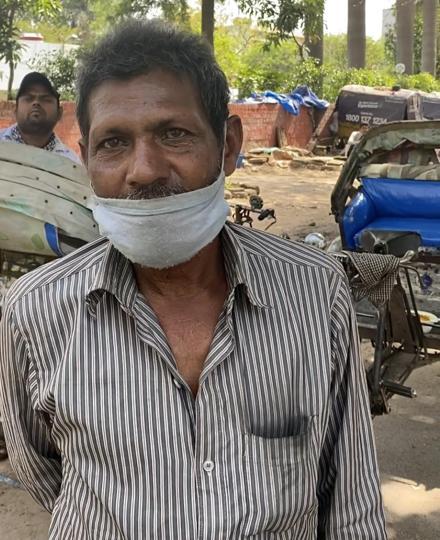
Rameshwar a rickshaw-puller of Uttar Pradesh says, “Every year, at this time of the year, I used to return to my village to harvest wheat. Can I not get a pass to go home somehow?”
He lives along with four others in roofed rickshaws meant for school children. The rickshaws are parked by the wall of the Government High School, Sector 35-A. The stove built by the wall of the school has not been lit for many days.
Sunder, yet another rickshawala from UP, says, “We are not earning anything. I am very unhappy. I want to go home but how do I do that? Even the money I had saved for my family has been spent.”
He breaks down while speaking to noted psychiatrist Simmi Waraich, a resident of Sector 35, who has taken it upon herself to provide a helping hand to the homeless daily wagers living in the corridors of the market and other open spaces.
“They are now getting some food but it is not enough so some people are providing them with sugar, tea leaves and milk so that they can make some tea.”
ELITE WORRIED ABOUT CLUSTERS
What is sad is that some of the elite of the sector are worried that the rickshaw pullers are not safe because they live in clusters. However, an effort has been made to tell them the do’s and don’ts and the police has provided them with masks.
Pramod Sharma, founder-coordinator, Yuvsatta (Youth for Peace), says “This section need to be treated with empathy for they are the most disadvantaged of the labourers. They have been providing services to the city while living in the open”.
The rickshaw-pullers’ presence in the prestigious city is as old as the city itself. The cycle rickshawalas with their spacious Saharanpuri rickshaws started pedaling on the city roads from the 1950s as the earliest mode of transportation for the inhabitants here.
Pinky Rani, project manager of Yuvsatta, in Bapu Dham Colony in the city’s Sector 26, points out that they are in dire straits and they only get meals once a day.
“Earlier the pradhan of the colony was distributing some rice and dal in the evenings but that too has been stopped,” Rani says.
‘PEOPLE LIVING AT HOME, RICKSHAW PULLERS WITH STRAYS’
Raj Kumar, 38, says “There are around 1,000 rickshaw peddlers and vegetable sellers with carts who are on the brink of starvation here in our colony and the administration should help us.”
In spite of the travails he is facing Sunder of Sector 35 says, “I know that I am not the only one in trouble, everyone is suffering but I just wish I was with my family in the village home!” Waraich says, “We need to reach out to these hapless people. We live in homes and some of us have two floors and a garden. They live in the open with stray dogs!”
Vinod, a rickshawala living with eight others outside the quiet offices in Sector 35, says, “At present, there are only women are in our villages and they cannot do the harvesting so we are hoping we will get passes to return home!”


