Acting on a National Green Tribunal directive, the Chandigarh Pollution Control Committee has developed a mobile app to facilitate residents’ complaints regarding air pollution.
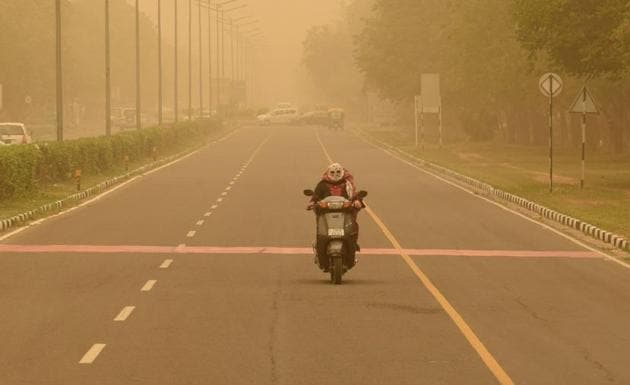
Created with the assistance of the National Information Center (NIC), Delhi, the Android-based app is currently in the testing stage. It has been developed on the lines of the Central Pollution Control Board app “Sameer”.
“The tribunal had directed CPCC to develop a public grievance redress portal for complaints on air pollution, along with a supervisory mechanism for its disposal mechanism,” said a UT official.
NGT also told the committee to evaluate functioning of such portals on a real-time basis in the interest of protection of environment and public health, and to enforce the rule of law.
“In particular, analysis may be undertaken about the number of complaints received, nature of issues raised and remedies provided. Such exercise has to be ongoing,” the tribunal’s order stated.
Worsening air quality
Chandigarh’s air quality index (AQI) was largely under the “satisfactory” category before the Covid-19 lockdown in March. Thereafter, it shifted to the “good” category.
The air quality is measured through the AQI. An AQI between 0-50 is considered good, 51-100 satisfactory, 101-200 moderate, 201-300 poor, 301-400 very poor and 401-500 severe.
In the months following the lockdown, the pollution levels have been consistently rising following lifting of restrictions and increase in economic activity and are currently at the “moderate” level.
{{/usCountry}}In the months following the lockdown, the pollution levels have been consistently rising following lifting of restrictions and increase in economic activity and are currently at the “moderate” level.
{{/usCountry}}Emergency preparedness
CPCC has also developed a Graded Response Action Plan (GRAP) as part of the city’s emergency preparedness in case air quality dives severely. This was stated by the committee in its recent meeting with the NGT.
The strategies include reduction in number of vehicles and effective traffic management. It also lays down closing of polluting industries, shutting schools, control of diesel generator set usage, stopping construction activities, odd and even scheme for private vehicles, and closing of brick kilns, stone crushers, hot mix plants and power plants.
Besides this, the plan includes mechanised cleaning of road, sprinkling of water, curtailing open burning of coal/wood at open eateries, road dust, construction dust and entry of trucks.