
 E-Paper



Bengaluru Business Corridor to run 700 metres through reserve forest stretch: Report
Bengaluru's Peripheral Ring Road project raises environmental concerns as it will cut through Jarakabande Kaval reserve forest.

 Prefer HTon Google


Bengaluru’s long-delayed Peripheral Ring Road (PRR) project has revived environmental concerns after officials confirmed that the proposed alignment will cut through a portion of the Jarakabande Kaval reserve forest, one of the last remaining green stretches in north Bengaluru.
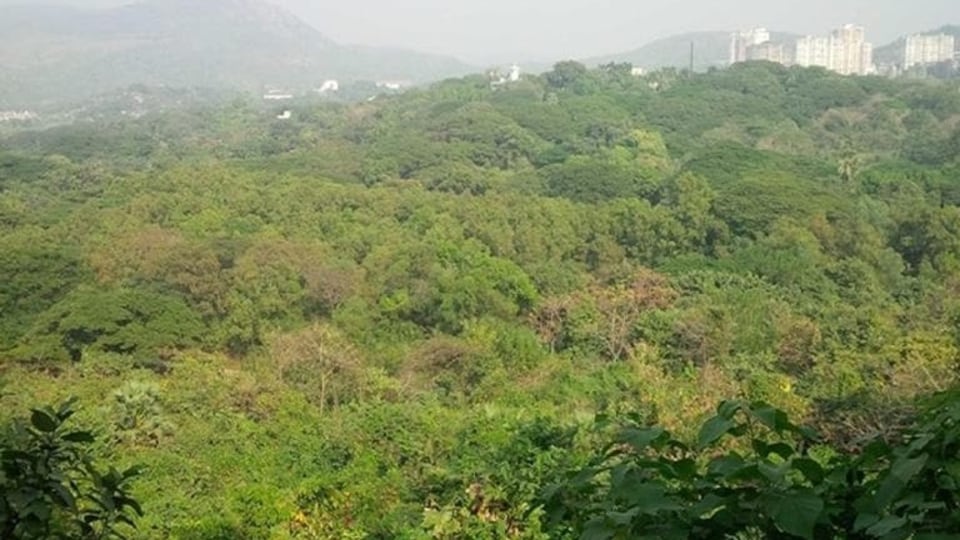
The 73 km road, meant to connect Tumakuru Road with Hosur Road, will require diverting forest land and removing large sections of vegetation along its path.
(Also Read: New Bengaluru Business Corridor promises faster travel, less traffic. Here’s the route)
According to LK Atheeq, chairman of Bengaluru Business Corridor Ltd, a 700-metre segment of the PRR will pass through the reserve forest, Times of India reported.
He said the road would be elevated to a height of 5.4 metres in this stretch, built as a 35-metre-wide flyover supported by two piers. To limit disturbance, no service road has been proposed.
Atheeq said 2.4 hectares of forest land would be diverted and that undergrowth would be rejuvenated after construction, the report further added.
However, he did not disclose the number of trees likely to be felled. A revised Environmental Impact Assessment (EIA) submitted in 2022 had estimated that 631 trees would be cut within Jarakabande Kaval alone.
The report identified a total of 36,824 trees across the entire PRR alignment that would make way for the project, including 13,355 trees in the TG Halli reservoir catchment area. It had also warned that 20.9 km of the alignment would run through sensitive Arkavathy and Kumudavathy sub-catchments.
Although the proposal to route the PRR through Jarakabande Kaval, also known as Avalahalli forest, has existed for several years, the Bangalore Development Authority has yet to formally seek forest land diversion. Fresh afforestation has not been taken up along the alignment, the official said, warning that the project will inevitably affect forest cover.
Spread across 120 acres, the forest draws 400–500 visitors on weekends and hosts diverse vegetation. According to the publication, environmentalists fear additional pressure from ongoing urbanisation and nearby projects.
KS Sangunni cautioned that construction activity, heavy machinery, and the movement of vehicles could disrupt wildlife, disturb birds, and damage shrubs that play an essential ecological role.
(Also Read: Bengaluru traffic: Panthur Main Road to reopen on Monday as white-topping project gets completed)


