After 37 rounds of counting, spread across five days, Panjab University (PU) on Monday finally declared the results of the 15 registered graduate constituency seats of the 91-member senate, bringing to an end one of the longest counting exercises in the university’s recent history.
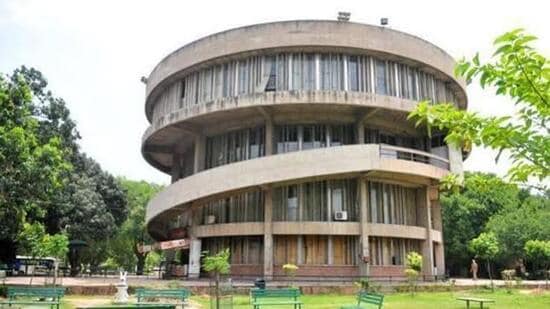
The senate is the varsity’s highest statutory body and takes key decisions on budget, regulations, academic policies, creation of departments and major administrative matters. It also elects members to the syndicate, the university’s executive body responsible for day-to-day governance.
Apart from ex-officio and nominated members, the senate draws members from a wide range of stakeholders, including principals of affiliated colleges, professors, associate/assistant professors, and registered graduates. The graduates’ constituency is the largest having 15 seats and over 6 lakh voters. To cater to these voters, PU had set up booths across seven states: Punjab, Haryana, Himachal Pradesh, Uttarakhand, Rajasthan, Delhi and Jammu and Kashmir. After consolidation of ballots from various states, counting for this phase had begun on September 23.
Voting system
{{/usCountry}}Voting system
{{/usCountry}}The senate follows the preferential voting/single transferable vote system, under which voters mark candidates in order of preference. The first-preference votes are counted initially, following which the prescribed counting procedure involves the transfer of surplus votes of elected candidates and, where required, the transfer of votes of eliminated candidates according to the next available preferences. Therefore, the first-preference tally alone does not determine all 15 elected members.
According to the final counting chart, 60,044 votes were polled, of which 6,075 were declared invalid, leaving 53,969 valid votes. The winning quota was fixed at 3,374 votes.
Among the earliest winners were Mukesh Kumar Arora, who topped the poll with 3,424 votes. He was followed by Sandeep Singh Sikri (3,044), Ashok Goyal (2,775) and Simranjit Singh Dhillon (3,374), all of whom crossed the quota in the initial stages of counting. Arora is among PU’s most experienced senate faces, having made it to the body seven times, of which five elections were fought through the graduate constituency.
As vote transfers progressed, Shankar Choudhary (3,380), Varinder Singh (3,040), Surjit Singh (2,986), Sukhdev Singh Sirsa (2,985), Jodh Singh Advocate (2,980), Amnender Mann (2,727), Lajwant Singh Virk (2,517), Gurraj Singh (2,415), Kapil Sharma (2,392), Mehar Singh (2,375) and Naresh Gaur (2,061) made it to the winners’ list. Jodh Singh Advocate, 27, the convenor of the student organisation Sath, has become the youngest candidate to be elected to the senate this time around.
Although the graduate constituency elections are now complete, the senate will be fully constituted only after the remaining phases are completed and the process receives the chancellor’s approval. The final phase, slated for October 4, will see the election of six ordinary fellows from various university faculties. The four-year term of the previous senate had expired on October 31, 2024.