
 E-Paper



Go-green Miyawaki way: IAS officer spearheads initiative to boost Punjab’s forest cover
Young officer Setia has successfully developed 40 forests across Punjab in last 3 years and planted almost 3.4 lakh trees in the state. He is upbeat about the Miyawaki method.


On a sunny October afternoon, 2017 Indian Administrative Services ( IAS) officer, Sagar Setia is busy giving directions to his ground staff, while checking full-blown trees in a Fazilka village, saplings of which were grown as part of a plantation drive just 14 months ago. This forestry, however, is different. It is based on the unique concept of Miyawaki’s technique and unlike many other of his contemporaries, Setia has turned his love for nature into a full-fledged afforestation.
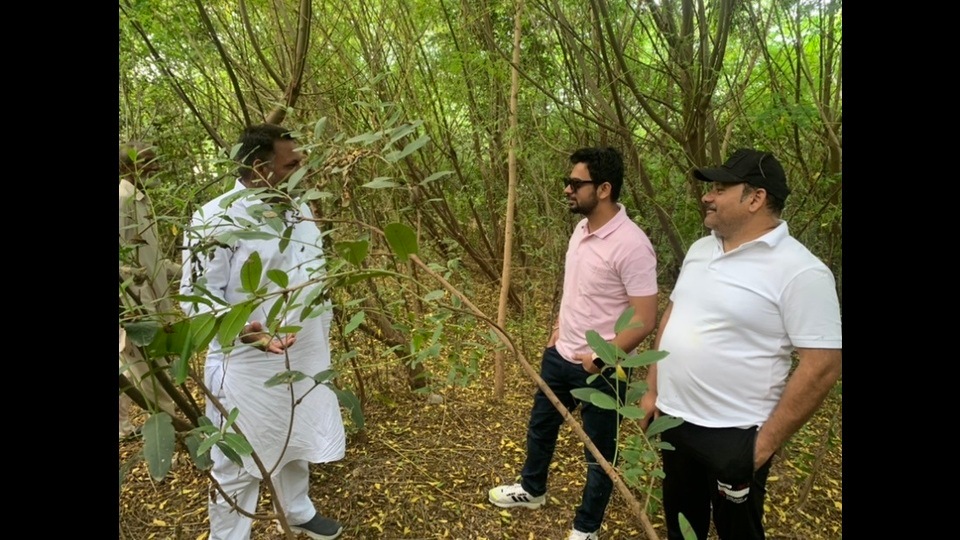
This young civil services officer is upbeat, about the way Miyawaki method accelerates forest development by constructing soil, utilising native plant diversity, growing healthy saplings, and planting them close together.
“As the Miyawaki’s technique has managed to regenerate forests from Thailand to the Amazon, we thought to replicate the model in Punjab,” said Setia, now posted as additional deputy commissioner (general), Ferozepur.
Sethia has successfully developed 40 forests across Punjab (Ludhiana, Mansa and Fazilka districts) in the last 3 years and planted almost 3.4 lakh trees. He says Miyawaki’s methodology to grow saplings , which converts any land into a self-sustainable forest in a very short span, is a key take-away of this technique.
“It all started on December 31, 2019, when while posted as SDM Payal, a maiden project was initiated thereafter deeply analysing the methodology of eminent naturalist Akira Miyawaki, to cultivate a forest by exploring funds from MNREGA,” he said. “The idea is to bring back the native forests by planting local varieties. They are self-sustainable, maintenance-free and helpful in fighting climate change,” said Setia.
Going green by expanding Punjab’s forest cover has not been an easy task though. Setia says departmental synergy has been a major driving force for this initiative.
“Many hiccups came up including tackling the different topography of various areas of Punjab. Later convincing the ground team to convert an empty land into a beautiful green spot in few months was an uphill task. There was limited initial success, entire ground staff team became a part and parcel of this initiative and boosted my morale manifold,” he said. Even after Setia’s transfer, the ground staff that was associated with the initiation of this green initiative is taking keen interest and stay engaged in the activities.
“We manage end-to-end services including an arrangement of labour, material, equipment, tools and facilities required to execute an afforestation project using the Miyawaki Method for creating natural, wild, maintenance-free and native forests,” said Setia. He says soil test is the primary requirement for the Miyawaki technique followed by preparation of the saplings. “The process starts with doing a soil survey and finding out what the soil is missing followed by a survey to study the native plant species and biomass. After the survey, saplings are prepared in a nursery and soil is mixed with biomass to make it more fertile,” he informed.
Explaining this method further, Setia says, “Finally the process of planting 50 to 100 varieties of native species at a density of 3-5/square meter starts. The last stage involves watering and weeding the area for the next few months, after which the forest needs no maintenance and becomes self-sustainable,” he furthered. “We plant about 8500-9000 saplings in an acre and out of which more than 70% survive quite well,” he said, adding that soon a similar campaign will also be launched at Ferozepur, while the process to earmark the probable locations has commenced.
Himanshu Aggarwal, deputy commissioner, Fazilka acknowledged the success of Miyawaki forests, adding that concerned officials are pushing “My Village My Forest Project”, which was started by the then ADC (Development) Sagar Setia, with the aim to plant at least 75 forests this year in line with 75 years Amrit Mahotsav celebrations. Out of these 35 are now completed and another 27 are ongoing, he added.


