
 E-Paper



Guest Col | The power of small steps: People’s walk against drugs
The "People’s Walk Against Drugs" has evolved into a significant anti-drug movement in Punjab, emphasizing the urgent need for civil society involvement.


The power of the first step should never be underestimated, for I witnessed it firsthand. On December 11, I completed the second year of the “People’s Walk Against Drugs”. The first edition, held last year, was the result of an impromptu decision to awaken the civil society after watching haunting videos of Punjabi boys dying from drug consumption. That 100-kilometre walk began in New Chandigarh and ended at Bhagat Singh’s native village Khatkar Kalan.
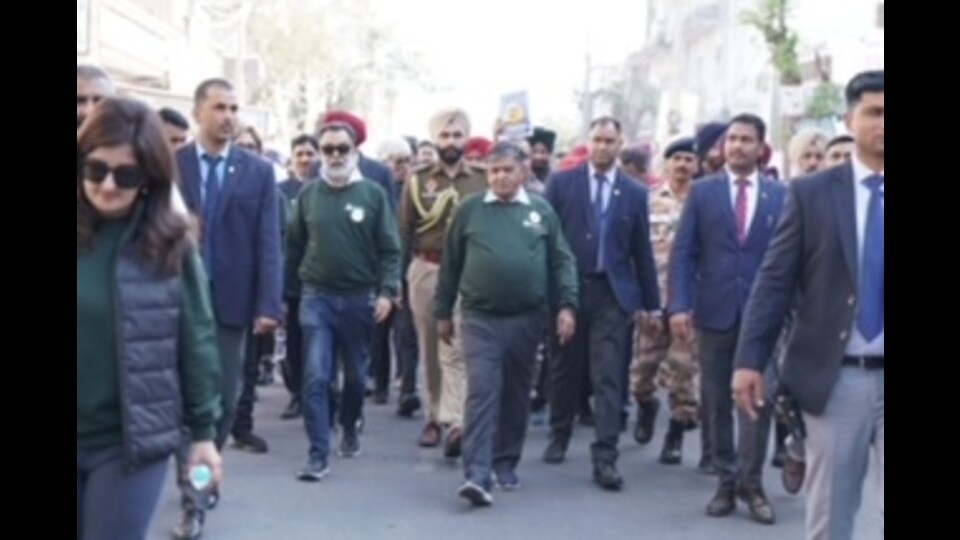
By the time I took the final stride of the 2024 walk — this time starting from my native village Chhauni Kalan and ending at the Jung-E-Azadi Memorial in Kartarpur, Jalandhar — the initiative had transformed into a full-fledged anti-drug awareness movement. Of course, the joining of Punjab governor Gulab Chand Kataria during the last two days added a multiplier effect. His walking 15 kilometres at the age of 80 provided that much-needed shot in the arm that can turn small initiatives into significant movements.
Building strong narrative against drugs
A thorough gentleman with a balanced approach — that is the impression I formed during our many conversations along the walk — he came across as someone genuinely committed to contributing his part in helping Punjab build a strong narrative against drugs. It took him only a moment to decide to join me after I shared my programme and earlier experiences. “Khushwant ji, main aapke saath do din chalunga,” he had said when I met him for the first time in my life. And sure enough, thousands turned up, including Red Cross volunteers led by its honorary secretary Shiv Dular Singh Dhillon.
A state on the brink
The urgency could not be clearer. Punjab faces a catastrophe. According to the 2023 Parliamentary Standing Committee on Social Justice and Empowerment, around 6.6 million people in Punjab consume drugs — 7,00,000 of them are children aged 10 to 17. The numbers are staggering: One in five Punjabis is struggling with drug addiction. Meanwhile, the recovery rate remains a dismal 1.5%.
Civil society movement need of the hour
In the face of such statistics, enforcement alone cannot solve this crisis. Punjab clearly needs a civil society movement — one that engages its youth, mothers, educators, and leaders. Over the past two years, walking nearly 150 kilometres and speaking to over 10,000 students and visiting over thirty-forty schools and colleges, I have reached a troubling realization: hardly anyone has spoken directly to Punjab’s youth about the grim reality of drugs.
This absence of honest, practical conversations is glaring. Youth must be told in an effective way that why they are at risk and how to choose the correct path — one of education, health, and opportunity over drugs. Most importantly, they need to feel proud of their roots, of coming from a state where even smoking was once a taboo. How then has one strip of a pharmaceutical drug managed to rob Punjab’s youth of their pride and lives?
Easy access to pills
The biggest culprits are Tramadol and Pregabalin — medications consumed in staggering numbers across the state. These medicines, rampant and dangerously easy to access, are as insidious as they are deadly. At times, I wonder: Which border is more dangerous — the one with Pakistan or the one with Baddi, where pharmaceutical production has created a pipeline of despair?
The situation is so dire that during this year’s walk, I was joined by soldiers from the Army Recruitment Board in Jalandhar, who counselled students in the schools to join the army, where I would stop to talk. The Indian Army is worried. Punjab, once its proudest recruiting ground, is losing its youth to drugs or emigration. Same boys and girls who could have served the nation are now failing fitness tests.
‘Mothers Against Drug’
From this initiative emerged a powerful thought, as many women would turn up for the walk. That mothers can be empowered as the first line of defence against drugs. This idea is now being amplified by the Punjab Lit Foundation, an NGO that I co-founded this year to help build a better narrative for Punjab. Advocating for a movement called “Mothers Against Drug”, PLF’s co-founder Sanna Kaushal is spearheading this, trying to impress that empowering mothers could turn the tide in this fight.
The time for small, disconnected initiatives and political slugfests is over. Punjab needs a clear, structured action. Here are a few steps I recommend as key learnings from these two walks:
Mother-teacher partnerships: Introduce special parent-teacher meetings focused on empowering mothers with knowledge and vigilance for children aged 10–17.
Training teachers: Implement a compulsory two-day training programme for all schoolteachers to help them understand the issue and their role in addressing it.
Educating panchayats: Organise similar training sessions for sarpanches, panches, councillors and corporators to create grassroots awareness.
Above all, approach this crisis with sincerity — not as an opportunity to score political points. Punjab’s youth deserve better than to be reduced to mere votes.
khushwant.ahluwalia@gmail.com
(The writer is an author and former information commissioner of Punjab. Views expressed are personal)


