
 E-Paper



Guest Column: Withering cotton cultivation in Punjab
The weather and market uncertainties are two key factors contributing to the farmers’ reluctance to adopt cotton cultivation. Erratic rainfall and subsequent water scarcity, coupled with over-extraction of groundwater, worsen the situation for cotton growers.

 Prefer HTon Google


Cotton has been a preferred crop in southwestern Punjab due to its low water requirement and the promise of better returns for growers. The government endorsed it for its potential to diversify the state’s crops. However, indigenous cotton varieties had become less profitable and more susceptible to pests over the years, leading to a decline in cotton cultivation. The introduction of Bt cotton in 2006 sparked hope among growers, resulting in increased cultivation areas and incomes.
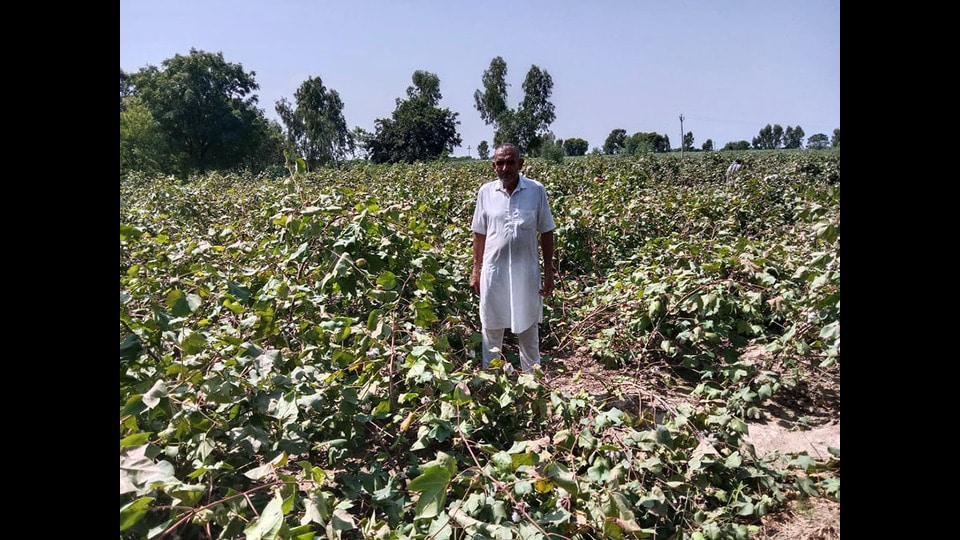
In 2006-07, cotton cultivation reached its peak, covering 6.04 lakh hectares and yielding an average of 750kg of lint per hectare, with a total production of 2.7 million bales. The cotton production, however, plummeted to its lowest point, hitting 3.93 lakh bales in 2015-16. The decline was attributed to whitefly infestations caused by incorrect seeding practices and the application of substandard pesticides and insecticides. This year, the area under cotton shrank to 3.39 lakh hectares, with an average yield of 197kg of lint per hectare and a total production of 3.93 lakh bales.
As of 2022-23, the present cotton cultivation area stands at 1.89 lakh hectares, which is lower than the previous year’s 2.51 lakh hectares (2021-22) when production reached 6.46 lakh bales, with a productivity rate of 437kg of lint per hectare, marking the second-lowest level in the past two decades, with the lowest recorded in the 2015-16 season.
Apart from issues related to the supply of quality seeds and agrochemicals, cotton cultivation in Punjab faces challenges that deter farmers from embracing it. The weather and market uncertainties are two key factors contributing to the farmers’ reluctance to adopt cotton cultivation. Erratic rainfall and subsequent water scarcity, coupled with over-extraction of groundwater, worsen the situation for cotton growers.
Persistent pest infestations, particularly from the pink bollworm and whitefly, have plagued cotton cultivation in Punjab. These pests have developed resistance to chemical pesticides over time, leading to a substantial drop in cotton production and significant losses for farmers in the Malwa region.
Volatility deters growers
Market volatility in cotton prices adds to farmers’ apprehensions towards cotton cultivation. Cotton prices can fluctuate by as much as 20% within a single season. Many Punjab farmers remember instances where sudden drops in cotton prices left them with lower incomes than expected, discouraging them from taking the risks associated with cotton cultivation. Cotton prices were approximately ₹2,000 a quintal in 2006-07, increased to about ₹5,000 a quintal in 2015-16, and currently stand at over ₹10,000 a quintal.
Historically, government policies in Punjab favoured wheat and rice cultivation and provided price support and procurement mechanisms. These policies, designed to ensure food security, created a comfort zone for farmers, reducing their incentive to diversify into other crops like cotton. The Minimum Support Price (MSP) for wheat and rice in Punjab provided a safety net for farmers for decades. In contrast, cotton lacks similar price support, contributing to farmers’ reluctance to embrace it. The Cotton Corporation of India and state agencies do very little to stabilise the market through presence and procurement at the MSP, particularly during market instability. The cotton purchase by these agencies rarely exceeds 10% of total production, and it has been almost nil in recent years.
The focus on wheat and rice, which require more water, exacerbates groundwater depletion. The excessive use of chemical fertilisers in these crops also contributes to soil degradation and water pollution. Data from the Central Ground Water Board reveals that over 80% of Punjab’s districts are experiencing excessive groundwater exploitation, leading to a drop in water tables.
Underutilising resources
The underutilisation of cotton spinning and ginning mills due to decreased cotton production has resulted in job losses in these industries. Out of the 400 ginning mills in the state in 2010, 80% have either closed or relocated to neighbouring states, leaving only 80 functional mills now. The major textile mills in the state are also operating at about half of their capacity. These mills face challenges due to decreased local cotton production and consequent rise in prices. Cotton imports have become costly due to duties imposed by the Government of India that were uncommon in the past. Resultantly, jobs in these mills are dwindling, input costs are increasing, and margins are under stress, forcing them to either hold back on new investments and modernization or explore alternative diversification options.
Comprehensive measures are needed to promote cotton cultivation in the state, which otherwise is withering. It is necessary to sustain it as an alternative crop, not only for crop diversification and raising farmers’ incomes but also for the sustenance of cotton ginning, spinning, and textile mills and protecting and promoting employment. In this effort, policies should encourage efficient irrigation techniques, promote crop rotation, and support rainwater harvesting to address water scarcity issues and reduce the water footprint of cotton. Integrated pest management (IPM) practices that reduce reliance on chemical pesticides, including the use of natural predators and resistant cotton varieties, deserve more attention.
Incentives, research to the rescue
The government should provide financial incentives, subsidies, and insurance schemes to support cotton farmers during periods of low production. Fair-pricing mechanisms should facilitate timely marketing and procurement of cotton. The government’s crop diversification programmes (CDP) should aim to educate farmers about crop diversification and provide technical assistance and financial support.
Investment in research and development should focus on developing new cotton varieties that are drought and pest-resistant and promote innovative farming practices suited to Punjab’s climate. The Punjab Agricultural University should research and try genetically modified Bt cotton varieties to identify those appropriate for current climatic conditions before their adoption in Punjab.
Promoting cotton cultivation as an alternative crop for diversification in Punjab is a complex challenge, but it holds the potential for economic, environmental, and social benefits. The barriers to cotton adoption, such as water scarcity, pest infestations, and market volatility, require concerted efforts from government, agricultural experts, farmers, and industry. Punjab should work towards revitalising its cotton farming sector by implementing sustainable practices, supporting cotton farmers, and modernising the textile industry. A comprehensive cotton revival programme should be evolved based on existing data, evidence, and requisite technical research and support, with farmers, trade, and industry as equal; stakeholders and partners. sureshkumarnangia@gmail.com
The writer is a retired Punjab-cadre IAS officer. Views expressed are personal.


