Despite opposition from the Bharatiya Janata Party (BJP), the Himachal Pradesh Assembly on Thursday passed the Indian Stamp (Himachal Pradesh Second Amendment) Bill, 2026, reducing stamp duty for women purchasing property worth up to ₹1 crore from 8% to 4%.
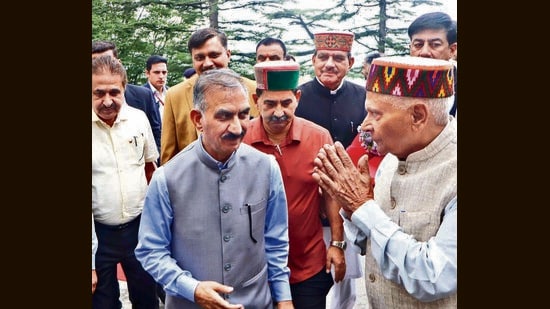
Terming it a step towards “women empowerment”, chief minister Sukhvinder Singh Sukhu said the move was aimed at encouraging property purchases in the name of women.
Under the amended provisions, women will pay 4% stamp duty on property purchases up to ₹1 crore, while properties valued above ₹1 crore will attract 8% duty for both women and other buyers. For men and other buyers, the duty will be 6% on properties valued up to ₹40 lakh and 8% on those above ₹40 lakh.
The amendment also provides for higher stamp duty and fees in several other categories, including transactions involving people from outside Himachal Pradesh. A 12% duty will be levied on outsiders acquiring property, either through transfer or lease, with government permission under Section 118(2)(h) of the Himachal Pradesh Tenancy and Land Reforms Act, 1972. The rate will apply equally to men and women.
The government has also tightened provisions relating to the re-registration of the same property between the same buyer and seller within a year. If the combined value of such transactions exceeds the prescribed limit, an 8% stamp duty will be levied by aggregating the transaction values.
{{/usCountry}}The government has also tightened provisions relating to the re-registration of the same property between the same buyer and seller within a year. If the combined value of such transactions exceeds the prescribed limit, an 8% stamp duty will be levied by aggregating the transaction values.
{{/usCountry}}A fee equivalent to 100 times the standard stamp duty will be charged for executing a Power of Attorney in favour of a non-resident living outside Himachal Pradesh or in relation to property located outside the state.
The BJP opposed the Bill, arguing that the government was imposing a financial burden on people to address the state’s fiscal challenges. Leader of Opposition Jai Ram Thakur said the hike in stamp duty was “exorbitant” and alleged that rates had been increased across almost every category.
“The state is undergoing fiscal challenges but that does not mean to burden common man with financial burden by raising stamp duty,” Thakur said, urging the government to withdraw the Bill and reconsider the proposed increases.
BJP MLA Trilok Jamwal alleged that the government was seeking to change the entire Act in the name of amending certain sections.
Revenue minister Jagat Singh Negi defended the increases, saying stamp duty rates had not been revised since 2012 and needed to be rationalised in line with current circumstances. He said the higher charges were also intended to check the misuse of General Power of Attorney arrangements by non-Himachalis in property transactions.
Negi said the government had reduced stamp duty for women while increasing rates in categories where, he argued, the higher charges would primarily affect those with the ability to pay.
“We are trying to check corruption and the rates have not been revised since 2012. The Centre is not giving our share, RDG has stopped, and now when we are trying to generate revenue through our resources, you are objecting to the same,” Negi said.
Daughters-in-law of govt land encroachers barred from local polls
The Himachal Pradesh assembly on Thursday also passed the Himachal Pradesh Panchayati Raj (Amendment) Bill, 2026, barring a daughter-in-law from contesting panchayat elections if her in-laws’ family has encroached upon government land. The Bill was passed despite opposition from the BJP, which termed the provision “anti-women”.
Rural development and panchayati raj minister Anirudh Singh tabled the Bill to amend the Himachal Pradesh Panchayati Raj Act, 1994, by expanding the definition of “family” to include a daughter-in-law.
Under the existing provisions, a person found to have encroached upon government land, as well as their son, was barred from contesting elections to panchayats or municipal bodies, while the daughter-in-law remained eligible. The amendment extends the disqualification to the daughter-in-law.
The State Election Commission had suggested changing the definition of “family” six years ago.
Opposing the Bill, BJP MLA Randhir Sharma said a daughter-in-law came from a different family and should not be penalised for an act committed by her in-laws. He alleged that the provision was aimed at targeting specific individuals.
Leader of Opposition Jai Ram Thakur also termed the Bill “anti-women”, alleging that the government was curtailing democratic rights. He urged the government to withdraw it, claiming it would not withstand judicial scrutiny.
Defending the legislation, rural development minister Anirudh Singh said the Bill had been introduced after obtaining legal opinion and argued that a daughter-in-law, being an integral part of the household and a beneficiary of its amenities, should also be covered by the rules.
Singh advocated a “one state, one law” principle, saying the amendment was intended to ensure that the law applied uniformly to families involved in encroachment.
He noted that often those who had encroached upon land and were thus ineligible to contest elections themselves often fielded their wives or daughters-in-law instead.