Himachal Pradesh has become one of the first states in the country to developed an integrated artificial intelligence (AI) applications to enhance forest restoration and disaster resilience.
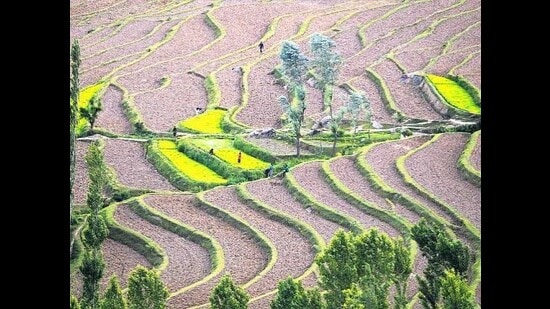
This AI-powered systems assists —WhereToPlant and WhatToPlant—helps local communities and farmers in scientifically identifying suitable plantation sites and selecting native tree species most likely to survive under local ecological conditions.
Himachal Pradesh State Disaster Management Authority (HPSDMA) special secretary Pushpendra Rana said, “Himachal has been facing frequent natural disasters from past few years. Plantation programmes have been running for decades and many have produced encouraging results, but our research found that nearly 50% of plantation budget was being spent at locations where site suitability was poor or where adequate vegetation already existed. So these AI powered applications were conceived.”
Rana said the findings were published in the journal World Development in 2022, following which the department spent the next three to four years developing AI-based tools capable of scientifically identifying suitable plantation sites and recommending the most appropriate native species.
The WhereToPlant platform combines artificial intelligence, machine learning, geospatial analysis and ecological modelling to evaluate plantation suitability using more than 3,050 environmental variables, including soil characteristics, climate, rainfall, terrain, elevation and existing vegetation. While the WhatToPlant platform addresses the second critical challenge by identifying the most suitable native tree species for every plantation site.
Rana said that the entire state has been divided into nearly 7,95,000 landscape tiles, each covering around seven hectares, corresponding to the average plantation block size in Himachal.
{{/usCountry}}Rana said that the entire state has been divided into nearly 7,95,000 landscape tiles, each covering around seven hectares, corresponding to the average plantation block size in Himachal.
{{/usCountry}}“The application is extremely simple to use. It is integrated with Telegram. A user only needs to access the application at a location. The system automatically captures GPS coordinates and the underlying machine-learning models instantly analyses,” he explained.
The application predicts the ecological suitability of 98 native tree species under specific environmental conditions, he said.
“We have developed ecological suitability models for 98 native tree species using extensive field data collected by forest staff across the state. When a user checks a location, the application not only indicates whether plantation is suitable but also recommends the most suitable native species for that particular site. Species are displayed using their local names so that communities can easily understand and adopt the recommendations. The user will also be directed to the nearest forestry nursery where those saplings are available.”
The forest department began piloting the application on a large scale under various plantation programmes last year. “Our initial assessment indicates that plantations undertaken using the application have recorded a success rate of nearly 82 to 85%. If these results continue, AI can significantly reduce wastage while substantially improving ecological restoration across the state,” he said.
Focusing on the need of resilient ecosystems, Rana said, “Today, Himachal is investing heavily in roads, bridges and other public infrastructure. However, infrastructure alone cannot protect the state from future disasters. We also need ecological resilience. Healthy forests and resilient ecosystems must develop alongside physical infrastructure. Ecosystem-based approaches offer one of the most effective long-term solutions for reducing disaster risks.”
“When infrastructure development and ecological restoration move together, Himachal Pradesh will be far better prepared to face future natural disasters. These applications will help us identify where ecological recovery can be initiated most effectively, making the state’s development more sustainable and resilient,” he added.