Himachal Pradesh’s beekeeping industry is facing a serious threat from the small hive beetle (SHB) (aethina tumida murray) in local apiaries, posing a grave threat to the production of over 1,500 metric tons of honey annually.
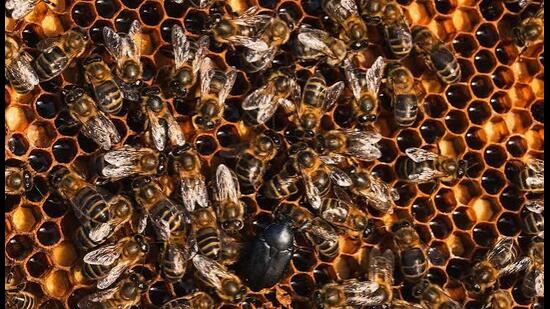
So far, the industry has already faced losses of ₹3 crore since June this year with the infestation of the SHB with Kangra being the worst hit. Bee keeping is largely done in districts including Kangra, Hamipur, Una, Chamba, Kullu and Lahaul in Lahaul Spiti.
Himachal is home to 37,000 colonies managed by approximately 2,500 commercial beekeepers, producing more than 1,500 metric tons of honey annually. In addition to commercial operations, thousands of local and traditional beekeepers across the state could also be severely affected by an SHB infestation.
As per the estimates of the horticulture department, so far, the bee keeping industry has faced 39% loss with Kangra being worst affected. The state has a total 2,500 registered bee keepers of which Kangra had 1,950 registered bee keepers. The threat extends beyond honey production, as honeybees are important pollinators of agricultural and horticultural crops. A decline in healthy colonies can therefore have implications for crop production and the wider ecosystem.
Delegations raises concerns with Sukhu
{{/usCountry}}Delegations raises concerns with Sukhu
{{/usCountry}}Raising concern, a delegation of beekeepers, led by deputy chief whip Kewal Singh Pathania, met chief minister Sukhvinder Singh Sukhu on Saturday to apprise him about the rapid spread of the SHB, which has particularly affected beekeepers in the lower areas of Himachal Pradesh, causing them considerable losses.
Sukhu said that apiculture is an important agricultural and livelihood activity in the state. He said that the state government was making continuous efforts to promote beekeeping in the state and assured the delegation that the state government would make every effort to address the problem through scientific means so as to safeguard the beekeepers from any further losses.
‘Controlling pest a challenge’
Horticulture department joint director Dr Kamalsheel Negi said they organised an awareness camp for beekeepers at Shahpur last week to sensitise them to the growing threat posed by the small hive beetle and measures to protect bee colonies.
Negi said, “Controlling SHB is challenging as there is at present no chemical treatment considered sufficiently safe to kill the pest without posing a serious risk to honeybees. Indiscriminate use of pesticides around hives can consequently harm the very colonies they are intended to protect.”
He said, “We have issued an advisory to the beekeepers to adopt biological control measures, including the use of beauveria and metarhizium, to contain infestations without harming honeybees.”
SHB infiltrate bee colonies
The pest has reportedly been detected on an unusually large scale in Himachal this year, including in the Kangra region, raising concern among beekeepers and scientists over its rapid spread.
Originally traced to West Bengal and later reported in Punjab, the invasive pest has now spread to Himachal Pradesh, raising alarms among apiculturists.
The SHB is an aggressive pest that can infiltrate bee colonies, multiply rapidly and destroy brood, honey, pollen and combs. In severe infestations, it can force entire colonies to abandon their hives, resulting in substantial economic losses to beekeepers.
Believed to have originated in sub-Saharan Africa, the SHB has spread to several countries. Its presence was recorded in Bangladesh in 2020 and subsequently in North 24 Parganas district of West Bengal in 2024 before it spread to other states, including those in North India.
Adult beetles are strong fliers and can travel 10km to 12km in search of bee colonies. They can also manipulate worker honeybees into tending and feeding them.