
 E-Paper



Karnal: NDRI commercialises eight rapid milk quality assessment technologies
Scientists said that the technologies are expected to strengthen quality assurance across the dairy value chain by enabling rapid and reliable screening of adulterated milk

 Prefer HTon Google


The Indian Council of Agricultural Research -National Dairy Research Institute (ICAR-NDRI), Karnal, commercialised eight rapid technologies for detecting milk adulteration by licensing them to an Indore-based private firm.
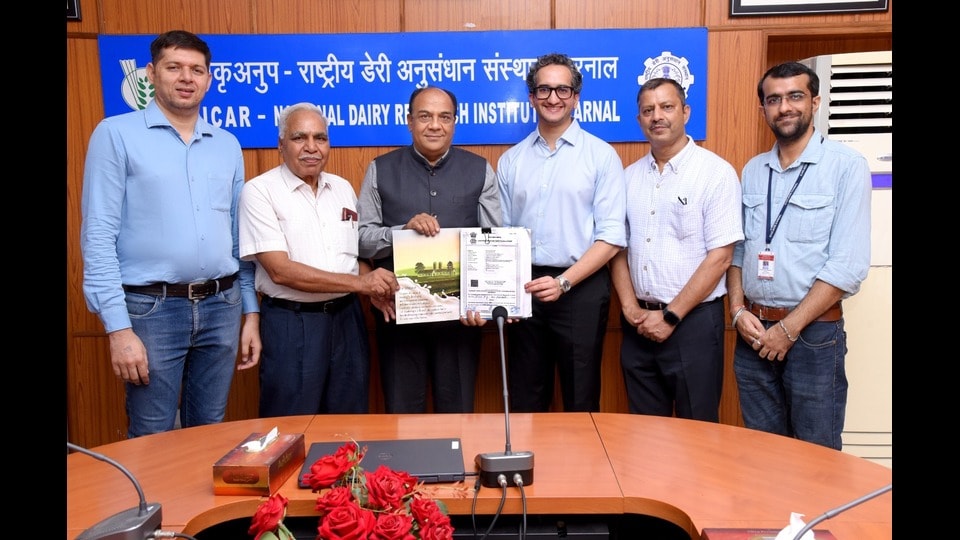
Scientists said that the technologies are expected to strengthen quality assurance across the dairy value chain by enabling rapid and reliable screening of adulterated milk.
NDRI director Dheer Singh said that institute’s continued commitment to translating research into practical technologies for the benefit of the dairy sector.
“The licensing agreement represents another important milestone in ICAR-NDRI’s efforts to transfer indigenous technologies to industry for large-scale adoption. The technologies comprise paper strip-based rapid tests for the detection of neutralisers, urea, hydrogen peroxide, glucose, sucrose, maltodextrin, salt, and formalin in milk,” he said.
Developed through a multidisciplinary collaboration between the dairy chemistry division and the animal biochemistry division of ICAR-NDRI, these technologies are protected by patents.
Besides offering rapid results, the developed tests provide superior sensitivity compared to conventional methods and all eight tests can be completed within 10 minutes, while some produce results almost instantaneously.
Joint director (research) Rajan Sharma said that the rapid tests are designed for use at milk collection centres, enabling early identification of adulterated milk before it enters the processing chain.
Sharma noted that the tests are simple to perform, require no sophisticated instrumentation, and can be used effectively even by non-technical personnel, making them highly suitable for field-level quality monitoring.


