
 E-Paper



‘Truckers are similar to F1 drivers.’ Really?
Data in commercial transport doesn’t replace the human behind the wheel; it elevates them.

 Prefer HTon Google


Once upon a time, truck drivers were, well, truck drivers. But that was then. That narrative recently came under scrutiny in a conversation with the Chief Digital Officer (CDO) at a new age logistics company with a global footprint who said that he looks at every truck in his fleet as a Formula 1 car. These are expensive machines that can cost a few million dollars apiece. That is why he insists the people who drive them be described as Formula 1 drivers.
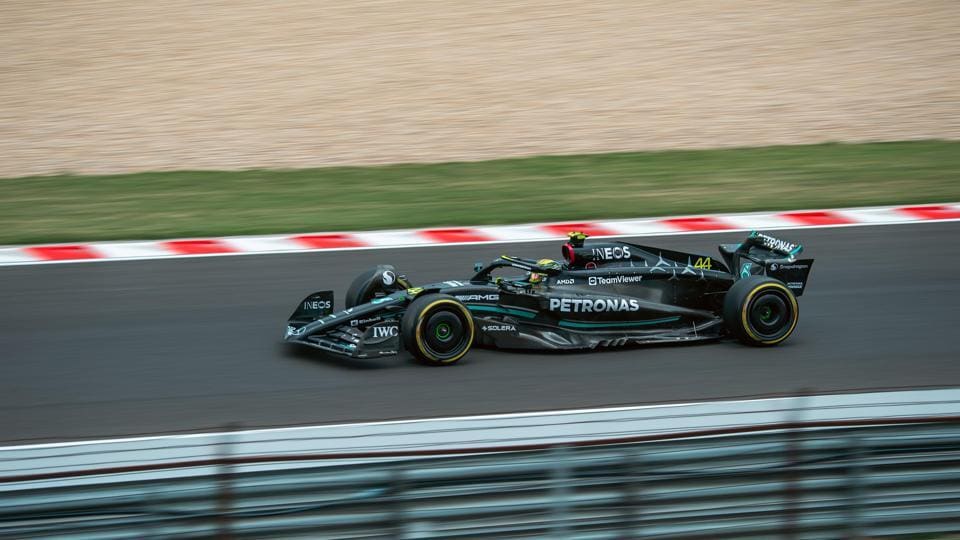
But what is the DNA that binds an F1 car and a long-distance truck? To understand that, a good place to begin is the racetrack. Most people who follow the sport are focused on the race driver. But a modern F1 vehicle is less of a car and more of a high-speed, data ecosystem.
Behind each car stand 1,200 to 1,500 people—from aerodynamicists at headquarters to pit crew technicians on the asphalt. During a two-hour race, the vehicle generates millions of data points collected by over 300 sensors. The pit wall, packed with multiple screens, tracks all kinds of data. The race director and teams of engineers pore over all of it to read everything from micro-weather patterns to compute a rain front’s impact on the track five kilometers before the first drop hits even as they compute the exact second a car must be pulled in for a change of tyres.
Also read: Citizens in assemblies: Putting people at the heart of Parliament’s performance
The CDO’s point was simple: an F1 car isn’t about the driver. It is an enterprise that thrives on real-time data. This sounds great because the CDO is a self-confessed F1 fan. Perhaps, he likes to think of himself as a race director. But what if this is just corporate storytelling? Does this analogy stand scrutiny in the real world?
Veteran automotive journalist Adil Jal Darukhanawala has been inside cars and trucks. His first observation is that engineers at work to help navigate an F1 car to the podium operate in sterile, hyper-controlled worlds. Here, every curve is mapped and pre-programmed. As opposed to that, a logistics manager traversing the Western Peripheral Expressway understands that no algorithm can pre-program an unexpected pothole or a sudden traffic bottleneck.
Having said that, he goes on to point out that F1-style telematics and GPS tracking are now integral to commercial transport. While this is new in India, such solutions have been on the shelves for 15-20 fifteen years. So, what is changing? It’s not technology, but leadership. For decades, Indian fleets operated on the “Lala model”, Darukhanawala says.
His point is, fleet owners insisted on buying bare-bones chassis with basic seats, no power steering, and no air conditioning. Drivers would be run to exhaustion and pushed until either the machine or the human broke. As opposed to that, as tech-savvy fleet operators take over, they understand that modern trucks that can cost up to ₹2.5-crores are massive financial assets. Leaving them in the hands of an exhausted driver in a 45-degree cabin is financial suicide.
Also read: How the Caliphate almost passed to family of India's Nizam of Hyderabad
Installing air conditioning, spring-loaded seats, power steering, and real-time telematics are not acts of luxury. This is brutal unit economics. A rested, comfortable driver handling a connected vehicle cuts a Pune-to-Bengaluru freight run from 36 hours down to 24, while keeping the asset intact. It shifts the industry’s baseline from saving money to generating asset productivity.
That productivity relies on basic physics that only works when the infrastructure catches up. Take aerodynamics. A curved roof spoiler on a truck cab is completely useless under 80 kilometers per hour. On old, congested state highways, aero aids were decorative pieces of plastic. But on modern expressways such as the Golden Quadrilateral where a 40-tonne rig can finally hold 90 km/hour for hours, that same piece of plastic cuts wind drag and converts directly into massive fuel savings across a 1,000-truck fleet.
Also read: ‘Hospital is safe for mother and child’: Fostering safe motherhood with institutional deliveries
Data in commercial transport doesn’t replace the human behind the wheel; it elevates them. In an F1 car, which of course, costs many times more than a truck, telemetry is deployed to manage tyre degradation over a two-hour sprint. On a 2,000-kilometer cross-country haul, a truck driver uses telemetry to manage fatigue and vehicle wear over a six-day run. New age fleets of entities such as Delhivery are ahead of the curve because they use telematics across their entirety to plot every route variable with precision, Darukhanawala points out.
So, while an F1 machine is built to survive a two-hour sprint, a commercial truck is built to survive brutal economic reality. It means backing the human on the wheel to morph a mechanical asset into an intelligent, profitable, engine. And that is why, CDOs like to think of truck drivers as F1 drivers.

Stay updated with all the Breaking News and Latest News from Mumbai. Click here for comprehensive coverage of top Cities including Bengaluru, Delhi, Hyderabad, and more across India along with Stay informed on the latest happenings in World News.


