The department of biotechnology of the Kurukshetra University is set to conduct research to make paddy straw useful for industries and generate additional income for farmers.
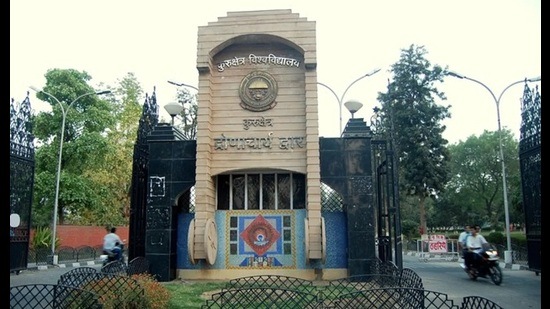
The department has received a grant of ₹14 lakh from the Haryana State Council of Science and Technology for the research and development project on production of microbial silicase for resolution of silica in rice straw for value addition for a period of three years.
The move, if successful, will prove a big breakthrough and will help to get rid of the problem of stubble burning by finding out a cost-effective and environment-friendly approach to tackle the issue.
Project in-charge Dr Sunita Dalal said high silica content is the biggest problem in the paddy waste and the prime objective of this research is to find out a formulation to dissolve silica in an environment-friendly way so that it could be used as potential material for industries.
She said crop residue burning generates pollutants affecting human health by polluting the air and environment. Since the farmers do not find paddy straw as nutritious animal fodder due to its high silica content, it caused the indigestibility of livestock.
The protecting effect of silica layer inhibits the commercial application as well that stakes it as a potential feedstock for different industries such as paper, fibre board, bio-fuels, bio-ethanol, dietary fibre and bio-char.
{{/usCountry}}The protecting effect of silica layer inhibits the commercial application as well that stakes it as a potential feedstock for different industries such as paper, fibre board, bio-fuels, bio-ethanol, dietary fibre and bio-char.
{{/usCountry}}“Under stressful conditions, some bacteria tend to release silicase enzymes, which will be isolated and standardised to be potentially pre-treatment protocols on rice straw. This will increase accessibility of hydrolytic enzymes towards value-added products as well,” she said, adding that the project is likely to have wide-reaching positive effects on the environment, energy, and agricultural sectors along with economic symbiotic partnership among farmers and industries.
She said an appropriate pre-treatment technique for silica reduction is to find its suitability as a feedstock is need of the hour as harsh and expensive physical and chemical methods of dissolving silica from rice straw are available, but they prove to be a burden on the environment.
Stubble burning is a major issue in the paddy-growing belts of Haryana. Even the state government has provided subsidies up to 80% on the purchase of machines for the management of crop waste but achieving zero stubble burning still remains a challenge as the state has reported 6,987 incidents of farm fires during the kharif harvesting season ending on November 30, against 9,898 reported last kharif harvesting season from September 15 to November 30.
Farmers allege that due to restrictions on early transplantation of paddy, they do not get enough time for management of crop waste after paddy harvesting as they have to prepare fields for the next crop.
“If the paddy waste becomes useful for the industries, it will not only help farmers get rid of the crop waste but they will get additional income by selling it to the industries,” said Karam Chand, deputy director agriculture of Kaithal district.