
 E-Paper



Ludhiana: PPCB flags high pollution in Buddha Nullah while dyeing units operate
PPCB officials report alarming pollutant levels in Buddha Nullah, linked to dyeing industries. BOD levels soared to 154 mg/l; heavy metals exceed limits.


Officials from the Punjab Pollution Control Board (PPCB), Punjab Biotechnology Incubator (PBTI), and the Municipal Corporation (MC) have submitted a detailed report on the water quality of Buddha Nullah to the Deputy Commissioner two days back. The report highlights a significant increase in pollutants, particularly Chemical Oxygen Demand (COD) and Biological Oxygen Demand (BOD), when dyeing industries were operational.
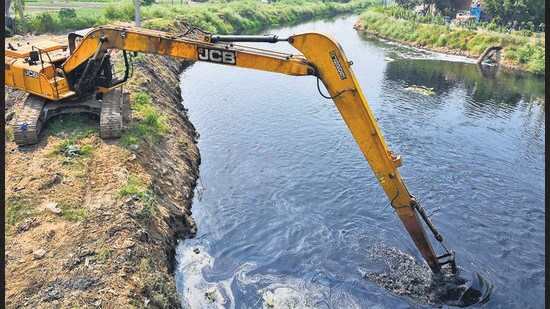
In August, a preliminary report had already raised concerns about the high levels of heavy metals in Buddha Nullah. The latest report further reveals that the water contains coliform bacteria at alarming levels of 1.72 crore per 100 ml, whereas the safe limit for bathing is just 500 per 100 ml.
During a meeting with Deputy Commissioner Jitendra Jorwal, officials pointed out that on August 6, when dyeing industries were active, the BOD level in the water was recorded at 154 mg/l, far exceeding safe levels. Ideally, a clean river should have a BOD level below 1 mg/l, and anything above 8 mg/l is considered highly polluted. When the dyeing units were closed on August 9, the BOD levels dropped significantly, indicating that the industries are a major contributor to the pollution.
The report also noted dangerous levels of heavy metals like chromium, nickel, and lead in the water samples, with chromium being ten times above the permissible limit in some areas.
Water samples were collected from 12 locations along Buddha Nullah on two separate days: August 6, when the dyeing industries were operational, and August 9, when they were not.
Deputy Commissioner Jitendra Jorwal commented, “PPCB has been asked to investigate why such variations occur and provide a detailed volumetric analysis. The reasons behind these changes will soon be clarified.”
Earlier in May, the National Green Tribunal (NGT) had issued a notice demanding a status report on actions taken against dyeing units responsible for polluting Buddha Nullah. The notice followed a suo motu cognisance of an article titled “Ludhiana PPCB report flags 54 dyeing units in Buddha Nullah’s catchment,” which highlighted environmental violations related to industrial pollution.
In a previous report, the PPCB found that the water in Buddha Nullah was unfit for irrigation due to dangerously high levels of BOD and chemical pollutants.


