As many as 11 of Punjab’s 23 districts have recorded an increase in farm fire incidents compared with the corresponding period last year, even as the overall number of stubble-burning cases in the state has declined by 17.3%, according to the latest district-wise data compiled by the state government.
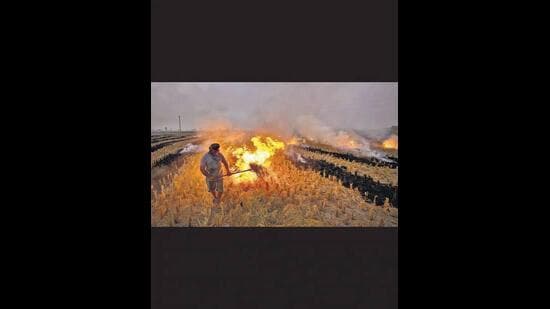
Gurdaspur has witnessed the sharpest increase, with farm fire incidents more than doubling from 58 during the corresponding period last year to 118 this year. Tarn Taran, another major contributor to the state’s farm fires, has also reported a rise, from 506 cases in 2025 to 558 this year.
Other districts reporting an increase include Ferozepur, where cases rose from 296 to 316; Barnala (66 to 83); Faridkot (52 to 67); Fazilka (49 to 54); Fatehgarh Sahib (32 to 33); Hoshiarpur (15 to 18); Jalandhar (48 to 67); Kapurthala (110 to 118); and Rupnagar, which reported four incidents compared to none last year.
In contrast, Punjab recorded 2,347 farm fire incidents till November 4 this year, against 2,839 during the corresponding period in 2025, marking a decline of 492 cases. Sangrur, which had reported the highest number of incidents last year at 510, witnessed a substantial decline to 163 this year. Amritsar also recorded a drop from 249 to 207, while Mansa saw cases fall from 126 to 43.
The decline in the overall number of incidents comes even as paddy harvesting is progressing at a slower pace this year.
{{/usCountry}}The decline in the overall number of incidents comes even as paddy harvesting is progressing at a slower pace this year.
{{/usCountry}}According to the data, 85.10% of the total paddy area had been harvested by November 4 this year, compared with 87.97% during the corresponding period last year.
The total paddy area under cultivation has increased from 31.72 lakh hectares in 2025 to 32.87 lakh hectares this year.
With the optimum window for wheat sowing drawing closer, farmers are under pressure to clear their fields and prepare them for the next crop. November 15 is considered the ideal deadline for wheat sowing to ensure maximum yield. The narrowing window has raised concerns that farmers might resort to burning paddy stubble instead of waiting for its collection and management.
AQI crosses 200
Meanwhile, thick smog has engulfed several parts of Punjab, with air quality deteriorating amid the ongoing farm fire season. Several cities recorded an AQI above 200 on Wednesday, indicating poor air quality and raising concerns over the impact on public health.
Nodal officers to be held accountable
The Commission for Air Quality Management (CAQM) on Wednesday took serious note of the spurt in farm fire incidents in Punjab and directed the state government to intensify monitoring and enforcement drives. Chairperson Rajesh Verma held a video conference with the state environment and agriculture secretaries, deputy commissioners and senior police officers of 12 districts, including Ferozepur, Sangrur, Bathinda, Patiala, Barnala, Faridkot, Jalandhar, Fazilka, Ludhiana, Malerkotla, Moga and Mansa. The commission said nodal officers must be held accountable for lapses in monitoring and failure to prevent farm fires, warning of strict action against any laxity. A high-level CAQM team led by its member (technical) is already in Bathinda to assess the situation on the ground.